No Fault Yet Liable: Geely's SOTIF Patent Clarifies Liability Boundaries in Intelligent Driving Accidents
Geely secures SOTIF patent to analyze intelligent driving accident data via inverse algorithms, clarifying liability and driving system self-evolution.
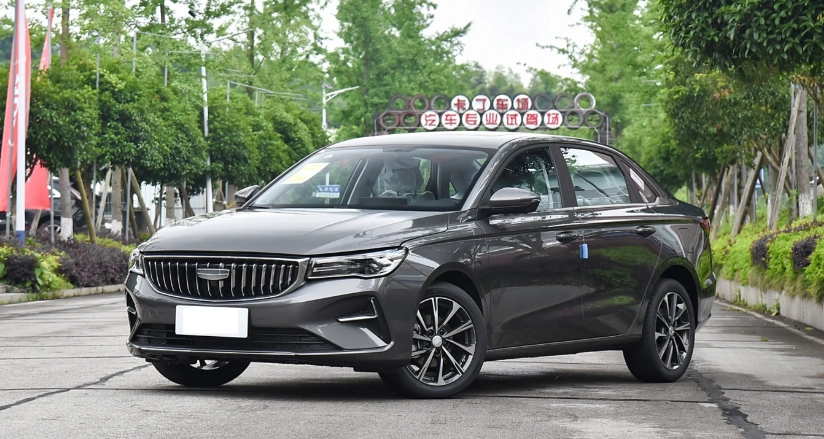
The development of intelligent driving is currently stuck in the deep waters of "Safety of the Intended Functionality (SOTIF)," unable to move forward. Recently, the China National Intellectual Property Administration announced that the invention patent for "Assisted Driving Optimization Method Based on Safety of the Intended Functionality Risk Assessment," jointly filed by Zhejiang Geely Holding Group Co., Ltd. and Geely Automobile Research Institute (Ningbo) Co., Ltd., has been officially granted.
The approval of this new patent directly targets the most hidden and legally friction-prone systemic anxiety in advanced intelligent driving: when the autonomous driving system itself has no hardware failures and all sensors are intact, yet due to the algorithm's own cognitive limitations or scene comprehension errors, the vehicle fails to detect an overturned tractor-trailer or irregular obstacle up ahead in time, leading to a catastrophic collision.
This kind of "unknown unsafe scenario" triggered by system design flaws or environmental interference is precisely the murky black box of interests that is hardest to clarify in daily disputes among automakers, consumers, and insurance investors.
Many onlookers, accustomed to viewing intelligent driving through the lens of ultra-large computing power chips and frequent over-the-air (OTA) version updates, tend to dismiss such risk assessment technology as nothing more than academic paperwork written by automakers. This superficial logic grossly underestimates the massive credit friction costs brought by data he-said-she-said disputes as the automotive industry moves toward the era of advanced intelligent driving. In the endless stream of past intelligent driving accidents, the data captured by automakers' backend systems is often chaotic and disorganized, making it difficult to determine whether the software perception was too slow or whether the actuator's avoidance strategy was overly conservative. This not only causes technology iteration to lose its direction but also turns every incident into an endless drain on brand equity.
To understand the deeper rationale behind Geely's latest technological move, one must deconstruct the underlying back-calculation logic of this new algorithm through the intellectual property mapping on Tianyancha.
This technology, deeply advanced by Geely Automobile Research Institute, essentially establishes a cold and precise data-cleaning and causal inference mechanism between the assisted driving optimization server and frontline vehicles. In actual operation, when any vehicle equipped with this system encounters a perilous "critical risk scenario" during driving (such as a near rear-end collision or a failed emergency avoidance), the system does not simply upload the driving recording. Instead, it immediately captures the driving data of that critical scenario.
The most ingenious part of the interest game lies in the optimization server's subsequent reverse control: the algorithm uses this data to forcibly "back-derive" and reconstruct the target state at the very first moment the assisted driving system effectively perceived the obstacle, while pulling up the vehicle's avoidance information at that time.
If the back-calculation results show that the distance and angle when the system first detected the obstacle were still within the control range of the safe critical target state, yet the vehicle ultimately failed to avoid it effectively, this directly catches the "culprit" in the software's underlying logic. The algorithm will immediately calculate, based on this initial perception deviation, a second parameter used to update and correct the system's first parameter.
This causal chain that digitizes blind-spot scenarios and cleanses and recycles data is, in essence, Geely Automobile using industrial-grade safety rules to reshape the long-term settlement discourse power of intelligent driving systems.
For a long time, parameter optimization in intelligent driving systems has been heavily reliant on road-test fleets blindly accumulating mileage and collecting data on public roads. This crude development model is not only costly but also extremely inefficient at capturing truly valuable extreme danger scenarios. The approval of this Geely patent, by reverse-constructing the "safety near-miss" scenarios that tens of thousands of production vehicles have encountered in the real world, is essentially an attempt to instantly turn the dangerous moments experienced by real car owners into low-cost ammunition for forcing the algorithm to evolve on its own.
As the public relations hype around intelligent driving fades, what tests a traditional automotive giant's intelligent driving depth is no longer aggressive rhetoric at launch events, but rather its precision in deconstructing and restoring data from extreme disaster scenarios. Geely Automobile's inclusion of "Safety of the Intended Functionality Risk Assessment" as a granted invention in its core asset library at this time is a clear strategic warning: the internal war in advanced intelligent driving has fully moved away from the crude era of piling up hardware. Whoever can first weld shut an engineering fortress between backend servers and underlying algorithms that enables closed-loop repair of every kilometer of dangerous data will be the one who can truly maintain a lasting technological edge in the coming cycle.