Chicecream returns with new owners and 3-8 yuan bars
Chicecream is relaunching under a new shell company backed by budget frozen-food supplier Royal Little Tiger, cutting prices to 3-8 yuan, but it still faces wary distributors and a damaged brand.
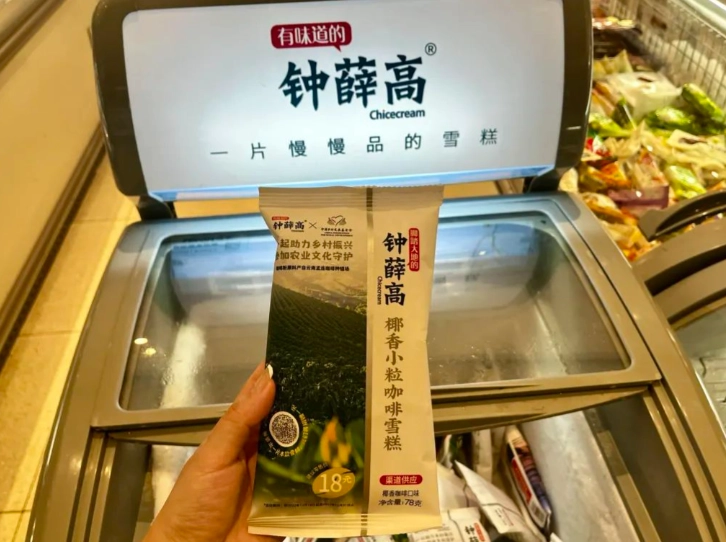
Chicecream, the ice cream brand once mocked as a "price刺客" for premium pricing, is relaunching under new owners with bars priced at 3–8 yuan (about $0.40–1.10), its first products due in the fourth quarter.
The revival is less a founder's comeback than a takeover: new capital, a veteran of low-cost supply chains and a food-science influencer have acquired use of the brand name while legally walling it off from the old company's debts.
A new shell, built to keep old debts out
Corporate records on Tianyancha, a company database, show the vehicle leading the relaunch is Zhongxuegao Brand Management (Shanghai) Co Ltd, incorporated in June 2026 with 10 million yuan (about $1.4 million) in registered capital and Zhang Luoli as legal representative.
Its shareholders are Wang Yaqing and Changsha Hujia Food Technology Co Ltd, an affiliate of frozen-snack maker Royal Little Tiger.
In August the company set up a wholly owned subsidiary, Changsha Chicecream Food Co Ltd.
The naming — a near-homophone of Chicecream written with different characters — is a textbook legal separation from the past.
Chicecream Food (Shanghai) Co Ltd, the original entity, is burdened by tens of millions of yuan in enforcement claims, consumption restrictions and supplier lawsuits; any cash reaching it can be seized by the courts at once.
The new backers had no intention of inheriting those liabilities. By setting up a new management company and having it invest in a subsidiary, they secured use of a brand with huge public recognition and controversy while cutting off debt transmission from the old business.
From white-label supply chain to brand owner
The decisive player is Royal Little Tiger, which sits behind shareholder Changsha Hujia. The company has grown fast in frozen snacks, sausages and egg-tart shells, and is a leader in China's ultra-low-cost supply chains.
Its model strips out brand premium and relies on tens of thousands of frozen-food channels in lower-tier cities and rural markets, bulk purchasing and thin margins to dominate price points below 10 yuan.
That a frozen-food giant built on white-label substitutes should take over a brand that once billed itself as affordable luxury marks a fundamental reversal of Chicecream's business DNA.
In the boom years, Chicecream used its roof-tile shape as social currency, told stories about expensive natural ingredients and ran provocative marketing to push single bars to 15 yuan, and in some cases 60 yuan.
As consumers traded down and became more rational, an ice cream "刺客" with no real technical moat was quickly abandoned by the middle class. High freezer slotting fees at supermarkets and cold-chain logistics dependent on high per-unit prices but stalled sales broke its cash flow.
Royal Little Tiger is, in effect, fitting the brand's traffic-heavy shell with industrial organs suited to a harsher market.
The new team has named Chen Dacheng, a food-science blogger known for ingredient analysis and debunking, as CEO. Using Royal Little Tiger's nationwide ambient and cold-chain frozen logistics, it will cut prices to the single digits, with a mainstream band of 3 to 8 yuan.
The move plays on the contrast of a "刺客 turned ordinary." Chen's science credentials are meant to rebuild food-safety trust shattered by the "doesn't melt when burned" controversy, while Royal Little Tiger's wholesale network and purchasing power are meant to squeeze out marketing costs and turn the bar into a volume product.
Freezer space and a damaged reputation
The price cut does not guarantee a smooth path. The relaunch faces hard tests in store freezers and in consumers' minds.
Ice cream sales depend heavily on regional distributors and mom-and-pop stores for freezer display. Memories of the old Chicecream's collapse — returned goods with nowhere to go and unpaid bills — still weigh on many distributors.
Against the near-locked freezer networks of Yili, Mengniu and Nestlé in the 5-yuan band, a revived brand with damaged credibility must offer far higher margins and cash-on-delivery terms to win prime shelf space — a heavy cash-flow burden for a company with only 10 million yuan in registered capital.
Then there is the double edge of notoriety. The Chicecream name carries not only memories of a hit product but widespread resentment over a "tax on the gullible."
If a brand that once called itself premium suddenly sells at factory prices, old buyers may feel it has lost its bragging rights, while new ones may suspect cuts to milk fat and ingredients.
Finding a new story between cheap industrial goods and quality is the trust cliff the new management must face.
The shell-swap revival sends a stark signal to consumer and retail businesses: the era of minting brands on atmosphere and emotional premiums is over. Now that a supply-chain veteran in cheap sausages has tamed the one-time ice cream "刺客", the logic returns to cost and actual sell-through.
The price cut has bought Chicecream a standing ticket back to the freezer. Whether the venture reborn in Changsha can rebuild a self-sustaining business on volume is the hard account Chen Dacheng and Royal Little Tiger must settle after sales begin in the fourth quarter.