Behind In-Yam Food's 162% stock price surge lies a 240x P/E ratio severely disconnected from fundamentals, as its Yangtze River Delta milk bar model faces aging stores and national expansion hurdles.
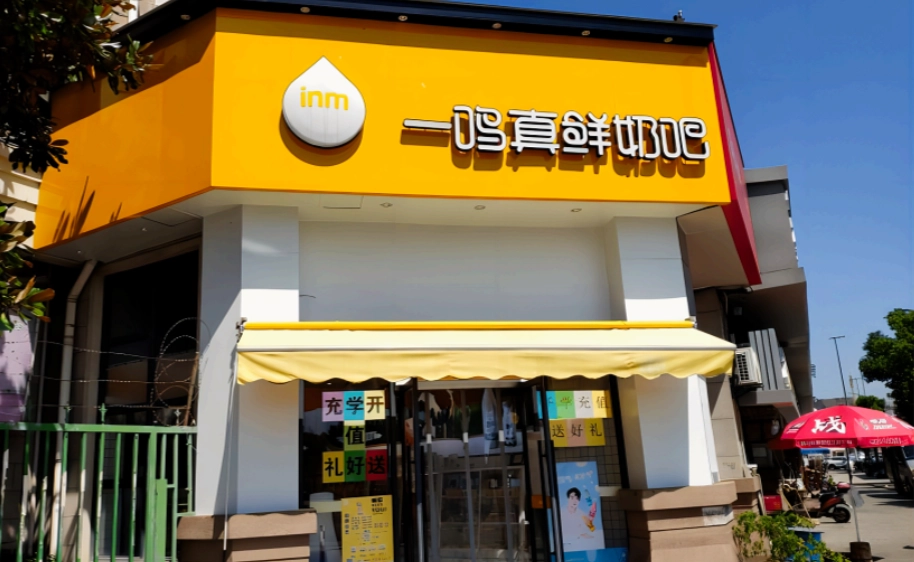
When InMing Food, the leading regional milk bar player in the Yangtze River Delta that focuses on a composite business format of "dairy plus baking," saw its stock price violently surge 162.06% in just over a month, and on September 2 issued a high-risk warning announcement, candidly admitting that its dynamic price-to-earnings ratio had been hyped to nearly 240 times, its price-to-book ratio had breached 12 times, and its various valuation metrics were crushing the industry average by multiples or even nearly tenfold, the speculative frenzy in the secondary market surrounding the so-called "new retail consumption rebound" and "mass staple food revaluation" had already completely detached from the gravitational laws of physical commerce.
Faced with a lukewarm interim report showing first-half revenue edging down 0.85% to 1.39 billion yuan and net profit of less than 40 million yuan, this runaway stock price drama tears open not only the illusory bubble created by short-term speculative capital leveraging its chip structure advantage, but also the deep anxiety of an old-brand community milk bar that is firmly locked within the Yangtze River Delta region as it confronts an aging store model, franchisees under thin-margin pressure, and a nationwide expansion that is struggling every step of the way.
The Physical Radius Limits of the Milk Bar Model
InMing Food once used its highly forward-looking "InMing Fresh Milk Bar" format to tear open a differentiated channel in its Zhejiang stronghold that combined the freshness sensitivity of short-shelf-life milk with the high average ticket price of baked goods. On the streets of Wenzhou and in Yangtze River Delta communities, a warm cup of fresh milk paired with freshly baked bread in the morning built the rigid breakfast mindshare of thousands of community residents. However, this business model, which single-handedly carries the entire chain of ranch farming, central kitchen processing, cold-chain logistics, and offline stores as heavy assets, is naturally subject to extremely stringent physical radius limits.
Short-shelf-life fresh milk and fresh baked goods have extremely demanding cold-chain delivery timeliness requirements. Once separated from the support of the core cold-chain network in Jiangsu, Zhejiang, and Shanghai, the warehousing and fulfillment costs of cross-regional expansion rise exponentially, directly confining its revenue base within this existing red ocean of East China.
The Governance Foundation of High Family Control
Tracing through the underlying commercial records to penetrate this food company's governance foundation, its extremely distinct and highly closed family ties are fully exposed in Tianyancha archives. Tianyancha business registration data shows that Zhejiang InMing Food Co., Ltd. was established in September 2005, with registered capital of approximately 401 million yuan, and the legal representative, chairman, and general manager is Zhu Like. In the equity map penetrated by Tianyancha, the major shareholder Zhejiang Mingchun Group Co., Ltd. holds 40.38% of the core equity, and Mingchun Group itself is firmly controlled by founder Zhu Mingchun and his wife Li Meixiang, eldest son Zhu Like, second son Zhu Liqun, and others.
Including the shares directly held by family members Li Meixiang, Zhu Like, Zhu Liqun, and Li Hongyan, the five concert parties of the Zhu family have long maintained their control over the listed company at an absolute controlling position of nearly 80%.
This chip structure, with full family control and highly concentrated shareholding, ensured extremely high strategic resolve during the company's early startup and regional network expansion phases, but in the secondary market it has evolved into a dangerous double-edged sword of liquidity.
A high proportion of family shareholding means that after deducting the chips locked by major shareholders, the proportion of external floating shares truly circulating in the secondary market is extremely low. When specific capital tries to find small-market-cap, light-float gaming targets in the consumer sector, it can easily seal limit-up boards rapidly through high-frequency turnover and continuous matched trading, thereby leveraging a tiny liquidity advantage to drive consecutive doublings in the stock price.
The Chasm Between Fundamentals and Valuation
However, when the true cards of its fundamentals are laid bare, between this price-to-earnings ratio of 239.75 times and the industry average of 27 times lies a chasm that cannot be filled by real performance.
Judging from the just-disclosed 2026 interim report, InMing Food achieved operating revenue of 1.390 billion yuan, which not only failed to grow but actually edged down 0.85% year-on-year; although net profit attributable to the parent company increased 21.09% year-on-year to 39.0113 million yuan, the underlying driver of this profit rebound was not hot volume growth in the terminal consumer market, but rather accounting profit squeezed out by the company through extreme "saving" in supply chain and internal controls.
The more brutal reality is written in the bleeding curve of the comprehensive gross margin, which has been sliding from high levels to 27% year after year.
Structural Fissures in the Store System
Within the store business model, deeper structural fissures are silently spreading.
InMing Food's directly operated and franchise systems display an extremely typical split of interests: "revenue goes to franchises, profit goes to direct operations." Although the franchise system supports most of the company's channel scale, franchisees must bear the severe loss rates of short-shelf-life food, rigid increases in offline store rents, and labor and utility expenses, with the gross margin on franchise supply hovering at a low level of just over 20% year after year;
while directly operated stores maintain a gross margin above 50%, under the current squeeze of generally cautious foot traffic and surrounding convenience stores and coffee and tea beverage brands frantically plunging into the breakfast price war, directly operated stores likewise face enormous downward pressure on per-store efficiency and same-store growth.
The Main Business Under Full-Scale Encircling
An even more severe challenge comes from the full-scale encircling of its main business.
On the dairy side, national ambient and low-temperature giants are conducting carpet-like penetration of Yangtze River Delta communities by leveraging strong cold-chain sinking capabilities; on the baking and fresh food side, foreign convenience store networks such as FamilyMart and Lawson, as well as local snack discount stores and new tea beverage brands, have successively launched combination punches such as "coffee plus bread" and "yogurt plus light meals" at 9.9 yuan or even lower, directly diverting the rigid morning and evening peak customer flows on which InMing milk bars depend for survival.
The company's rare listing of food safety, offline store operations, and raw material fluctuations all as major warnings in its risk disclosure precisely indicates that management is clearly aware of just how fragile this precision retail machine, which relies on offline physical storefronts, truly is in the face of extreme overvaluation.
The Endgame of the Valuation Suspension River
This myth of a 240-fold price-to-earnings ratio in early autumn has sounded an alarm for the entire fast-moving consumer goods and chain retail sector. Short-term capital can create stock price miracles in a closed chip pool through funding advantages, but a mass food company that survives by selling milk and bread ultimately cannot support a paper valuation ten times that of its peers with mediocre, slightly declining revenue.When the speculative fever recedes, if InMing Food cannot break through the geographic barrier of the Yangtze River Delta and cannot carve out genuine profit space for franchisees in the blood-soaked red ocean of breakfast and light food involution, then the high-valuation suspension river that has escaped the gravity of fundamentals will ultimately, before the cold reality of consumption, face an irreversible stampede-style reversion.