Zheng Qinwen's father builds Grand Slam-named business network
Zheng Qinwen's father Zheng Jianping is linked to eight active companies, many named 'Grand Slam,' as family venture capital backs her tennis career and a wider sports business.
Zheng Qinwen's China Open title has focused attention on the business network built by her father, Zheng Jianping, whose companies carry "Grand Slam" in their registered names.
Corporate records on Tianyancha, a Chinese business database, show Zheng is linked to 12 companies, eight of them still operating. The Grand Slam branding predates his daughter's breakthrough, rather than following it.
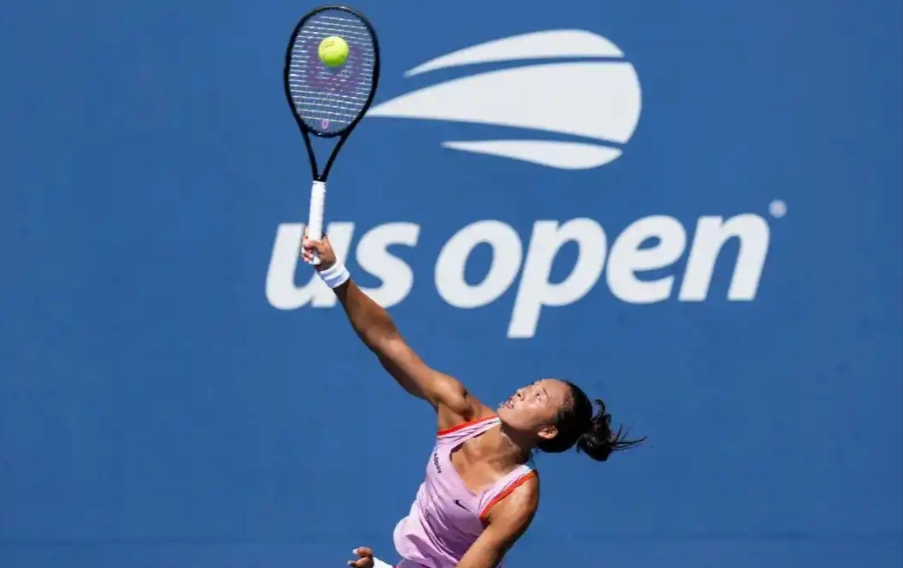
After her China Open win, Zheng Qinwen posted about "the weight of a dream," setting off a national sports celebration. Public interest then moved down her career path to the family structure that supported it — and to the registered businesses underneath.
Three core entities carry the "满贯" (Grand Slam) name: Yongsheng Golden Grand Slam Club (Hubei) Co., Ltd., Qisheng Grand Slam International Commercial Management (Hubei) Co., Ltd. and Qisheng Golden Grand Slam Club (Wuhan) Co., Ltd. Their registered scope covers sports event planning, sports brokerage, venue management and brand commercial development.
A family venture capital model
Professional tennis is a market-ruled, high-cost global sport. Unlike China's state system, where academies select athletes and cover travel and logistics, a player's family pays for coaching teams, fitness and rehabilitation staff, and international travel to ranking events. The source puts annual costs at several million yuan (hundreds of thousands of dollars) before a player earns tour prize money or major endorsements.
Zheng Jianping's first capital came from businesses in Hubei including auto parts and steel trading. Once his daughter showed unusual physical talent, he committed tens of millions of yuan (several million dollars) of family wealth and gave up the state-system route. He paid for training in Beijing and Europe, hired Li Na's former coach Carlos, top foreign rehabilitation staff and the agency IMG.
The Grand Slam entities show an ambition beyond accompanying a young athlete: moving from building one star to owning part of the local sports industry chain.
From prize money to venues
Most families of world champions stop at endorsement shares and public honours. For a businessman, the source argues, Zheng Qinwen's commercial value is only the visible tip. Her tour titles, Olympic gold and China Open crown give the clubs, youth training bases and management companies behind her a rare level of public trust.
By setting up Grand Slam clubs and commercial management companies in Wuhan and elsewhere in Hubei, all under his control, Zheng Jianping has built a base that can take on local government and corporate sports projects, youth squad training, city event IP and high-end venue operations.
That extends the family's income beyond tour prize money and international endorsements into a tennis-related real business that is less exposed to the competition cycle and can be scaled.
The governance question
The close tie between a family business empire and a top athlete also raises questions about sports agency governance and conflicts of interest.
Deals with global brands such as Nike and Rolex, and management of her image rights, are normally handled by major international agencies such as IMG, which stress global positioning and brand protection. If family-owned local entities take too large a role in sub-licensing her image, appearing at local property projects or backing non-specialist brands, that can clash with endorsement exclusivity and dilute a top player's premium.
Youth clubs face a long payback test of their own. A champion's rise depends heavily on individual talent that cannot be replicated. If a local club sells itself only on being "the cradle that produced Zheng Qinwen" and cannot deliver on coaching depth, scientific training and a steady flow of young players, its venues and management company will carry heavy depreciation and lose students.
The eight operating companies and the Grand Slam name cluster send a clear signal to the sports consumption and new business sectors: the rise of China's new generation of professional athletes is no longer a single, flat story. It is a system combining family capital, sharp commercial judgment and global professional rules.
Zheng Jianping has moved in a few years from angel investor to sports industry operator. The open question for his Grand Slam matrix is how to draw the line between family interests and professional representation while protecting a global brand asset and expanding local brick-and-mortar business.