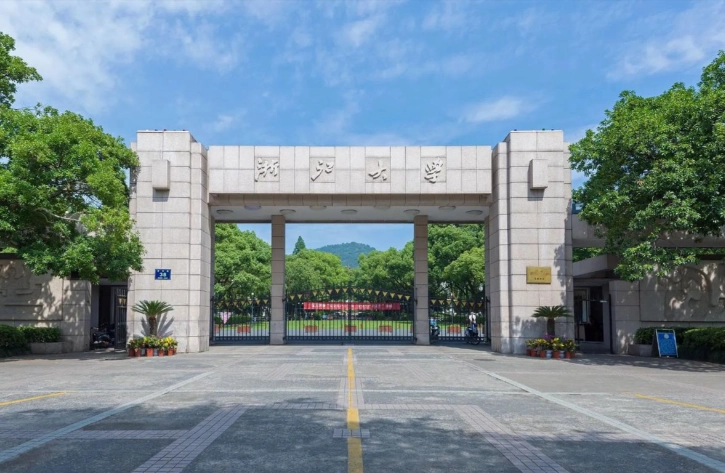
Zhejiang University Registers 'Qiushi Eagle' Trademark Across All Classes: Elite School's Cross-Industry Defense Against 'Armani' Highlights Hidden Asset Protection
Zhejiang University has registered its 'Qiushi Eagle' trademark across all categories, building an intellectual property barrier to prevent brand parasitism and infringement, safeguarding academic reputation and intangible assets.
While global luxury giants frequently deploy their legal teams like harvesters, indiscriminately sweeping up Chinese local brands for visual trademark infringements, the nation's top academic institution, situated at the pinnacle of its ivory tower, has also erected an impenetrable intellectual property quarantine wall, driven by an unyieldingly cold legal logic.
Recently, in the aftermath of the LV lawsuit against Molly Tea, netizens jokingly unearthed Zhejiang University's intellectual property records, playfully suggesting that the university's early registration of the "Qiushi Eagle" emblem was a preemptive move to avoid clashing with luxury brand Armani. What appears to be a lighthearted piece of internet-driven entertainment actually precisely reveals the exceptionally granular financial precision and strategic front-loading deployed by elite academic institutions in the deep waters of intangible asset erosion and rampant commercial infringement.
Most industry observers, accustomed to viewing universities purely as centers for teaching and research, tend to interpret this all-category trademark maneuver as a superficial public relations stunt by the university to prevent future problems. This simplistic reasoning completely underestimates the deep-seated anxiety of top universities over the malicious dilution or even backlash against their "brand sovereignty," throughout the lengthy lifecycle of brand value, intangible asset valuation, and subsequent university-industry-academia transformation.
A university's reputation is a heavyweight asset that cannot afford to be infringed upon, and its real defensive capabilities are laid bare in the comprehensive intellectual property landscape disclosed by Tianyancha.
Tianyancha intellectual property information clearly shows that as early as December 2025, Zhejiang University had already made a major move by filing trademark applications for its school emblem across all categories. A look at the clearly registered classification matrix in the Tianyancha system reveals that this intangible asset's reach aggressively spans all 45 international classifications, including daily chemical products, finance and property management, and communication services. By recent days, some core "Qiushi Eagle" graphic trademarks have passed official audits and successfully obtained rigid legal authorization.
Why would an academic powerhouse, long reliant on state funding and dedicated to rigorous research, choose this moment to wield the full force of modern commercial trademark protections at 100% coverage intensity?
The core driver points directly to the cold industry code of conduct regarding the "parasitic harvesting" and "long-tail infringement" of top university super IPs in the broader commercial sphere.
In long-term commercial operations, labels such as "Developed by Zhejiang University" or "Jointly Produced by a Zhejiang University Laboratory" have degenerated into low-cost, illegal cash-generating shells in the gray markets of social commerce, e-commerce daily necessities, and even counterfeit financial management sectors. Numerous small entities, desperate to buy consumer trust, recklessly skirt the edges of trademark law. This not only severely tarnishes the academic purity of the university but also exposes the parent institution to potential legal liabilities that could surface at any moment. If Zhejiang University had only registered trademarks in traditional education and research classifications, it would face significant administrative hurdles and depreciation in cross-category enforcement against these infringements in daily chemicals, finance, and other unrelated sectors.
This all-category registration campaign is, in essence, Zhejiang University welding shut an external "legal purifier" and "absolute sovereignty defense network" around its intangible assets.
By firmly locking the "Qiushi Eagle" graphic within the boundaries of seemingly unrelated shelves like daily chemicals and finance, Zhejiang University forcefully eliminates any legal channel for external capital to exploit "timing gaps" or "cross-category knockoffs" to steal the university's reputation assets. Whether to avoid the supposed "Armani knockoff" embarrassment or to thoroughly clean up the counterfeit cosmetics and financial products flooding the market under the Zhejiang University banner, this comprehensive enclave across all 45 classifications ensures that when the university initiates judicial recovery in the future, it can bypass complex infringement determinations and directly strike with clear patent evidence from Tianyancha for a dimensionality-reducing blow.
The management of university intangible assets has long moved past the rough paradigm of only discussing values without addressing interests. As social traffic dividends and trust dividends become exceedingly scarce during the clearing cycle, the true measure of a top university's long-term risk control prowess is not only how many academicians have emerged from its laboratories, but also whether its management can maintain a clean, hardcore legal entity statement to firmly control the flow of every bit of profit derived from its reputation.
This all-category trademark imprint that Zhejiang University has etched into its Tianyancha intellectual property record is a clear industry shift warning: the second half of the intellectual property war has long bid farewell to passive, romanticized defense. Whoever can first break down its heavy brand reputation assets into parts, complete all-scenario compliant land grabs, will be the one to truly secure enduring premium on its entire reputation balance sheet amidst the coming great reshuffle.