Wildman Gelato founder closes more than 10 companies as franchise model strains
Cui Jianwei, founder of Chinese gelato chain Wildman, has closed or revoked more than 10 of his 40-plus linked companies, raising questions about quality and store economics as franchises expand.
Wildman founder Cui Jianwei has closed or had revoked more than 10 of the roughly 40 companies linked to him, corporate records show, as the gelato chain's franchise-heavy model comes under scrutiny.
The scrutiny intensified after Luo Yonghao, a well-known Chinese entrepreneur and livestreamer, publicly criticised Wildman's gelato as overpriced and "even hard to eat," saying he missed rival Zhong Xuegao. The remark pushed Wildman into a social media storm and revived Cui's old claim that he had "pushed gelato prices down."
With single servings priced at nearly 30 yuan, and some at 38 yuan, the public is questioning not only the product's flavour and premium but also the business behind it.
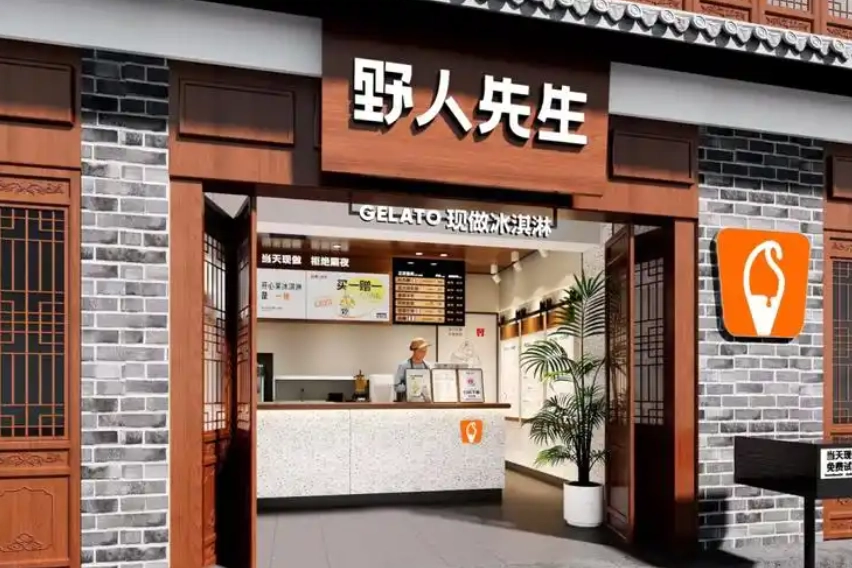
Records on Tianyancha, a corporate records database, show Cui is associated with more than 40 companies. Only about 20 remain active, including core operating entities Beijing Wildman Enterprise Management Development Co and Beijing Wildman Trading Co. The other 10-plus have been deregistered or had their licences revoked.
From direct-run stores to franchising
Those closures track Cui's shift from running stores himself to expanding nationwide through franchises. A graduate of Peking University Guanghua School of Management who once worked at an overseas investment institution, Cui founded Xianguohui more than a decade ago. It was later renamed Wildman Mufang and finally Wildman.
Most of the deregistered entities were traditional restaurant stores and branches set up as single shops or regional companies in the early years.
Gelato is inherently hard to industrialise: it is made and sold on site, has a four-hour shelf life, and uses fresh fruit with a very short keeping time. Under the early asset-heavy model, store rents were heavy and demand swung sharply between seasons. High waste rates turned many early stores into financial burdens, which were cut off through deregistration or by letting licences lapse.
The real turning point came in the past two years, as Wildman shifted from small company-run shops to a franchise machine targeting about 1,000 stores.
A price slot for middle-class polish
Wildman's rapid growth has been built on middle-class demand for affordable refinement. At boutique gelato shops, a double-scoop serving often sells for 45 yuan or more, sometimes above 60 yuan. Single scoops at Häagen-Dazs and Godiva routinely sit around 50 yuan.
Cui's promise to "push prices down" in practice means occupying a 28 to 38 yuan band in department store ground floors: positioned as healthier, lower in fat and more stylish than traditional American hard ice cream, yet about a third cheaper than genuine artisan shops.
On that standardised pitch, Wildman dropped the direct-run threshold and moved to a franchise partnership model led by professional franchisees. By charging brand usage fees, expensive integrated ice-making equipment, and high-margin custom premix powders and fruit jams, the brand passes store rent, utilities and labour costs to franchisees. Store numbers quickly climbed to a peak of nearly 1,000 nationwide.
That franchise logic lies behind the product contradiction Luo's "expensive and hard to eat" comment points to.
Scale versus quality control
Real gelato depends on low air content and the texture that comes from grinding and emulsifying high-fat nuts or seasonal fruit on site within a short window. Once a chain reaches hundreds or thousands of stores, no central kitchen can ensure that frontline staff thousands of kilometres away judge fresh ingredients with the same precision.
To control franchisees' ingredient waste and skill requirements, standardised industrial premixed bases, frozen fruit purees and longer-preservation technology inevitably replace higher-cost handwork.
When the base drifts toward semi-industrial production but the serving still carries a nearly 30 yuan premium price, the gap between taste and price widens. With consumers tightening their belts, tolerance for "ice cream assassins" and "fake premiumisation" has worn thin.
People will cheer a 9.9 yuan Mixue Bingcheng drink, and will occasionally pay for genuinely top-tier handmade dessert. But they will not accept an in-between product that wraps an industrial line in middle-class styling while still charging a premium tax.
Fragile stores and the Zhong Xuegao slide
The closure records trace a risky transformation from craftsman to chain capital machine. The deregistrations on Tianyancha show there is no real myth in offline food: each doubling of scale makes quality control and single-store profitability more fragile.
Now that a celebrity's criticism has torn off the "Eastern gelato" premium mask, Wildman must offer a convincing answer on franchisee margins and the actual product experience. Otherwise the slide Zhong Xuegao took may be just around the corner.