Gome Hit with 817 Million Yuan Enforcement in Guangzhou as Debt Spiral Brings Final Shutdown
Gome Electrical Appliances faces 817 million yuan in compulsory enforcement as its debt spiral leads to a final shutdown.
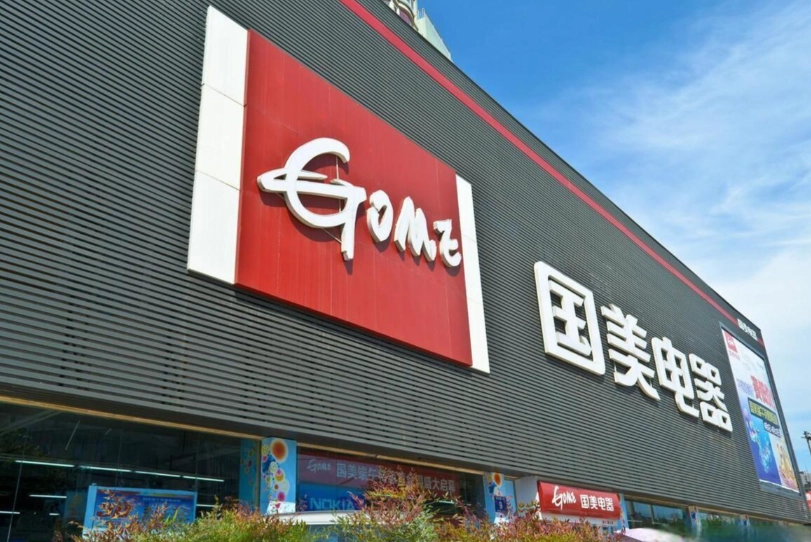
When the China Enforcement Information Network aimed an enforcement target of over 817 million yuan squarely at Gome Electrical Appliances Co., Ltd., and the Haizhu District People's Court of Guangzhou officially filed the case for enforcement, any fantasy in the capital market that this former home appliance retail giant could save itself was completely crushed.This is no longer an ordinary case of overdue supplier payments or commercial contract breach, but an irreversible judicial forced liquidation and asset encirclement launched by financial creditors and core institutions after the collapse of the shell of a massive retail empire.
Debt Trajectory: The Systemic Rot of Asset Drainage
Following the business registration foundation and public bond archives to verify its debt trajectory, Gome's asset drainage had long since evolved into a systemic rot that could not be stitched back together. According to Tianyancha App, Gome Electrical Appliances Co., Ltd. has registered capital of 1 billion yuan, its legal representative is Dong Xiaohong, and it is 70% controlled by China Pengrun Management Co., Ltd., while Ocean City International and Hongxi Investment hold the remaining 19.5% and 10.5% respectively.
Behind this equity map traced by Tianyancha, what is truly shocking is the cold reality disclosed in its bond announcements:in the first half of this year alone, Gome Electrical Appliances added 16 enforcement cases, with the total enforcement target amount reaching as high as 2.7674 billion yuan.
Add to this the massive 817 million yuan enforcement order handed down by the Guangzhou Haizhu Court this time, and judicial pursuit worth tens of billions of yuan is pouring down like an avalanche onto this hollowed-out entity.The single amount of 817 million yuan directly punctured the outside perception that Gome was left with only trivial, scattered debts.Enforcement of this magnitude often corresponds to a default on a large bank syndicated loan, a trust default, or a substantive default on bulk supply-chain ABS.
The filing of the case in Guangzhou Haizhu means that core financial institutions in South China have already abandoned lengthy out-of-court debt restructuring negotiations, formally torn off the mask, and are trying to race ahead for repayment by judicially auctioning Gome's remaining high-liquidity assets in South China, such as properties, warehouses, and even core shareholdings.
Deep Root Cause: The Backlash of Aggressive Capital Tactics
The deep root cause of this commercial collapse was never merely the physical dimensional strike by e-commerce platforms against offline big-box stores, but rather the brutal backlash when Huang Guangyu's extremely reckless capital tactics after his return collided with an industry winter.
Shortly after regaining his freedom, Huang Guangyu once made the bold claim that he would "restore the original market position within 18 months." However, the prescription he offered not only failed to cure Gome's severe organizational aging and stagnant sales momentum, but instead squandered precious cash reserves in a doomed Don Quixote-style battle for traffic. From the high-profile renaming of the Gome App to "Zhenkuaile" and spending heavily to build an entertainment-oriented social e-commerce platform, to blindly burning money to follow the live-streaming sales trend and the Zheshangzhe sub-brand, Gome carried out several rounds of high-intensity capital idling while completely detached from its own supply-chain control capability.
When consumer habits had long since become completely entrenched in leading e-commerce and interest-driven e-commerce, the radical transformation burned through the last breath of vitality. Not only was the cash-generation function of the main business not restored, but the cash-flow bottom line needed to keep thousands of offline stores operating was completely breached.
The Supply Chain Death Spiral
What followed was an extremely fatal supply chain death spiral.
The essence of a home appliance chain store is a quasi-financial game: relying on the credit terms and payment pressure from upstream home appliance giants such as Gree, Midea, and Haier, and using the precipitation of cash flow from downstream consumers, it earns huge deductions, channel fees, and entry fees in the middle.Once Gome's overdue payment to any one manufacturer was made public, the entire supply chain's trust system instantly fell apart.Leading brands quickly cut off supply and forcibly reclaimed goods, regional distributors collectively rushed to demand repayment, the stores had no goods to sell, causing foot traffic to plummet, and the collapse in foot traffic directly led to defaults on mall rents and employee salaries.
From large-scale nationwide store closures and lawsuits over unpaid employee wages, to the full freezing of core bank accounts,Gome had long existed in name only, reduced to a debt shell tightly sealed off by all kinds of litigation and enforcement orders.
Endgame Signal: The Clearing of a Classical Distribution Empire
This single enforcement action exceeding 800 million yuan sent the cruelest endgame signal to the entire traditional Chinese commercial retail landscape:once a classical distribution empire built on aggressive leverage and channel hegemony loses real control over upstream supply and downstream users, it can only be cleared out in the most miserable way in the face of penetrating judicial pursuit.As one enforcement document after another divided up Gome's last remaining residual value, those chain-store myths once written into business school case studies ultimately could not escape the fate of being written into the list of dishonest enforcement subjects.