Coconut Palm Group faces court enforcement over 1.45 million yuan
Coconut Palm Group, the Chinese coconut-drink maker, has been ordered to pay 1.45 million yuan, bringing its enforcement records to 10 and exposing weak compliance controls.
Coconut Palm Group, the Chinese coconut-drink maker known for its retro packaging and viral livestream marketing, has been pulled into a court enforcement spotlight after the Longhua District People's Court in Haikou issued four enforcement rulings against the company in quick succession.
The total involved is just over 1.45 million yuan (about $204,000) — pocket change for a beverage group with annual revenue above 5 billion yuan (about $700 million), but the case has drawn attention to a growing stack of enforcement records against one of China's best-known drink brands.
Ownership and enforcement records
Corporate records database Tianyancha shows Coconut Palm Group was set up in July 1980 with 50 million yuan in registered and paid-in capital. Its legal representative is Zhao Bo. Its business covers investment and management in food and beverages.
The group is wholly owned by Hainan Yeye Industrial Co Ltd. The four cases filed by the court in Haikou have pushed its existing enforcement records as a person subject to enforcement to 10.
Strongman governance behind closed doors
Why would an industry leader with deep cash reserves let a dispute over roughly a million yuan reach the enforcement stage?
The root cause points to a highly centralized and closed style of governance built around a dominant founder figure.
Coconut Palm traces its origins to the near-bankrupt state-owned Haikou Canned Food Factory. Its three decades of dominance in the domestic coconut-drink market rests on reforms pushed through by Wang Guangxing, who broke the "three iron" guarantees of lifetime employment, pay and promotion and introduced employee shareholding.
But the absolute control built on that founder's prestige has hardened into an insular, family-style fortress. Zhao Bo now holds the title of legal representative, yet voting power and profit distribution remain anchored to the founder's inner circle through the parent company and its employee shareholding committee.
Under this system, internal rules override modern corporate governance, and outside contracts can be treated with managerial arrogance.
Past litigation records suggest these mid-sized enforcement cases rarely stem from cash shortages. They typically arise from disputes over final payments on construction projects, outsourced labor, regional dealer rebates or supplier payment terms. Plant culture at the group enforces strict, self-made rules on rewards, penalties and quality fines.
When suppliers, contractors or former employees fall out with management, the legal and finance teams tend to fight through lengthy court proceedings. Even after judgments take effect, a slow payment approval chain that depends on senior sign-off can push payments past compliance deadlines, leading courts to freeze funds.
Channel cracks and compliance gaps
A deeper problem is that Coconut Palm's core market is showing irreversible cracks in distribution and generational appeal.
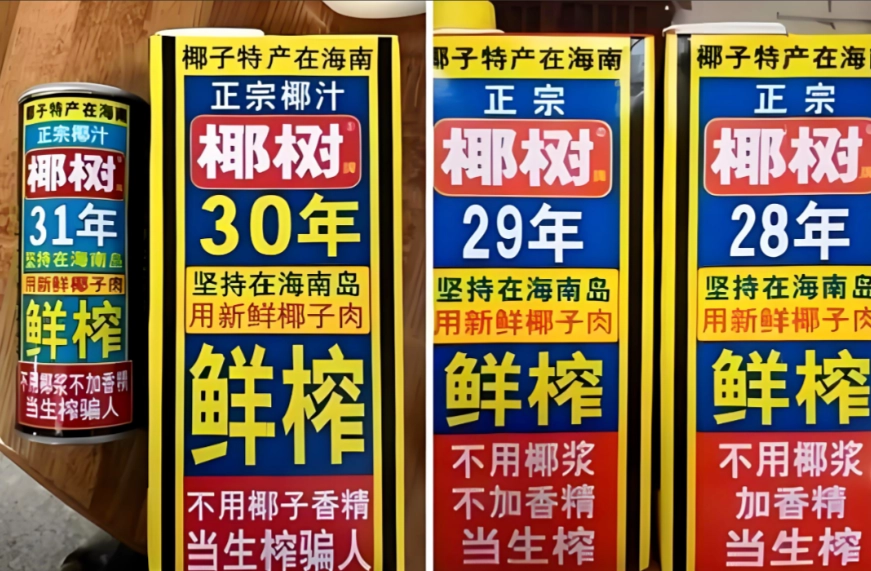
The coconut latte boom created a vast market for coconut milk as an ingredient. Feinuo, a challenger in the new consumer supply chain, moved quickly to penetrate tens of thousands of tea and coffee chains across China. Coconut Palm stuck with its retro red-yellow-blue-black packaging and leaned on livestream marketing and traditional restaurant and liquor-store shelves.
As freshly made drinks pull customers away from packaged beverages, turnover at individual stores in traditional channels is slowing.
Flashy marketing at the front end, combined with enforcement penalties over million-yuan contract and labor disputes at the back end, exposes a gap between the group's image and its modern compliance and risk controls.
Warning for the industry
The enforcement case is a warning for the consumer goods industry: product strength and past advantages can carry a company for 30 years, but they cannot cover for disordered internal governance forever.
The 1.45 million yuan is just a number to be debited from a bank account. But as enforcement records pile up in official credit systems, what is really being enforced is outside respect for the company's contract ethics and its standards of modern corporate governance.