Budweiser's China Sales Core Steps on the Gas with 61% Surge Past $1 Billion: The Battle to Defend the Nightlife Channel
Budweiser's Shanghai sales company has increased its capital to $1.03 billion, a 61% jump, to shore up its nightlife channel and counter premiumization competition from domestic brands.
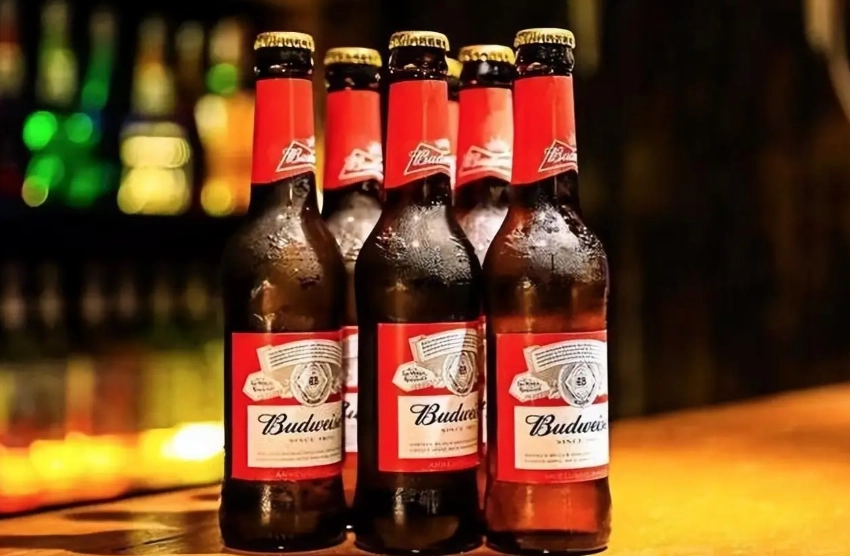
At a sensitive moment when growth in China's domestic high-end beer market is slowing and sell-through in restaurant and on-premise nightlife channels remains under continuous pressure, the core sales foundation in China of global beer giant AB InBev has received an extremely heavy capital boost. A net increase of nearly US$400 million, with total registered capital directly crossing the US$1 billion mark—this is by no means routine foreign-exchange fund scheduling, but rather a key anchor driven into the ground by the multinational beer overlord, under the dual squeeze of encirclement in premiumization by China Resources and Tsingtao and bleeding from its on-premise nightlife base, in order to stabilize the national cash-flow hub and channel control.
Business Registration Change: Registered Capital Soars 61%
Penetrating this sales flagship from the underlying records of business registration, its scale and equity structure are clearly preserved in Tianyancha archives. According to the Tianyancha App, Budweiser (Shanghai) Beer Sales Co., Ltd. recently underwent a business registration change, with registered capital sharply raised from approximately US$640 million to approximately US$1.03 billion, an increase of as much as about 61%. The entity was established in December 2014, with Zhang Mu as its legal representative, and its business scope covers food sales, procurement agency services, and daily necessities sales, among others. It is jointly held by Budweiser (China) Sales Co., Ltd. and Budweiser Investment (China) Co., Ltd.
Rare Massive Capital Increase for an Asset-Light Sales Company
Scaling an "asset-light" sales company with strong asset-light characteristics to a registered capital of more than US$1 billion is truly rare in the fast-moving consumer goods industry. In conventional understanding, hundreds of millions of dollars in huge funds are often used to build heavy-asset brewing plants or launch high-end canning lines. Directly injecting huge capital into a sales entity, however, has an extremely realistic business driver behind it: this is to provide deep credit support and liquidity buffers for a vast and increasingly complex national distribution network.
As Budweiser's core sales hub in China, Budweiser Shanghai undertakes the key functions of coordinating nationwide distributor payment settlement, front-loading marketing expenses, and managing supply chain payment terms. This round of capital increase first points to the battle to defend its traditional advantaged channels—nightlife venues and high-end dining.
Nightlife and High-End Dining: All-Out Defense Battle Begins
Over the past decades, Budweiser, with its portfolio of high-end and super-premium brands including Budweiser, Corona, and Hoegaarden, has nearly monopolized bars, KTVs, and high-end dining channels in first- and second-tier cities nationwide. This model relies on high listing fees and exclusive sales agreements supported by high gross margins. However, as the consumption patterns of the nighttime economy have diversified in recent years, foot traffic at traditional mass-market KTVs and large bars has shrunk, and consumers have increasingly diverted to craft beer and ready-to-drink categories, Budweiser's high-end reservoir has encountered unprecedented sell-through resistance.
Inventory turnover days in on-premise channels have been lengthened, and a large number of regional distributors face heavy advance-funding pressure and the pain of destocking. Thickening the capital foundation of the sales entity is essentially providing channel partners with more ample credit terms and credit lines, preventing a collapse in distributors' capital chains from triggering cross-territory dumping and a stampede.
Close-Quarters Combat: Encirclement in Premiumization by China Resources and Tsingtao
A deeper strategic motivation lies in responding to close-quarters combat with China Resources Beer and Tsingtao Beer in the super-premium heartland.
China's beer industry has long bid farewell to the era of rough volume competition. After total consumption peaked, the entire industry's profit hopes rest on the premiumization battle at price points of 8 to 15 yuan and even higher. China Resources Beer, with its "Heineken + Snow" dual-brand combination, is frantically grabbing share in the high-end segment. Tsingtao Beer, relying on super-premium single products such as Yishi Chuanqi, continues to elevate its brand positioning. Domestic giants are sparing no cost in replicating Budweiser's past channel assault tactics.
Facing competitors' step-by-step channel competition, Budweiser must maintain extremely high-intensity capital expenditure on marketing promotion, exclusive placement of terminal freezers, offline pop-ups, and sponsorship of sports and music events. Without a strong capital reservoir as support, front-end marketing firepower can easily be weakened in a war of attrition.
Migration to Off-Premise Channels: Forcing a Back-End Capital Reshaping
In addition, the structural migration toward off-premise channels (supermarkets, convenience stores, and instant retail) is also forcing Budweiser to reshape its back-end capital allocation system.
As more young people move their drinking occasions from noisy bars to home drinking, tipsy camping, and home delivery, instant retail platforms such as Meituan Flash Purchase and Hema have become battlegrounds everyone must contest. Unlike traditional nightlife venues that rely on large distributors for包销, instant retail and near-field e-commerce impose extremely fragmented settlement requirements for digital product selection, high-frequency promotional subsidies, and multi-warehouse fulfillment. The "procurement agency services and daily necessities sales" specifically included in the business scope of Budweiser Shanghai Sales Company, combined with the surging capital, enables it to transform more flexibly into a multi-channel supply chain service provider, directly undertaking large-scale direct distribution and advance-funding settlement for new retail terminals.
The Billion-Dollar Fortress: Defensive Will and an Unfinished Answer Sheet
This nearly US$400 million capital increase in early autumn sends a clear signal to the entire consumer goods and beer sector: the era when multinational FMCG giants could lie back and earn brand premiums in China has completely turned the page, and the second half of premiumization is a tug-of-war testing cash-flow reserves and channel resilience. Budweiser has used real gold and silver to build its sales flagship into a billion-dollar fortress, demonstrating its defensive will to secure its Chinese high-end beer foundation.
But amid the reality of a rational return in mass consumption and domestic brands pressing forward step by step, whether this massive US$1 billion in capital can thoroughly revitalize terminal sell-through and curb the decline in gross margin is the answer sheet that Zhang Mu and other management must submit to Asia-Pacific headquarters after the business registration hammer falls.