A $23K Debt Trips Up a $2.8B Giant: Beijing Vanke's Consumption Ban Exposes Liquidity Bottlenecks at Top Developers
Beijing Vanke was hit with a consumption restriction order over a 16,800 yuan debt, exposing liquidity bottlenecks and management failures at a leading real estate developer.
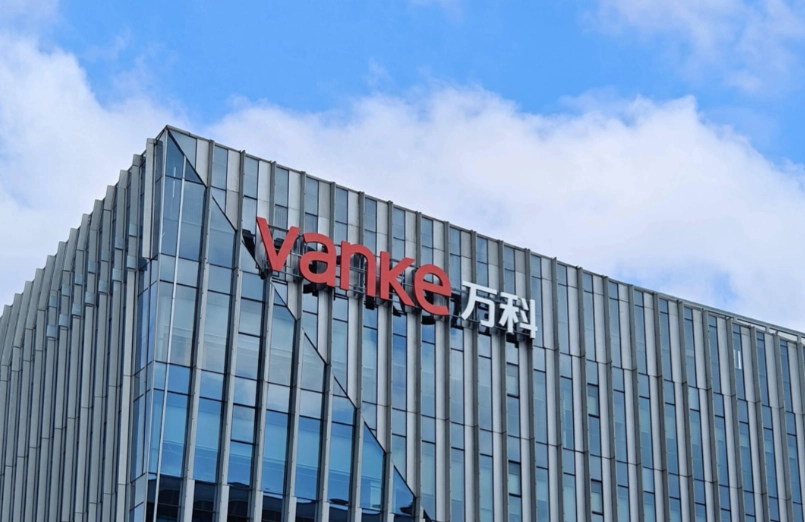
When Beijing Vanke Enterprise Co., Ltd., with registered capital of as much as 2 billion yuan, was issued a consumption restriction order by the Beijing Chaoyang District People's Court over an enforcement subject matter of just over 16,800 yuan, and even its new legal representative Li Aidong was included in the high-consumption restriction, this absurd, almost theatrical discrepancy in amount tore open, in the most glaring way, the most embarrassing hidden corner of an industry benchmark during a downturn cycle.
The outside world was astonished that a flagship entity holding the signboard of Vanke Group's key northern stronghold would become the subject of consumption restrictions over just over 10,000 yuan. But if this tiny judicial spark is placed back under the microscope of the current capital chain of real estate developers, what it reflects is by no means simple debt evasion, but rather a deep systemic blockage in leading real estate developers' mechanisms for fund pooling, project penetration, and last-mile repayment.
The Stark Contrast Between 2 Billion Yuan in Registered Capital and 1.8 Million Yuan in Enforcement Subject Matter
Examining its scale through the underlying traces left in commercial registration and risk litigation, the strong contrast is clearly preserved in Tianyancha records. Tianyancha legal litigation and business registration information shows that Beijing Vanke Enterprise Co., Ltd. was established as early as 1987, jointly controlled by China Vanke Co., Ltd. and Shenzhen Vanke Financial Advisory Co., Ltd., with Li Aidong as legal representative. As Vanke's core base for deeply cultivating the north for more than 30 years, its book registered capital of 2 billion yuan stands in sharp contrast to its current 5 pieces of enforcement information as a person subject to enforcement, totaling about 1.8356 million yuan in enforcement subject matter.
The enforcement subject matter of 16,800 yuan is not even equal to the average selling price per square meter of any one of its projects, yet it can stubbornly choke a massive entity at the 2 billion level. Its underlying logic points directly to real estate developers' passive failure in handling engineering subcontracting disputes.
The Dual Red Lines of Subcontracting Disputes and Presale Fund Supervision
This case was initiated by Beijing Chengxiang Zhonghao Construction Co., Ltd., and the cause of action is clearly a construction project subcontracting contract dispute. In the conventional chain of real estate development, similar disputes over tens of thousands of yuan in subcontracting final payments, material payments, or labor deduction disputes are countless. In the high-turnover era when real estate developers had ample cash flow, such small disputes were often settled privately by the project department through engineering visas or petty cash channels before legal affairs even intervened, and would not ferment to the judicial enforcement stage at all.
However, under today's dual red lines of guaranteed housing delivery and strict supervision of presale funds, every transfer of funds by a real estate developer must go through layer upon layer of approval. All sales proceeds are tightly locked in each project's special supervision account, dedicated solely to physical delivery, and strictly prohibited from being diverted to settle historical final payments to general contractors and subcontractors or to balance non-related debts.
This extremely rigid defense line for fund supervision means that even if the parent entity sits on tens of billions in assets, a core regional company may not even have the authority to independently allocate tens of thousands of yuan to satisfy a judicial judgment on an old delivered project.
Disconnect Between Authority and Responsibility Amid Drastic Organizational Restructuring
A deeper management ailment exposes the disconnect between authority and responsibility in large real estate developers amid frequent drastic organizational restructuring. Since former chairman Lin Tong stepped down in May of this year and Li Aidong took over as legal representative, Beijing Vanke has been undergoing deep reconstruction of authority and responsibility across both operational lines and business registration compliance lines. Against the backdrop of headquarters pushing for greater centralization of power and comprehensively cutting management costs, regional legal and finance teams have been significantly streamlined, and litigation tracking between project companies and the parent entity has suffered serious process gaps.
As for the enforcement notice issued by the Chaoyang District Court, frontline teams can easily miss the statutory reporting deadline due to process delays, departmental buck-passing, or waiting for group-level fund coordination. Under the strict rules of the current Civil Procedure Law, as long as the amount is not fully paid within the specified period and no enforcement settlement is reached, the court's consumption restriction system will automatically and indiscriminately trigger consumption restrictions on the company and its legal representative.
The Destructive Power of Consumption Restriction Orders in Public Opinion and in the Eyes of Financial Institutions
For Beijing Vanke, although a consumption restriction order differs from the list of dishonest persons subject to enforcement, which carries a determination of malicious intent, the destructive power it creates in public opinion and in the eyes of financial institutions even exceeds that of a tens-of-millions-level loan extension. At a sensitive moment when major rating agencies, creditor banks, and supply chain partners are scrutinizing Vanke's debt repayment capacity with a magnifying glass, the legal representative being restricted from high consumption over just over 10,000 yuan can easily be misread by the market as a dangerous signal that liquidity has completely dried up, thereby triggering a chain storm of runs by upstream and downstream supply chain participants and tightening of credit lines by financing institutions.
Maintaining Stability at the Nerve Endings: The Credit Bottom Line for Real Estate Developers in the Defensive Phase
This consumption restriction storm over just over 10,000 yuan in late autumn sounded an alarm for the entire real estate industry mired in the sales slump: after the industry entered an extremely low-margin defensive phase, what measures a real estate developer's risk resistance is not only its ability to restructure massive debts worth tens of billions, but also its precision in maintaining stability at the nerve endings. What was shattered by just over 10,000 yuan is not Vanke's balance sheet, but the outside world's invisible faith in its refined management and its big-company credit system.