Sanxiang Bank sues Evergrande and Yiyang Urban Investment, exposing 46 million yuan in bad debt and old accounts of government-enterprise collusion.
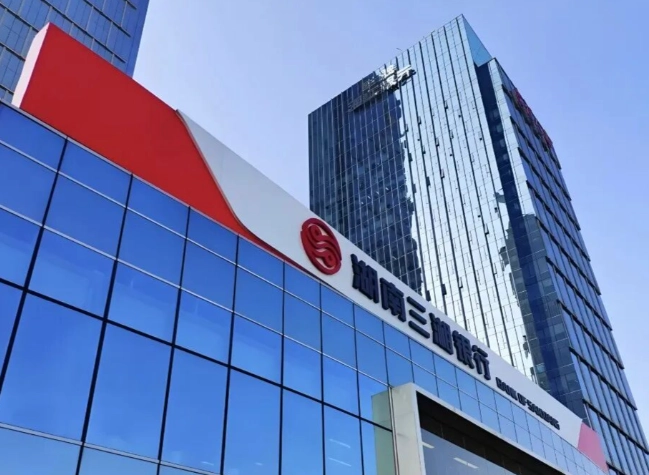
When a private bank backed by Sany Heavy Industry files a lawsuit simultaneously against Evergrande Real Estate, which is mired in a debt black hole, a local urban investment operating platform, and three underlying real estate project companies, outsiders who merely regard it as an ordinary case among the tens of thousands of financial loan contract disputes involving Evergrande nationwide would overlook the brutal reckoning of old accounts from collusive real estate development between local governments and enterprises in lower-tier cities, as reflected in the fact that a private bank, a collapsed real estate company, and a local urban investment platform are all welded onto the same defendants' bench by a single project company.
During the golden era of runaway real estate growth in the past, in third- and fourth-tier cities, to accelerate new district development and monetize land finance, a marriage between urban investment platforms and national leading real estate companies was once a standard template. The urban investment platform handled primary land consolidation, planning and capital allocation, and even provided implicit credit enhancement, while the real estate company, relying on the brand halo of rapid turnover, acquired land and built buildings, and then enlisted joint-stock banks or local city commercial banks and private banks to provide front-end development loans and mortgage support.
However, when the giant real estate company suddenly collapsed, the once smoothly operating tripartite chain of interests instantly disintegrated, and the former honeymoon period of cooperation rapidly evolved into cross-entity debt runs.
Judicial Information Penetration: The Defendant Lineup Spans Multiple Camps
Following the underlying archives of judicial traces and financial statements to penetrate through, the intricate interweaving of interests among the parties is revealed with great tension in business registration data. Tianyancha judicial information shows that in this contract dispute initiated by Hunan Sanxiang Bank, the defendant lineup spans multiple camps: Evergrande Real Estate Group is among them, Yiyang City Urban Construction Investment and Operation Group Co., Ltd. appears as a core local state-owned capital platform, and the underlying entities Liuyang Jinbi Real Estate, Yiyang Hengrui Real Estate, and Liuyang Xiangsheng Real Estate constitute the front-line performance positions.
In the group relationship network penetrated by Tianyancha, Liuyang Jinbi and Yiyang Hengrui both belong to the core members of the Evergrande Group.
Bad Debt Confession: 46.6 Million Yuan in Other Receivables and a 50% Provision Ratio
A more intriguing key clue lies in the notes to Yiyang Urban Investment's own financial statements. Yiyang Urban Investment's 2025 financial report clearly records that its other receivables from Yiyang Zhuoyue Real Estate and Yiyang Hengrui Real Estate had a total book balance of 46.6034 million yuan, and it had extremely rarely directly made a 50% bad debt provision, with the provision amount reaching 23.3017 million yuan.
Yiyang Hengrui Real Estate, as the same coordinate point, precisely links Sanxiang Bank's debt pursuit with Yiyang Urban Investment's bad debt confession.
This bad debt provision ratio as high as 50 percent, in a reporting system where urban investment platforms have always been conservative or even accustomed to whitewashing asset quality, is tantamount to publicly admitting that the funds sunk within Evergrande's project companies have substantively become unfinished projects. Over the past many years, urban investment platforms advanced funds to real estate project companies, lent to them, or failed to recover deposits for joint land acquisition, forming massive other receivables. Under the high pressure of Evergrande's collapse, project suspensions, and even the closed operation of guaranteed housing delivery funds, the possibility of urban investment platforms withdrawing sunk funds from underlying projects is extremely slim.
Shift in Recourse: Sanxiang Bank's Game of Pulling Urban Investment into the Defendants' Bench
And Sanxiang Bank's choice to list Yiyang Urban Investment as a co-defendant pushes the game to a white-hot level of compliance and responsibility penetration.
In conventional bank development loan structures, if a local urban investment platform acts merely as a pure partner or minority shareholder, it usually does not need to bear joint and several repayment liability. Sanxiang Bank's forcible inclusion of the urban investment platform in the defendant list in this case most likely means that in the financing closed loop of that year, Yiyang Urban Investment or its affiliated entities, in order to facilitate syndicated loan disbursement or project implementation, issued liquidity support letters, deficit supplement commitments, or assumed substantive guarantee and fund supervision joint obligations regarding land transfer and jointly managed fund accounts.
Faced with the objective reality that Evergrande's main entity has long been hollowed out and is extremely difficult to enforce against, the private bank as plaintiff has shrewdly shifted the focus of recourse to the urban investment entity, which still relies on local fiscal support and existing assets.
Conclusion: The Legacy of Real Estate and the Cost of Blurred Government-Enterprise Boundaries
This is a highly concealed major exposure of real estate's lingering poison occurring in lower-tier markets. When the myth of real estate shattered, those urban investment platforms that blurred government-enterprise boundaries during the earlier investment promotion boom not only had to endure the bleeding pain of tens of millions of yuan in advanced funds being forcibly provisioned as bad debt, but also had to swallow, under the gavel of financial institutions' compliant recourse, the bitter fruit produced by the implicit guarantees they issued for blind expansion back then.