Beijing Urban Construction Development places RMB 2 billion in Changping, doubling down on Beijing's core districts as it faces tests of sales absorption and cash flow.
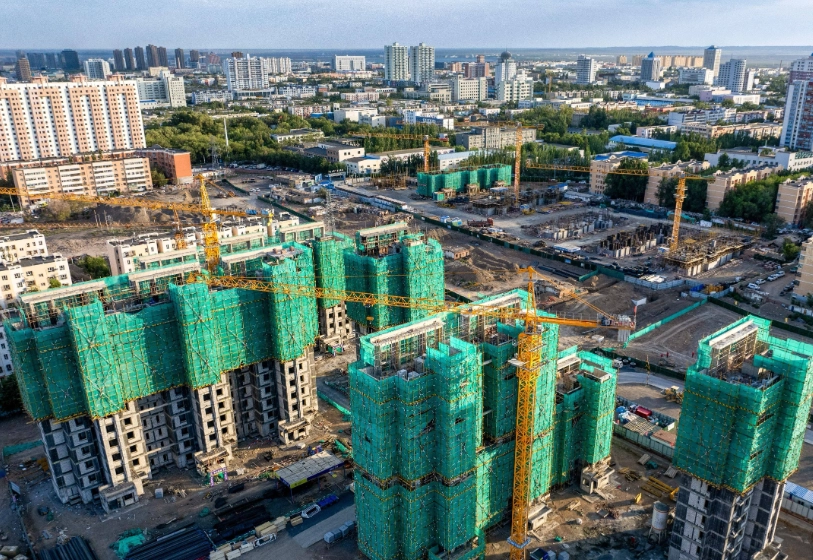
Against the backdrop of Beijing's land market continuously consolidating toward core state-owned real estate enterprises, the heavy bet quietly placed by Urban Construction Development in Changping District once again outlines the tactical trajectory of local construction-engineering giants fully retreating to defend their home turf in first-tier markets.The establishment of Beijing Urban Construction Xingchang Real Estate Co., Ltd. with registered capital of up to 2 billion yuan is by no means an ordinary expansion of an out-of-town branch, but a typical heavy-duty project operation platform set up for the development of a single or specific plot.
As private real estate enterprises have nearly vanished from the front lines of land auctions, local state-owned enterprises, relying on the deep qualifications of their parent groups and local government-enterprise relationships, are pressing billions in capital into Changping, a residential improvement hinterland in northern Beijing. On the surface, this is the confidence of advancing against the trend; internally, it reflects the structural predicament of having completely cleared out in third- and fourth-tier cities and being left only to compete for existing customers in the extremely involuted red ocean of first-tier markets.
2 Billion Yuan in Registered Capital: A Window into Project Level and Financing Leverage
The registered capital volume of a real estate project company has always been the most intuitive window into project level and financing leverage. According to Tianyancha business registration data, Beijing Urban Construction Xingchang Real Estate Co., Ltd. was recently established, with Zhang Jie as legal representative, registered capital of 2 billion yuan, a registered address precisely anchored in Changping District, Beijing, and a business scope directly targeting real estate development and operation.In the equity map penetrated by Tianyancha, this entity is 100% wholly owned by the A-share listed company Beijing Urban Construction Investment & Development Co., Ltd., with a subscribed capital contribution of 2 billion yuan, and the subscription deadline locked in on December 31, 2026.
This establishment move and the high subscribed capital scale build a compliant asset container in advance for subsequent land acquisition, consortium dismantling, or development loan approval.
Development Loan Thresholds and the Logic of Buying Property in Changping
The capital injection set at as high as 2 billion yuan deeply locks in the entry threshold for development loans and financial leverage. Under the current extremely prudent real estate financing regulatory mechanism, commercial banks impose extremely strict red lines on the capital ratio when issuing real estate development loans, usually requiring the proportion of self-owned funds to be no less than 25% to 30% of total project investment.A share capital scale of 2 billion yuan means that the corresponding project value and total investment expectation for this platform are at least at the level of six to seven billion yuan or more.
Choosing to set up a base in Changping likewise aligns with the home-buying logic of industrial population spillover in Beijing. As a core channel absorbing the innovation purchasing power of Haidian Zhongguancun and Future Science City, Changping has always been a strategic sector in Beijing where new home absorption is relatively steady. By establishing an independent entity here, Urban Construction Development can conduct closed-door operations and cash flow recovery with a more agile accounting system.
Heavy Betting on Core Areas Is Not Risk-Free Premium
However, concentrating all chips in the core areas of mega-cities does not mean collecting risk-free premiums.
The current Beijing new home market is likewise in the painful period of deep differentiation. Although Changping District has the spillover customer flow from Haidian, it is also the bloodiest red ocean battlefield where China Resources, Poly, Yuexiu, and the engineering bureaus under the China State Construction system fight most fiercely. The product lines of various state-owned and central enterprises are highly homogenized, engaging in close combat over efficiency ratios, fine-decoration delivery standards, and price discounts, and buyers' decision-making cycles have been greatly lengthened.
Although Urban Construction Development holds the cost-control advantage of local engineering construction, when facing market wait-and-see sentiment and low-price diversion from surrounding competing projects, high land carrying costs will directly test its absorption and turnover speed.Subscription does not equal paid-in capital, and business registration does not mean the project has entered substantive construction. Under the squeeze of rigid subsequent land payment and the opening cycle, how to quickly convert the book capital figure into real sales receipts is the harshest test facing this new company.
Industry Signal: Comprehensive Retreat and Defense by Local State-Owned Real Estate Enterprises
This establishment of a 2 billion yuan platform in early autumn releases to the entire real estate industry the most real direction of reality:The crude era of nationwide expansion has completely ended, and local state-owned real estate enterprises can only retreat all their ammunition into the patch of land they know best.Deeply locking core areas with heavy-asset entities demonstrates the absolute moat of state-owned enterprises in land and financial licenses. But under the cruel situation of overall contraction in home-buying demand and homogeneous state-owned enterprises trampling on each other in core areas, this seemingly prudent heavy bet is likewise a hard battle over absorption speed and cash flow realization.