From Shunde Alley to Trademark Office: Mo's Chicken Pot's 'Red Figure' Defense
Shunde Mo's Chicken Pot applies for trademarks for 'Uncle Mo' and 'Chicken Pot Princess,' building a personified brand moat against imitation and squatting in the food service industry.
In the intensely competitive culinary world of Shunde, a small business named Mo's Chicken Pot has been making frequent moves lately. Its strategic positioning in the intellectual property arena reflects a dawning awareness sweeping through grassroots dining establishments. According to the latest information disclosed by Tianyancha, the Foshan Shunde District Mo Zanrong Restaurant has applied to register multiple trademarks for "Uncle Mo's Chicken Pot" and "Chicken Pot Princess," spanning categories including food, dining and accommodation, and advertising sales. This is no mere naming exercise—it's an urgent effort by local dining establishments to build commercial moats amid the tides of traffic dividends and the IP branding wave.
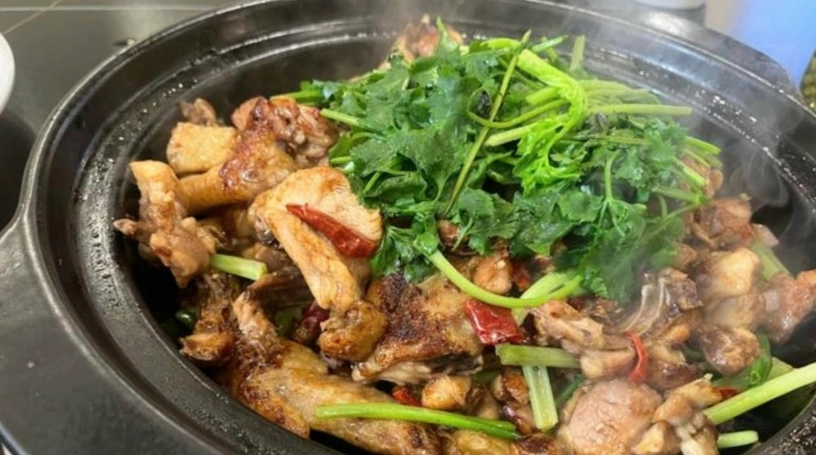
Founded in 2021, Mo's Chicken Pot represents the most typical "Shunde sample" in the restaurant ecosystem. As an individual business, its operator Mo Zanrong likely never anticipated at the outset that a pot of chicken stew, propelled by short-video algorithms, would rapidly transform from a neighborhood staple into an internet-wide check-in phenomenon. However, what followed was the inescapable fate of the dining industry: imitation and deconstruction.
The application for the "Uncle Mo" and "Chicken Pot Princess" trademarks is essentially about building a "personified" brand moat. In the 2026 dining landscape, purely flavor-based competition has hit a dead end of diminishing marginal returns. Consumers are no longer spending simply to satisfy their appetites—they are paying for a sense of identity or emotional value.
The brand connotation of "Uncle Mo" points to a fatherly, dependable artisan image steeped in years of experience, designed to counter the coldness of industrialized pre-made dishes with warmth and approachability. The emergence of "Chicken Pot Princess," meanwhile, reads as a sharp grasp of social media meme culture. This highly contrastive label precisely taps into young people's aesthetic preferences for "cute反差萌" and "self-deprecating social interaction." Looking at the classifications on Tianyancha, these trademarks extend beyond dine-in service to food products and advertising sales—a signal that Mo's Chicken Pot's ambitions are no longer confined to a few tables. Instead, it is attempting a daring leap from product to brand equity through IP licensing, retail expansion, and even franchising.
At a deeper level, this "aggressive" defensive move by Mo's Chicken Pot stems from the collective anxiety of local specialty restaurants after achieving fame. In the dining industry, trademark squatting and copycat establishments have never stopped. When one restaurant goes viral, ten similarly named competitors can spring up within a five-kilometer radius. Mo Zanrong's decision to act now is, in essence, a move to secure his commercial rights.
If flavor is the flesh of a restaurant, then trademarks and IP are its armor. Through the intellectual property strategy visible on Tianyancha, Mo's Chicken Pot is attempting to convert a local, non-standardized experience into a standardized brand asset. This approach is not uncommon in Shunde in 2026, yet it is highly representative—it signals that even a small individual business has come to realize that, in the digital social media age, if you don't establish a "no-fly zone" for your name in advance, the reputation you've painstakingly built could be carved up by others amid the algorithmic frenzy.
Behind this profit chain, beyond the operator's own commercial instincts, lies an increasingly mature intellectual property services industry. Through data monitoring, these service providers continuously remind popular establishments like Mo's Chicken Pot: once your follower count crosses a certain threshold, your name no longer belongs solely to you—it becomes a prize that capital or speculators may target at any moment.
Mo's Chicken Pot's "princess" dream is not just about harvesting traffic; it's a battle to defend the dignity of local street food. In that sizzling pot of chicken, what's churning isn't just ingredients—it's the operator's ambition for long-term brand building. This shift from "selling products" to "selling the brand" is weighty and fraught with the uncertainties of the review process, yet it is a toll that every grassroots restaurant hoping to emerge from the alleyways and go national must pay in the form of cognitive dues.