Panda Piggy Turns Jinhua Pig Farm Into Tourism Business
Jinhua's Panda Piggy has built a tourism and food business around the slow-growing Two-End Black pig, lifting its insured staff from 4 to 168 in six years.
A pig farm in Jinhua, Zhejiang province, has turned a viral "pig-view room" stunt into a diversified agricultural tourism business, with its workforce rising more than 41-fold in six years.
The operator, Zhejiang Jinhua Panda Piggy Two-End Black Pig Industry Development Co., built its model on the Jinhua Two-End Black pig, a local breed prized as the core ingredient of top-grade Jinhua ham. The company's bet is that experience and branding, not meat sales alone, can keep a slow-growing heritage breed commercially alive.
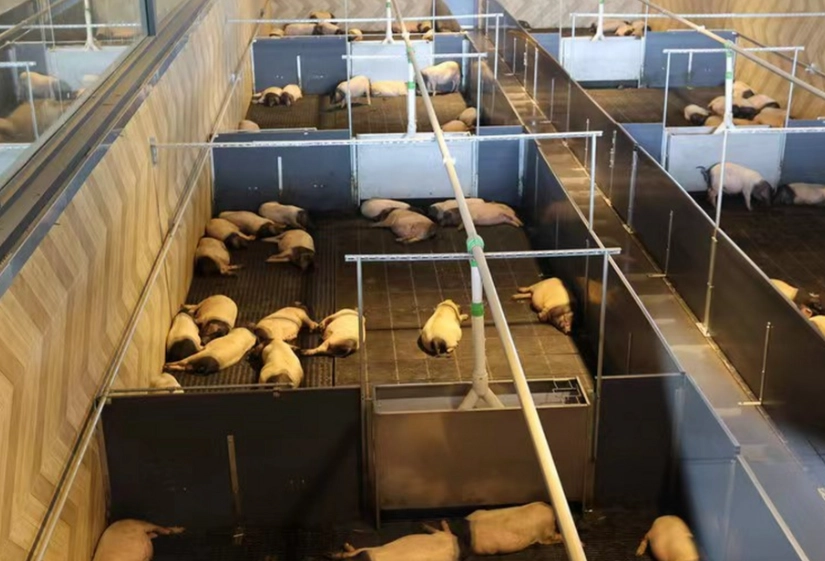
The 8,888-yuan-a-night "pig-view room" that drew national attention online is no longer for sale, the company said. It described the offer as an early annual-card package that bundled in a Two-End Black pig worth nearly 7,000 yuan, rather than a standalone room rate.
Corporate records on Tianyancha, a business database, show the company was set up in August 2010 with registered capital of 16.8 million yuan (about $2.4 million). Its legal representative is Cao Guozhong, and it is jointly controlled by Shen Jianjun and Cao Meiqun.
Workforce and capital scale up
Two figures in the Tianyancha filings stand out. The number of employees enrolled in social insurance jumped from just 4 in 2019 to 168 in 2025, an increase of more than 41 times in six years.
The company also raised its registered capital from 10 million yuan to 16.8 million yuan in 2024, a 68% increase, and set up subsidiaries in Hangzhou and at highway service areas.
The shift from a farm run by four people to a modern company with more than 100 insured staff points to a move beyond primary production into agriculture-tourism and consumer products.
A breed fighting for survival
The Jinhua Two-End Black pig, one of China's four famous pig breeds, has struggled against industrial white hogs. It takes 10 to 12 months to reach market weight, compared with 5 to 6 months for lean breeds such as Duroc and Landrace. Its feed-to-meat ratio is above 4.5, and the animal is small with a low meat yield.
Sold as ordinary supermarket pork, the breed's high feeding costs would leave farmers with losses. Its population has shrunk to near-endangered levels as imported white pigs took over the market.
Subsidies for protecting the breed's genetics were not enough to save it. The way out, the company reasoned, was to reposition the local pig as a premium product with cultural and social cachet rather than sell it by weight.
A tourism park as the lever
Shen Jianjun's team built its strategy around a tourism park that links farming, food processing and services. The pig-view room was the hook used to kick-start the Panda Piggy international ranch near opening.
The 8,888 yuan annual card centered on a fully grown Two-End Black pig, professionally slaughtered and delivered chilled to the buyer's home. Lodging and tickets were add-ons meant to make the package feel more valuable.
The contrarian offer drew heavy attention at little advertising cost, turning an old-fashioned regional specialty into a family-friendly "Panda Piggy" brand with a theme-park feel.
Once visitors reach the park in Wucheng district, revenue no longer depends on the national hog price cycle. The company earns from 5G smart-farming tours, odor-free pig sheds and educational visits; from a Two-End Black pig restaurant, freshly grilled sausages and baked goods; and from merchandise, premium ham gift boxes and advance adoption of pigs by affluent families.
Most of the 168 insured staff are no longer feed handlers but study-tour guides, tourism operators, central-kitchen chefs, retail brand staff and park maintenance workers.
Exporting the model beyond the source
The company's outbound investments show a push from its rural base to high-traffic locations. Tianyancha records list an agricultural technology entity in Hangzhou, capital of Zhejiang, and unusually, a highway service area management company.
Highway service areas, busy with long-distance drivers and families, are natural channels for converting passing traffic into specialty-food sales. By placing grilled Two-End Black pork stalls and small experience stores at transport hubs, Panda Piggy is trying to turn a single destination park into a replicable food-retail network.
Signals and a real test
The episode carries a clear signal for modern agriculture and tourism: traditional specialty farming can escape its dependence on weather and low-margin bulk sales only by breaking industry boundaries, turning production floors into experiences and commodities into premium brands.
Panda Piggy's 41-fold rise in insured staff attests to the vitality of that model. But now that the viral buzz has faded, the team faces a harder test: building Two-End Black pork products into everyday consumer goods with nationwide repeat demand, without being weighed down by geography and heavy tourism assets.