Huawei registers Xingmang trademark in play for mid-range market
Huawei has filed 'Xingmang' trademarks, fueling talk of a cut-price online sub-brand to fill the gap left by Honor and lift HarmonyOS adoption.
Huawei has applied to register "Xingmang" and "Huawei Xingmang" trademarks, corporate filings show, fuelling speculation that the company will create a sub-brand for the online value segment below its flagship phones. Huawei gave a guarded response: "Please refer to official information."
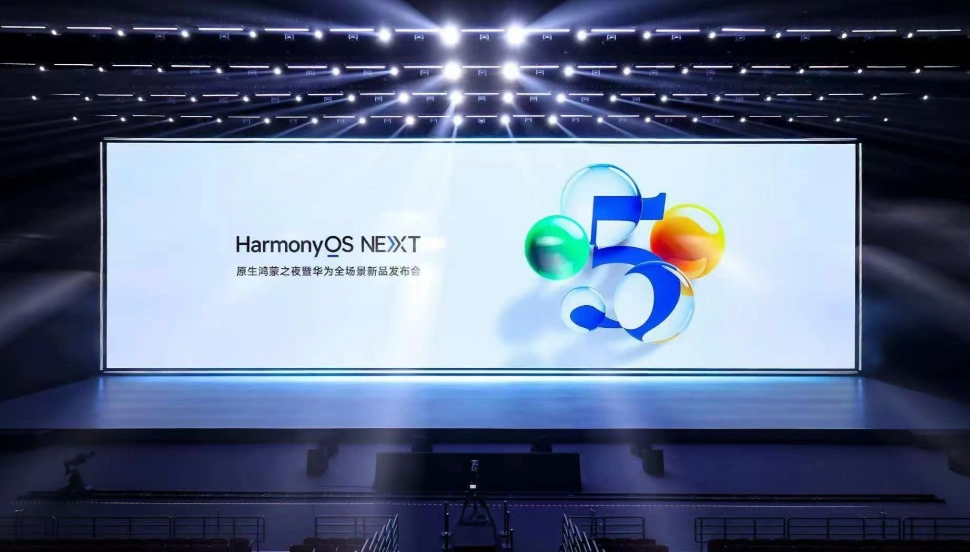
The filings, recorded by corporate records database Tianyancha, land as Huawei rolls out HarmonyOS NEXT commercially and expands Kirin chip output into wider price bands. Channel talk of a line "focused on mid-range value and filling the online volume gap" overlaps closely with the trademark classes Huawei has claimed.
Trademarks first, products later
Huawei Technologies has applied for several "Xingmang" and "Huawei Xingmang" marks, according to Tianyancha. The international classes cover advertising and sales, jewellery and watches, website services and scientific instruments. Some core classes have already been approved.
Huawei routinely stockpiles defensive trademarks before launching products, including its Classic of Mountains and Seas beast series and a separate star-and-constellation set. But the Xingmang filings line up too neatly with the channel rumours to be coincidence, the source argues.
The gap Honor left behind
The first driver is the vacuum Honor left in the mass-market, youth-oriented online segment after it was spun off.
In the golden era of Huawei's two-brand strategy, the Mate and Pura series held the high ground from 4,000 yuan to 10,000 yuan and above, in premium business and camera phones. Honor, as an independent sub-brand, used Huawei's technology halo to fight Xiaomi, OPPO and vivo online at 2,000 to 3,000 yuan with aggressive pricing and internet marketing.
Honor was separated from Huawei several years ago to survive external pressure. Huawei has kept mid- and low-end volume through the nova and Enjoy series, but neither fits the job. nova chases young fashion buyers offline, and heavy channel commissions rule out the thinnest online margins. Enjoy targets the entry-level, carrier-subsidised offline market and cannot satisfy young enthusiasts who track specifications.
In the 2,000 to 4,000 yuan band — China's largest by smartphone shipments and its most active among younger buyers — Huawei still lacks an online brand free to compete on price.
HarmonyOS needs volume
Deeper down, HarmonyOS NEXT needs active devices at a scale that premium flagships alone cannot deliver.
The system is not just a phone operating system but a separate software ecosystem that needs tens of thousands of developers to spend real money on adaptations. Mate and Pura sell strongly at high prices, but flagship shipments have a natural ceiling and cannot quickly supply tens of millions of daily users.
Every mature operating system needs a mass-market base. An online value sub-brand in the mould of early Honor could push second-tier Kirin chips, HarmonyOS and trickled-down XMAGE imaging algorithms into lower-tier cities and rural markets at more aggressive prices. That would be Huawei's fastest engine for growing the HarmonyOS NEXT installed base.
If Xingmang or a similar line takes shape, it would become the entry point that draws students and budget-conscious young professionals into Huawei's HarmonyOS hardware and software loop.
A home for mature components
Chip and component supply point the same way. As domestic advanced manufacturing and packaging yields recover, mid-tier chips — such as sub-flagship Kirin platforms with mature processes and scale cost advantages — are entering a capacity release cycle.
The premium parent brand cannot cut prices repeatedly without damaging its positioning. A separately positioned sub-brand is the natural buffer for absorbing large volumes of mature components and testing the cost limits of a flexible supply chain.
The channel problem
For Huawei, whose brand equity is expensive and whose sales depend heavily on offline stores, a new online value brand raises delicate channel questions.
Rebalancing offline distributors
The first is the interests of large offline distributors, including joint-venture partners such as Zhongyou, Potevio and Aisidi. Over the past few years, dealers have committed heavy capital and sunk costs into stores while earning rich margins on the Mate and nova series. If the new brand sells direct online at transparent, low prices, the team must work out how to avoid pulling customers from nova and how to prevent dealers from resisting over cross-region sales and price inversion.
Defining the product
The second is product definition. In the 1,799 to 3,500 yuan range, Redmi, OnePlus and iQOO already push high-refresh screens, 100W-plus fast charging, large batteries and aggressive performance tuning to their limits. A cost-constrained Huawei sub-brand would keep HarmonyOS and the company's reputation for connectivity, but would have to drop satellite communications and high-end periscope telephoto cameras. Whether that trade-off wins over demanding online spec-watchers is a severe test of the product definition.
After the trademark
The Xingmang filings and the range of classes they cover show a technology giant preparing in advance for the deep water of an ecosystem war. Huawei's "please refer to official information" line leaves the question open. But whether Xingmang arrives as a standalone sub-brand or as a mid-range product line that consolidates its online position, Huawei's determination to retake the mainstream market is clear. As HarmonyOS NEXT moves from a high-end beachhead toward full-scale adoption, the company still has to answer how a sharp value proposition will cut through the crowded mid-range segment.