$1B Suez Expansion and Patent Foundation: Linke Technology Leans on Carbon Black-Silica Internal Loop to Push Into Tire Export Heartland
Linke Technology is spending $1 billion to build an integrated carbon black-silica base in Egypt, positioning itself at the Suez Canal with patented circular technology to support tire exports.
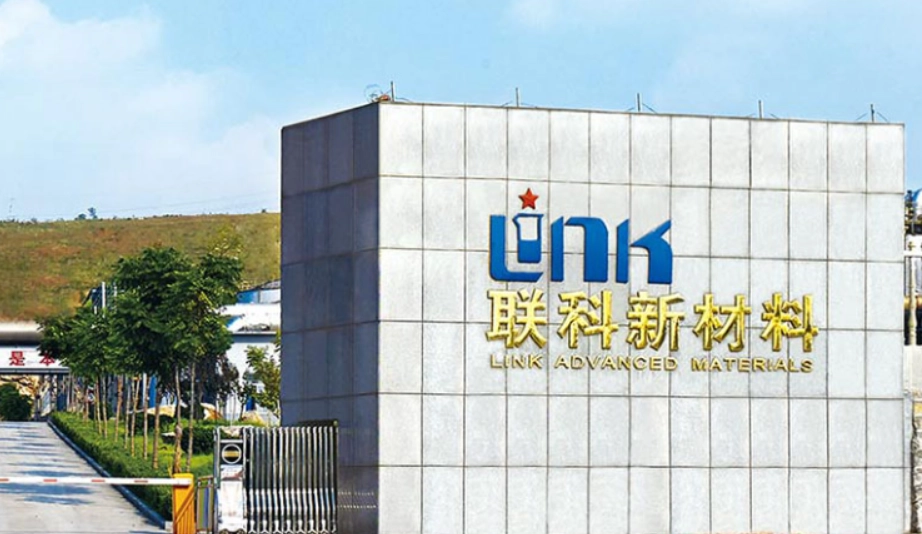
At a time when domestic rubber additives and inorganic silicon materials are mired in involutionary overcapacity, and the EU carbon tariff and trade barriers loom large, Lianke Technology, deeply rooted in the heartland of chemical production in central Shandong, dropped a hefty overseas investment of up to 1 billion yuan in early autumn. Planning an integrated base with an annual output of 100,000 tons of silica (white carbon black) and 100,000 tons of carbon black in the Suez Canal Economic Zone is by no means a routine move to set up an overseas contract manufacturing plant. Rather, it is a far-sighted battle by this hidden champion in a niche track, amid the great migration of downstream Chinese tire companies going global, to break free from its subordinate position as a mere upstream raw material supplier and seize the lead in global supporting operations by leveraging a geopolitical hub and core processes.
Patents as the Foundation: Extracting Sodium Sulfate from Wastewater Evaporated by Waste Heat from Silica Drying
Placing this billion-yuan overseas investment under the microscope of underlying technology, its core competitiveness was already foreshadowed in the patent landscape disclosed by Tianyancha. According to Tianyancha App, the invention patent applied for by Shandong Lianke Technology Co., Ltd., "A System for Extracting Sodium Sulfate from Wastewater Evaporated by Waste Heat from Silica Drying," was officially authorized in July this year. On the surface, this patent addresses environmental wastewater treatment and byproduct recovery, but placed within the chemical process foundation, it is precisely the core technical pillar that enables the "silica-carbon black circular economy integration" to push energy consumption and overall costs to the limit.
Carbon Black-Silica Circular Economy Integration: Opening Up Self-Circulation of Heat and Materials
In traditional chemical production, carbon black and precipitated silica are often in separate production systems. The carbon black reaction furnace releases vast amounts of surplus high-temperature tail gas and waste heat steam during high-temperature cracking; while the spray drying stage of precipitated silica is precisely a major energy consumer that devours enormous amounts of heat, and its reaction wastewater is also rich in large quantities of high-salt sodium sulfate.
If the two production lines are physically separated, carbon black enterprises must pay a high price for tail gas desulfurization and denitrification, while silica enterprises must bear the heavy burden of purchasing thermal coal or natural gas.
The patent system documented by Lianke Technology on Tianyancha is precisely the key to opening up the self-circulation of heat and materials.
Using the high-temperature steam and tail gas byproduced from carbon black as the heat source for silica spray drying, then channeling the waste heat generated during the drying process into a multiple-effect evaporation unit for a second time, low-cost evaporation produces extremely high-purity sodium sulfate crystals and achieves full reuse of process water. Once this closed loop of heat, power, and material internal circulation is replicated at the Egyptian base, it will directly build an extremely deep moat of management and energy consumption overseas—not only cutting unit production costs to a level difficult for peers to match, but also directly meeting the increasingly stringent carbon footprint review standards for green chemicals in Middle Eastern and European markets.
A Major Reshuffle in Downstream Tire Going Global: The Deep Driver of Supply Chain Restructuring
The deep driver behind this cross-ocean deployment of billion-yuan capital is the major reshuffle of the global supply chain by downstream tire giants.
China is the absolute overlord of global tire manufacturing, but in recent years, anti-dumping and countervailing tariffs imposed by Europe and the United States on Chinese tires have been escalating layer by layer, forcing leading domestic tire manufacturers such as Sailun, Linglong, and Sentury to undertake heavy-asset relocations to Southeast Asia, the Middle East, and even North Africa. Carbon black and highly dispersible silica (the core wear-resistant and rolling-resistance-reducing materials for green tires) occupy an extremely critical share of tire raw material costs.
If core fillers still rely on long-distance sea freight exports from China, the turbulent Red Sea situation, high container freight rates, and long delivery cycles will severely erode the supply chain resilience of overseas tire factories.
Positioning in the Suez Canal Economic Zone: Geopolitical Hub and Zero-Tariff Advantages
The Sokhna Industrial Zone in the Suez Canal Economic Zone is precisely the throat and fortress commanding this strategic shipping route.
By establishing a presence here, it reaches westward through the Mediterranean directly into the heart of Europe, and eastward directly faces emerging markets in the Middle East and Africa. More critically, Egypt has a free trade agreement with the EU, enjoys highly advantageous zero-tariff or preferential tariff treatment, and can completely avoid trade remedy investigations targeting Chinese domestic chemical products. At the same time, Egypt possesses extremely cheap natural gas and petroleum refining byproduct resources, which can provide a steady guarantee of low-cost feedstock oil for carbon black production.
By forming dual 100,000-ton production capacity here, Lianke Technology is in essence firmly binding itself to the overseas supporting lines of Chinese-funded tire companies and even first-tier international tire brands, fundamentally dissolving tariff barriers and geopolitical transportation risks.
Going Global Signal: Upgrading from Product Trade to Integrated Operations
This billion-yuan overseas move in late autumn sends a clear signal to the entire fine chemicals sector: the old model of simply fighting price wars domestically and exporting through low-price volume has become unworkable. When upstream material suppliers begin to carry exclusive patents and a circular economy foundation along the overseas footprints of the industrial chain to the other side of the ocean, global competition has already upgraded from mere product trade to integrated operations of "core processes + resource endowments + geopolitical hub."
Lianke Technology has built its cost foundation with patents, but how to smoothly transform a circular economy factory on paper into realized profits that meet production and quality targets under the Middle Eastern and North African environment of severe exchange rate fluctuations and vastly different labor policies is the next hard account this billion-yuan overseas investment must deliver.