Registered Capital Surges 400% as Tech Giant Alliance Forms: The Channel Positioning Battle Behind iFlytek's Investment in Qingtian Future
iFlytek invests in Qingtian Future, whose registered capital surges 400%, positioning itself in robot channel distribution and industry-education integration monetization.
As humanoid robot OEMs find themselves mired in exorbitant hardware R&D costs, while end-market deployment broadly confronts the painful monetization gap of "you can look but you can't sell," the undercurrent of capital in China's embodied intelligence sector is quietly shifting direction.
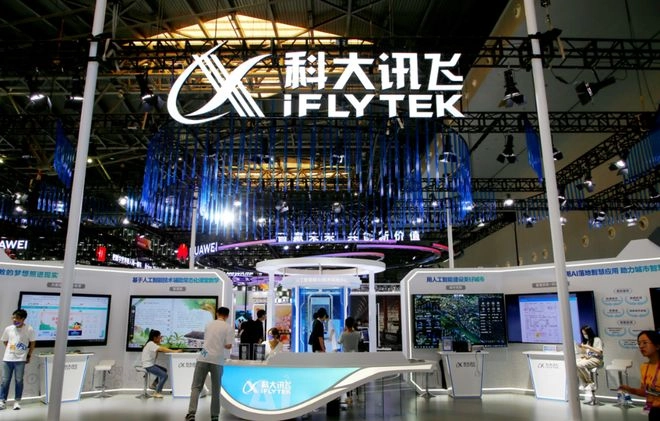
When iFLYTEK's wholly-owned subsidiary Anhui Xunfei Yunchuang joined hands with industrial capital including Zhongfu Future and Qingtian Zu to collectively enter the shareholder register of Shanghai Qingtian Future Robot Technology Co., Ltd., and simultaneously catapulted the startup's registered capital from a mere 2 million yuan by 400% to 10 million yuan, this seemingly modest small-ticket equity investment, under the microscope of industrial logic, reveals far from yet another blind concept-chasing co-investment—it is a scenario distribution alliance woven together by an AI large-model giant, a robot leasing platform, and education-industry-education capital.
The Business Foundation of a Channel-Oriented Newcomer
Tracing the industrial and commercial registration trail to examine the rights-and-responsibilities foundation of this target entity, its clear business orientation is fully visible in the Tianyancha archives. According to the Tianyancha App, Shanghai Qingtian Future Robot Technology Co., Ltd. was established in July 2023, with Fu Jun as its legal representative. Its approved business scope is almost entirely built on sales and services: intelligent robot sales, industrial robot sales, service consumer robot sales, intelligent unmanned aerial vehicle sales, and artificial intelligence hardware sales.
In this clean license, there is no dazzling array of underlying reducer manufacturing, nor any grand self-developed brain-inspired chips. Its core foothold since inception has been as a service provider focused on robot scenario deployment, secondary development integration, and channel distribution and leasing.
It is precisely such a channel-oriented newcomer—not a full-machine manufacturer—that has drawn iFLYTEK and Qingtian Zu to place bets on the same stage. The commercial driving force behind this is extremely realistic: the contest in embodied intelligence has already moved from the laboratory showmanship phase into the deep waters of channels desperately craving commercialization and cash generation.
iFLYTEK's Calculus: Trading Equity for a Software Deployment Channel
For iFLYTEK, which commands the Spark large model, its voice interaction and multimodal brain have demonstrated strong monetization capabilities in B-end education, healthcare, and office scenarios. But in the embodied intelligence domain, iFLYTEK has no intention of building expensive metal skeletons and motor actuators from scratch. Hardware manufacturing is a quagmire of heavy assets and long cycles—one misstep can devour massive operating cash flow. What iFLYTEK desires most is to rapidly inject its multimodal large model and embodied brain computing power as a software soul into various existing hardware forms.
However, OEMs, due to their respective allegiances and self-built ecosystems, often harbor reservations about introducing third-party large models. By taking a stake in an intermediary like Qingtian Future—which possesses both robot secondary development capabilities and comprehensive sales channels—iFLYTEK can, at minimal equity cost, build a plug-and-play translation hub between software and hardware: Qingtian Future completes the localized integration and adaptation of third-party robotic dogs and humanoid robots with iFLYTEK's large model system, then pushes them to end buyers.
Leasing and Education: Two Monetization Pathways Surface
What is even more intriguing are the monetization pathways pointed to by the backgrounds of the other shareholders who joined the investment on the same stage.
Qingtian Zu, as a domestic platform focused on robot leasing and commercial exhibition operations, directly addresses the biggest obstacle to current robot sales—"enterprises can't afford them or don't dare to buy them." With embodied hardware costing hundreds of thousands of yuan per unit, and before it has been proven capable of fully replacing mature production line workers, industrial clients are almost incapable of rashly making large-volume purchases. The leasing model and pay-per-use approach have become the top choice for cultural tourism venues, brand launch events, and commercial exhibition scenarios to trial robots, forming a perfect business convection with Qingtian Future's consumer and service robot sales.
And the entry of Shanghai Zhongfu Future Education Technology Group directly lays out another high-margin card: science and innovation research programs and industry-education integration at universities and vocational colleges.
Against the backdrop of the nation vigorously advocating new quality productive forces and embodied intelligence discipline construction, procurement demand from various vocational colleges and university laboratories for robot teaching and training platforms and software-hardware development experiment kits is exploding. Institutional procurement not only has ample budgets but also possesses an extremely high tolerance for cutting-edge technology concepts. By bringing in humanoid robots from major manufacturers and layering on iFLYTEK's AI education curriculum system and secondary development kits, Qingtian Future can quickly package them into industry-education integration training solutions priced at hundreds of thousands of yuan per set.
This is a mature shortcut that can bypass industrial clients' stringent yield-rate assessments and rapidly harvest cash flow.
Signals and Tests
This tens-of-millions-level capital increase in early autumn sends a clear signal to the entire robot and AI software-hardware ecosystem: the era of simply making robots do backflips at product launches has passed—whoever can sell hardware, lease it out, and turn it into teaching aids for monetization is the one qualified to keep breathing. The entry of iFLYTEK and other capital parties is not a bet on the life or death of a new hardware manufacturer, but rather a search for the most down-to-earth downstream distribution pipeline for its own large model technology.
But how much industrial depth this model—deeply dependent on exhibition leasing and vocational education procurement—can actually provide for technology deployment is the next hard account that Qingtian Future must prove to its shareholders after the registered capital expansion.