GAC Energy Ramps Up 50 Million Yuan Push into Beijing-Tianjin-Hebei Charging Market
GAC Energy invests 50 million yuan to establish its Beijing company, building an asset-heavy charging network as it pushes for a nationwide breakthrough for its premium brand.
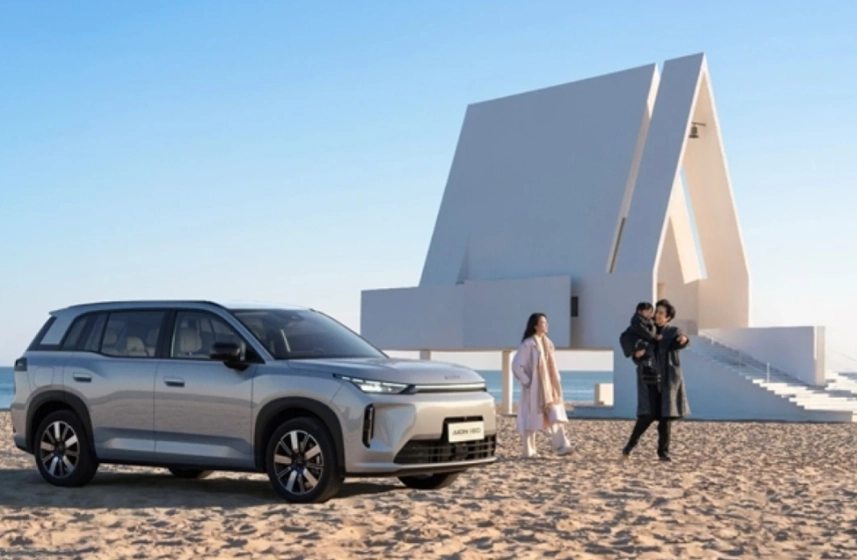
When GAC Energy Technology Co., Ltd. spent 50 million yuan to quietly put up the sign for GAC Energy Technology (Beijing) Co., Ltd. in the heart of the capital, this wholly owned capital injection at the 50-million-yuan level pierced through the conservative defensive posture of traditional southern automakers in northern energy-replenishment infrastructure. GAC Aion and Hyptec, which had built extremely high battery-swapping and ultra-fast-charging moats in their South China home base, were now marching north. This was by no means a routine move to set up a North China regional after-sales operation and maintenance office. Rather, it was a heavy-asset foundation laid by an OEM in the deep-water zone where nationwide competition in the existing new energy vehicle stock has peaked and high-end pure electric brands are struggling to break through into the cold northern and political-economic heartland, all in order to tear off the label of “king of regional ride-hailing.”
Following the traces left in business registration to penetrate the operating skeleton of this new entity, its role as a vanguard of heavy-asset operations is clearly preserved in Tianyancha records. Tianyancha business registration data shows that the legal representative of GAC Energy Technology (Beijing) Co., Ltd. is Liu Zhihui, its registered capital reaches 50 million yuan, and it is wholly controlled by GAC Energy Technology Co., Ltd.
Among the approved business scope, the most core pillar is not lightweight technical consulting or software development, but a complete heavy-asset construction and operation chain including electric vehicle charging infrastructure operation, centralized fast charging stations, motor vehicle charging sales, and charging control equipment leasing.
The capital foundation of a 50-million-yuan paid-in scale directly makes clear that from its first day of establishment, this entity bears the hardcore mission of self-building and self-operating sites and fronting funds to deploy high-voltage fast-charging piles. In traditional automobile business models, automakers often prefer to connect to third-party aggregation platforms such as TELD and Star Charge, using extremely light asset expenditure to handle users’ daily energy-replenishment demands. However, this free-riding asset-light strategy has completely failed in today’s high-end pure electric battlefield, where the mindshare of extreme-speed energy replenishment is the key contest.
For GAC, spending heavily to build its own energy-replenishment network in the north has two extremely realistic and urgent strategic reasons.
The first is the nationwide breakthrough sprint of a high-end brand. GAC Aion previously relied on an extremely mature supply chain and high cost-effectiveness to occupy half of the ride-hailing operating market in South China and even nationwide. But this deeply rooted mass-operations mindshare directly backfired on Hyptec, the high-end pure electric brand into which it had poured great effort. High-end private car owners have extremely demanding requirements for the energy-replenishment experience. The lack of an exclusive, exclusive-access, queue-free high-voltage ultra-fast-charging network is the biggest pain point preventing high-end models such as Hyptec from opening up the situation among Beijing-represented core high-net-worth consumer circles in the north.
To establish the dignity of a high-end brand benchmarked against Tesla Superchargers and NIO battery swapping in regions outside its home base, it must use real money to forcibly plant high-power fast-charging stations bearing its own brand logo in Beijing’s key business districts and transportation hubs.
The second is to seize scarce slots in the core power grid capacity of mega-cities. As one of the Chinese cities with the highest new energy penetration rate, Beijing’s core urban areas have long seen land resources and high-voltage transformer distribution capacity approach the load red line. For a centralized charging station with dozens of ultra-fast-charging parking spaces and support for high-power ultra-fast charging, the difficulty of obtaining approval for installation is no less than building a new traditional gas station.
If it continued to rely on remote operation by a parent company in another region, it would simply be unable to cope with Beijing’s extremely strict and complex approval processes for planning, fire safety, and power grid connection. Establishing an independent legal entity with registered capital of 50 million yuan is essentially about obtaining an entry ticket to independently initiate projects locally in Beijing and directly connect with State Grid Beijing Electric Power Company and local parks for power grid expansion quotas.
However, once the magnificent blueprint of a self-built energy-replenishment network is unfolded, heavy assets for energy replenishment in the cold northern regions have always been an extremely cold depreciation machine.
Compared with the South China market, where the climate is mild year-round and new energy vehicle battery degradation is extremely low, Beijing’s low winter and spring temperatures impose a nearly cruel physical test on the range shrinkage and charging power attenuation of pure electric vehicles. In extremely cold weather, not only is the fast-charging acceptance capacity of power batteries greatly undermined, but the failure rate and maintenance costs of liquid-cooling circulation modules and cable materials inside charging piles also rise by multiples.
More severe still, centralized sites in Beijing face astronomical ground rents and the game of peak-valley time-of-use electricity pricing. If the northern vehicle parc of GAC’s own brands cannot rapidly form scaled volume, then with only a few dozen lonely self-built sites, their meager share of charging service fees can easily be completely lost in the face of huge equipment depreciation and the black hole of site rents.
This 50-million-yuan move into Beijing in early autumn sends the clearest signal to the entire new energy vehicle energy-replenishment track: the light-cavalry playbook of simply selling cars without building charging piles has long reached its end. When southern automaker giants begin to cross geographical boundaries and use real money in heavy assets to directly confront the hard infrastructure battle in the northern core battlefield, the competitive threshold of the entire track has been pushed up to a comprehensive war of attrition across the full life-cycle energy replenishment system.