Zong Fuli Bets on 'Shu Pao Shui' to Break Through, Hangsheng's Two Sides: Slimming Down While Moving Forward
Zong Fuli launches functional carbonated drink 'Guoran Bobo' to break through, while Hangsheng Group simultaneously undergoes organizational slimming to cope with performance pressure and advance modernization reforms.
Recently, the names Hongsheng Group and Zong Fuli have frequently appeared in the public eye. A series of media reports—including executive-level turmoil, outsourcing of core business operations, and mounting sales pressure—have inevitably raised questions about where Zong Fuli is headed next.
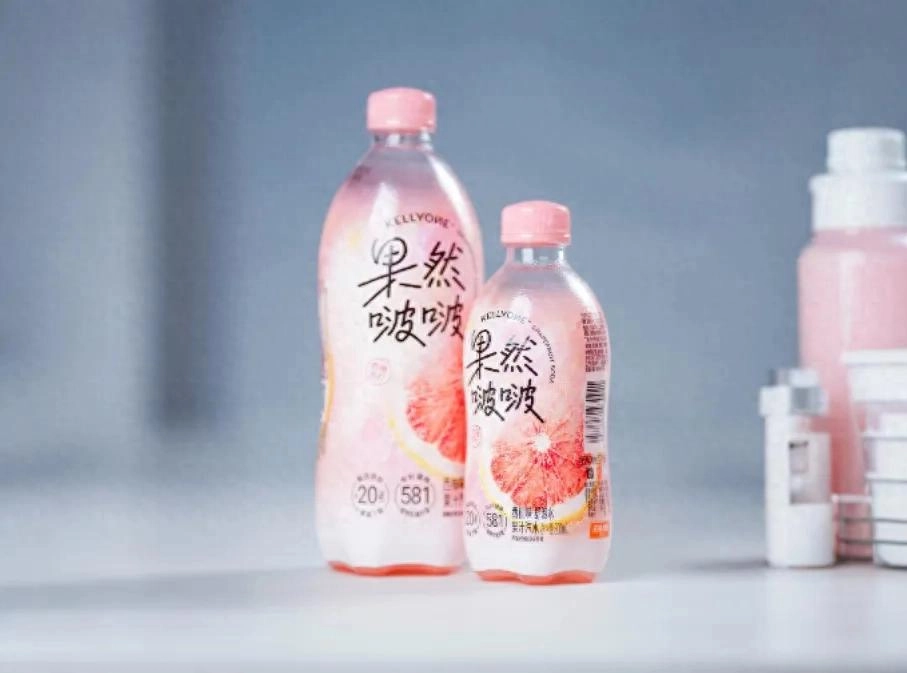
As external voices continue to swirl, KELLYONE, a brand under Hongsheng Group, has quietly launched a new mixed-fruit sparkling beverage, "Guoran Bobo," after years of silence. The product targets "functional + emotional" consumption, is priced across the mainstream price range, and has been steadily rolling out across channels such as Dingdong Maicai, Xiao Xiang Supermarket, and convenience stores.
On one front, the organization is undergoing painful restructuring; on the other, new products are being launched at a rapid pace. The two sides of Hongsheng's current reality reflect the inevitable growing pains of modernizing a corporation.
Guoran Bobo: A Pioneer in Functional Sparkling Beverages
"Guoran Bobo" represents KELLYONE's differentiated attempt in the highly competitive juice-soda segment.
It is a mixed-fruit sparkling beverage designed to capture consumer mindshare through "function + emotion." Its ingredients include proprietary strain No. 581 to support gut health, alongside a blend of GABA and theanine to promote relaxation. Compared to traditional carbonated drinks that emphasize great taste or zero sugar, this product attempts to address common issues among high-tier city consumers—such as anxiety and digestive discomfort—by incorporating calming ingredients.
From a product strategy perspective, "Guoran Bobo" clearly diverges from Wahaha's long-standing focus on lower-tier markets. Since its founding in 2016, KELLYONE has targeted the new-generation consumer base in first- and second-tier cities, with product lines such as "Shengqi Bobo" sparkling water and "Yi Cha" unsweetened pure tea all revolving around health-oriented beverages. This new launch continues that brand positioning, entering the East China market through a lightweight channel model combining "direct sales + e-commerce + instant retail," rather than replicating Wahaha's traditional deep distribution network.
In the carbonated beverage space, "Guoran Bobo" stands as a pioneer in functional sparkling drinks. The global market for mood-relaxing beverages is currently on an expanding trajectory, with plant-based and health drinks becoming key battlegrounds. According to Coca-Cola's latest financial report, the carbonated beverage market still holds significant value and growth momentum. Domestically, the emotional consumption market has reached 2.72 trillion yuan, with ingredients like GABA and theanine accelerating their transition from health supplements to everyday beverages. Yet, walking through offline shelves in China, one can barely find carbonated drinks with similar calming ingredients.
It targets a genuine pain point: young people in high-tier cities who are anxious, sleep-deprived, and have sensitive stomachs. This demographic doesn't need to be told to "drink less sugary beverages"—they want products that deliver a tangible physical effect after consumption. Of course, functional beverages have always faced the challenge of delivering noticeable results: GABA requires continuous intake to be effective, and probiotics need long-term colonization. How much can a single soda solve? Consumers may not be convinced, but at the very least, we can see that Zong Fuli's product strategy aims to carve out a niche in a homogenized market and define a brand-new category. This attempt doesn't appear to be a misjudgment, and her ambition as an entrepreneur is clearly evident.
A "Leaner" Hongsheng: The Logic of Cost Reduction and Efficiency
Around the same time as the launch of "Guoran Bobo," Hongsheng Group underwent a series of internal organizational adjustments. The original heads of the four core business divisions—administration, sales, legal affairs, and production—were all removed, the marketing center director and general manager of the sales company were dismissed, and non-production functions across the four divisions were placed under outsourcing plans. According to reports, the subsequent layoff ratio could reach 30%.
The most direct reason for these adjustments is performance pressure. In 2025, Wahaha's revenue growth was approximately 500 million yuan, maintaining a scale of around 70 billion yuan. However, compared to DONGPRO Beverage's 31.8% growth and Nongfu Spring's 22.51% growth, this increase is not particularly notable. As Wahaha's primary production and sales entity, Hongsheng Group carries considerable operational pressure.
From a management perspective, Zong Fuli's decision to place the marketing center directly under the president's oversight and outsource non-production operations is essentially a routine move by a company responding to market pressure. For any business facing structural adjustments, this combination of "centralized management + business streamlining" is hardly surprising—it's just been delivered with unusual intensity, and the market indeed leaves little time for recovery. What makes Hongsheng unique is that it is simultaneously transitioning from being a "Wahaha contract manufacturer" to a "self-owned brand operator," which adds greater complexity to organizational restructuring.
It should be noted that layoffs and outsourcing represent adjustments in the existing business domain, while new product development and brand building represent investment in incremental business. A company streamlining inefficient operations while launching new business lines is a common strategic choice when facing difficulties—the two are not necessarily contradictory.
Technology and Channels: The Unnoticed Foundational Assets
While personnel changes have drawn heavy media attention, Hongsheng Group's official channels have continued steadily releasing content about daily business operations. In recent years, the company has attracted intense scrutiny due to the personal trajectory of its leader, Zong Fuli, but its underlying technological capabilities have largely been overlooked.
According to official information, Hongsheng Group currently holds approximately 100 patents, with two core subsidiaries recognized as national high-tech enterprises. The company operates a CNAS-accredited laboratory and a national-local joint laboratory. On the product R&D front, Hongsheng has established its own proprietary strain bank, enriching more than 4,000 indigenous microbial strains from traditional fermented foods across multiple regions of China. This infrastructure serves as the research foundation for strain No. 581 in "Guoran Bobo" and represents the "hardcore" differentiator setting this product apart from most sodas on the market.
Upstream in the supply chain, Hongsheng Group's subsidiary Songyu Printing & Packaging Co., Ltd. has recently secured three industry awards: "China's Top 10 Innovative Printing Enterprises," "China's Top 50 Influential Label Printing Brands," and "National Top 5 for Food & Beverage Labels." The award-winning solutions include two breakthroughs in green and low-carbon technology: first, the industry's first scalable progressive replacement solution transitioning from solvent-based inks to green water-based inks, overcoming the long-standing industry challenge of water-based inks failing to print stably on films, while reducing volatile organic compound emissions and ink usage. Second, using internationally leading treatment equipment, the company converts organic solvents from printing exhaust gases into high-purity, industrial-grade products, achieving resource recovery and deep emission reduction.
It is understood that Songyu has accumulated more than 30 national patents and has participated in the formulation of over 10 national, industry, and group standards. The company has also won honors at the 9th Packaging Printing & Label Works Competition, the "Sun Cup" Asia Label Awards, and the China Print Awards. These green initiatives across the entire value chain save the company tens of millions of yuan annually.
On the channel front, Hongsheng is not solely focused on "retrenchment." In a recently announced nationwide cooler placement competition, markets added tens of thousands of new coolers, with regions such as Zhejiang-Shanghai, Southern Jiangsu, Northern Jiangsu, Sichuan, and Guangxi leading in placement volume. In the face of intense competition over terminal coolers, frontline sales teams have expanded presence by "creating space" through layout optimization and customized adaptations. The cooler placements have delivered direct returns for distributors and frontline sales staff, with a notable uptick in sales of water and tea products at retail points. Parallel incentive mechanisms are also running: a previous terminal inventory clearance competition awarded over one million yuan in prizes, while monthly maintenance rewards, quarterly outstanding sales awards, and annual bonuses of up to 10,000 yuan continue to be paid out, with top terminal representatives now earning over 300,000 yuan annually. Additionally, AI and digital tools are continuously empowering channel and terminal operations.
Zong Fuli's Next Steps
Setting aside the emotional labels of public discourse, Hongsheng Group under Zong Fuli's leadership has demonstrated tangible actions on multiple fronts: launching new KELLYONE products, continuously investing in the strain bank and smart manufacturing on the technology front, aggressively restructuring the organization and cost structure in internal management, and steadily advancing terminal expansion and digitalization in channels. These moves may seem dramatic due to Zong Fuli's inherent media appeal, but from a business logic standpoint, they amount to a business owner making choices within limited resources while facing strategic transformation and operational pressure.
Hongsheng Group recently registered new trademarks such as "Yuejian Wenrou" (Moonlit Gentleness) and "Ban Jian Shiguang" (Half-Slice Moments). This indicates that KELLYONE's new product roadmap is not a one-off gamble but part of a long-term brand portfolio. Looking at "Guoran Bobo," the product's functional positioning, formula design, and supply chain support all follow a clear logic—it could well be a new pathway that Zong Fuli's team is exploring in response to current market challenges.
Of course, whether these actions translate into market results remains an open question. Whether "Guoran Bobo" will be embraced by consumers, and whether operational efficiency genuinely improves after the organizational shakeup, both require time to verify. But based on available information, Zong Fuli is indeed driving substantive change at the company, not merely paying lip service or surface-level gestures.
For a privately held company in transition, the simultaneous emergence of new products, new channels, new management models, and personnel changes is entirely normal. Hongsheng's current state is neither as crisis-ridden as external narratives suggest, nor has it reached a point that could be called successful. It more closely resembles most enterprises undergoing transformation—experimenting, adjusting, and trying again amid uncertainty.