A 700-Fold Capital Bet: The Rocket Gamble Behind Zhuque-3's First-Stage Recovery and the Space Capacity Breakthrough
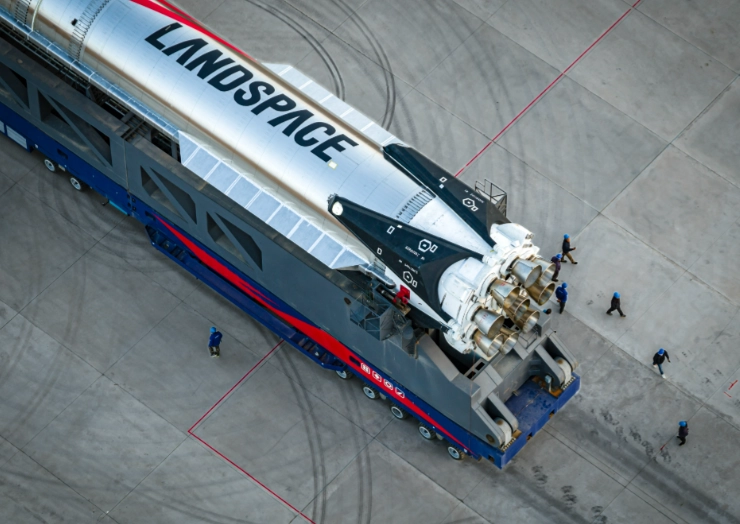
Landspace's successful first-stage recovery of the Zhuque-3 marks a breakthrough in low-cost launches, intensifying the race for space capacity.
When LandSpace became the first private aerospace company in China to successfully recover the first stage of a launch vehicle, the immediate reaction in public discourse was often to celebrate the birth of a Chinese version of SpaceX. However, stopping at national pride over a single technological breakthrough would mean completely overlooking the most brutal commercial and geopolitical contest behind this decade-long space adventure: the pursuit of reusable rocket technology is not about proving scientific strength in the spotlight, but about carving out a low-cost space logistics lifeline, driven jointly by private capital and national programs, on the eve of the closing window for global low-orbit satellite constellation launches.
In the era of low-orbit satellites, where tens of thousands are racing to reach space, orbital slots and frequency allocations follow the cold principle of first come, first served. Whether it is the Qianfan constellation or the national low-orbit internet program, the deployment of thousands of satellites demands near-extreme requirements for launch cost and frequency from rocket capacity. The previous model of expendable rockets, with launch costs of tens of thousands of dollars per kilogram of payload, turned large-scale commercial deployment into a bottomless pit devouring fiscal budgets and capital.
Only those who can reliably recover and reignite the first stage of a rocket can truly turn space launch into a high-throughput, low-marginal-cost heavy industrial logistics business.
A Decade-Long Capital Marathon: From 500,000 to 360 Million
Looking past the metal structure over ten stories tall to examine the underlying foundation of this leading private rocket company, its decade-long capital marathon reveals a resolute push through heavy-asset barriers. Business registration change records from Tianyancha show that the registered capital of LandSpace Space Technology Co., Ltd. surged from an initial 500,000 yuan in 2016 to 360 million yuan today, an increase of over seven hundred times.
In the social security data compiled by Tianyancha, the number of insured employees grew from just 31 in 2016 to 480 in 2025. The equity structure, jointly held by Beijing Future Aerospace Technology, Zhang Changwu himself, and core employee partnership firms, firmly locks in control of the technical team.
The Hard Industrial Threshold: The Obsession with Liquid Oxygen Methane
This hundreds-fold surge in capital and dozens-fold growth in the R&D and manufacturing workforce reflects the extremely hard industrial threshold of commercial aerospace. Rockets are never a light-asset industry that can reach space by writing code or drawing blueprints; it requires building in-house engine cold and hot test stands, independently constructing large-scale stainless steel welding and assembly workshops, and enduring repeated furnace failures and trial-and-error in the depths of the Gobi Desert. The core logic behind LandSpace's stubborn commitment to the liquid oxygen methane propulsion route, despite immense controversy, is that liquid oxygen methane combustion leaves minimal carbon buildup, the propellant is cheap and readily available, and it is currently the globally recognized best solution for low-cost reusable propulsion.
From early crude experiments to the industrial system now built by nearly five hundred core engineers, this massive capital investment finally completed the precarious leap from an R&D black hole to a closed-loop launch capacity with the vertical landing of the Zhuque-3.
Recovery Success: An Entry Ticket or an Elimination Round?
The success of first-stage recovery marks the moment domestic commercial aerospace has moved directly from the PPT validation stage of storytelling into the trench warfare of calculating launch costs per kilogram. Launch orders previously monopolized by major corporations and national programs will rapidly shift toward private launch capacity, driven by the cliff-like price reductions enabled by reusable rockets.
But this is merely an entry ticket to a brutal elimination round. Successful recovery is not the same as commercial success. Whether the rocket can undergo rapid inspection and reignition after extreme high temperatures and violent vibration, and whether the full lifecycle of a single booster can amortize the hundreds of millions in R&D costs, remains a Sword of Damocles hanging over every private aerospace company. What the Zhuque-3 pierced as it tore across the sky is the absolute hegemony of overseas giants in low-cost launch, but in the broader battlefield of deep-space commercialization, a war of attrition over satellite launch frequency and per-ton-kilometer costs is just beginning.