Zhongji Innolight's first-half revenue of 41.7 billion yuan exceeded all of last year, as it launched an 8 billion yuan buyback to lock in core talent and guard against cycle risks.
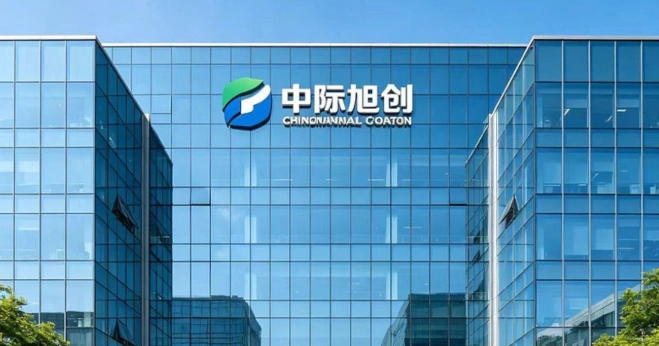
As the AI computing power arms race pushes global computing infrastructure to an unprecedented climax, Zhongji Innolight, a ChiNext heavyweight and the global leader in optical module shipments, has unveiled a buyback plan that has sent shockwaves through the entire A-share market: it intends to use its own funds or self-raised funds of RMB 4 billion to RMB 8 billion for share buybacks, with the upper limit on the buyback price aggressively raised to RMB 1,200 per share, and all shares to be used for equity incentives or employee stock ownership plans.
Echoing this sky-high buyback is its explosive financial underpinning: RMB 41.778 billion in revenue raked in over half a year, directly surpassing the entirety of last year. At a time when the computing power boom has pushed the industrial chain into a frenzy, Zhongji Innolight has chosen to pour its abundant inflowing cash heavily into equity buybacks and lock in its core team, rather than continuing unrestrained, blind large-scale capacity expansion. What this tears open is the deep-seated sobriety and calculation of this trillion-yuan hardware engine at its peak regarding technological generational shifts and cyclical fluctuations.
The optical module choke point under the computing power arms race
Over the past year or more, the capital expenditures of global tech giants around large-model computing infrastructure have exhibited an almost runaway expansion. The iterative evolution of Nvidia architectures and the self-developed ASIC chips of major cloud vendors has directly pushed data throughput demands within data centers to physical limits. As an indispensable optoelectronic conversion choke point between computing clusters, optical modules have seen their technical specifications surge rapidly in an extremely short time from 400G and 800G toward 1.6T and even higher-order silicon photonics and CPO architectures.
As the number one player that has long been deeply embedded in the supply chains of core North American cloud giants, Zhongji Innolight has eaten the fattest slice of cake in this round of structural dividends from global AI hardware.
A clear and concentrated governance foundation
Looking through the governance foundation of this optical communications leader, its clear and concentrated control structure is displayed with extraordinary depth in the underlying business registration records. Tianyancha business registration data shows that Zhongji Innolight Co., Ltd. was established in June 2005, with registered capital of approximately RMB 1.111 billion, legal representative Liu Sheng, and registered address in Longkou City, Shandong Province. The equity map penetrated by Tianyancha shows that Shandong Zhongji Investment Holding Co., Ltd. and Zehui Industrial (Hong Kong) Co., Ltd. firmly rank at the top with shareholding ratios of 63.82% and 26.69% respectively, with the two together locking in more than 90% of the core shares, providing an extremely solid control foundation for the listed company's management to carry out bold capital and strategic moves.
A gushing cash-generating machine
It is precisely by relying on this strong control and industrial positioning that the company's cash-generating machine has shown a gushing trend in the first half of this year.
Financial data disclosed by Tianyancha shows that in the first half of 2026, Zhongji Innolight's operating revenue reached RMB 41.778 billion, not only nearly tripling from RMB 14.789 billion in the same period last year, but also directly surpassing its full-year revenue total of RMB 38.240 billion in 2025. Combined with last year's net profit of as much as RMB 11.580 billion and a strong gross margin of over 42%, the operating net cash flow delivered to its books by the computing power wave in the first half had already reached the scale of tens of billions.
However, faced with such a surging torrent of funds, Zhongji Innolight made a decision of stark contrast: instead of using this windfall to continue laying heavy-asset production lines and expanding low-end capacity, it is taking out up to RMB 8 billion to buy back its own shares in the secondary market for incentives.
The strategic intent behind this heavy punch is extremely ruthless.
The dual strategic intent behind the heavy punch
Reinforcing the talent moat with capital chains
On the one hand, the core technical barriers of 800G and 1.6T optical modules have never been merely a few automated SMT assembly lines, but rather the scarce human capital of top optoelectronic algorithm experts, high-speed optical chip packaging engineers, and underlying architecture teams. On the battlefield where global optical communications giants fight at close quarters, grabbing people means grabbing tomorrow's technological lifeline. Binding an extremely high price ceiling of up to RMB 1,200 per share and billions in chips to core technical backbone personnel is reinforcing the moat with extremely costly capital chains, preventing competitors from launching poaching raids at the most prosperous moment of the industry.
A cold vigilance against the heavy-asset expansion trap
On the other hand, this move coldly exposes management's extreme vigilance against the heavy-asset expansion trap.
The fate of the hardware manufacturing industry has always been cyclical. Every past round of communications technology iteration (from 3G to 4G, from 100 Mbps to 1 Gbps) has almost always gone through a brutal cycle of early huge profits and revelry, mid-stage blind industry-wide follow-the-crowd expansion, and late-stage severe overcapacity and vicious price wars triggered by shrinking downstream capital expenditures. Although AI computing power demand now appears endless, the Capex spending of downstream North American tech giants is ultimately constrained by the real ROI of large-model commercialization.
Zhongji Innolight restrains the impulse to use the momentum to frantically expand fixed assets, choosing instead to use large-scale buybacks to convert surplus funds into share reserves and capital reserves. In essence, it is using highly liquid assets to build defensive fortifications, stockpiling the thickest ammunition in advance for a possible cyclical slowdown in the industry in the future.
Insights from the peak of computing power prosperity
This RMB 8 billion buyback drama unfolding at the peak of computing power prosperity sends a deeply insightful message to the entire hardware supply chain sector: in the face of the technological windfall bestowed by the times, a true industry overlord never proves its existence by blindly expanding capacity. Only enterprises that dare to hold the cash boundary in midsummer, use the strongest interest binding to retain core talent, and always guard against the cyclical winter can steadily cross the death cliffs of generation after generation of technological elimination in this great technological decisive battle woven from silicon and light.