Zhongheng Group's 760 million yuan land reserve payment has turned into a seven-year installment marathon, with state-asset repayments shrinking by over 80% amid the local debt-resolution dilemma.
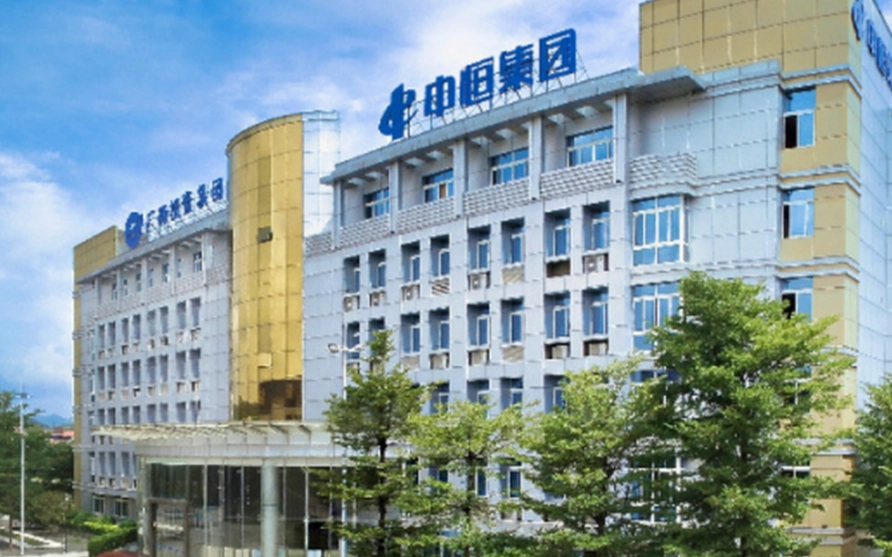
When Guangxi's established state-owned pharmaceutical listed company Zhongheng Group disclosed an announcement on September 2, declaring that a land reserve compensation payment totaling 759.76 million yuan under its controlled grandchild company had once again suffered a major default—the original agreement stipulated that 22 million yuan in principal and interest should be paid before August 31, but in the end only 5.5 million yuan in principal and interest was actually squeezed out, causing the overdue amount for the current period to expand to 48.6872 million yuan—what the capital market glimpsed was by no means merely an ordinary delay in a government-enterprise contract payment term.
This long debt-collection tug-of-war, which began in 2021, went through three consecutive extension agreement revisions in 2022, 2023, and 2026, and even pushed the final principal debt performance deadline all the way to June 2028, directly tore open the cruel bottom card of the truly dried-up liquidity of third- and fourth-tier city urban investment platforms and land reserve centers amid the halving of local land transfer revenue and the deep-water zone of debt resolution.
The Old Logic and Collapse of Land Reserve Compensation Payments
In the narrative of local urbanization and the frenzied advance of real estate over the past decade or more, land reserve compensation payments were once regarded by many listed companies holding old factory land as a "source of non-recurring windfall profits" that could rise like a thunderclap from flat ground. Enterprises vacated inefficient industrial land, local governments acquired it at high prices through land reserve centers, and then converted it into commercial and residential land through public bidding, auction, and listing for the secondary market. Real estate companies grabbed land at high premiums, the government obtained land transfer revenue, and listed companies recognized huge asset disposal gains and thickened their book net assets.
However, this tightly operating capital loop was highly dependent on the prosperity of the land market. Once real estate entered a balance-sheet contraction cycle, stalled new-home absorption led private and state-owned real estate companies to fully halt land acquisition. The large amount of land acquired by front-end land reserve centers instantly became stranded assets that could not be monetized, and the hundreds of millions of yuan in compensation payments originally promised were naturally alienated into suspended debts with no rice to cook.
Zhongheng Group's Equity Foundation and Identity Structure
Following the traces left in the industrial and commercial registry to penetrate the equity foundation of this local pharmaceutical leader, Zhongheng Group's special regional state-owned asset attribute is revealed with great tension in Tianyancha data. Tianyancha industrial and commercial data shows that Guangxi Wuzhou Zhongheng Group Co., Ltd. was established in 1993, reorganized in 1997, with registered capital of approximately 3.184 billion yuan, and its legal representative is Yang Jinhai.
As an established pharmaceutical group with core traditional Chinese medicine blockbuster products such as Xueshuantong for injection, Zhongheng Group had previously undergone mixed-ownership and state-owned asset restructuring, with actual control belonging to Guangxi Investment Group under the State-owned Assets Supervision and Administration Commission of the Guangxi Zhuang Autonomous Region.
This identity structure of an "autonomous-region state-owned asset-controlled listed pharmaceutical company" pursuing compensation payments from the "Wuzhou local land reserve center" gives the entire debt-collection game an extremely delicate administrative and game-theoretic flavor.
The two entities are both located within the coordinate system of the local public ownership economic system, and should originally possess extremely high credit endorsement and rigidity in contract performance. However, counting from the launch of the land reserve in 2021, over a long period of five years, only 382.77 million yuan of principal has been painfully recovered from the total burden of 760 million yuan, with 376.99 million yuan of principal still mired in delay, and the payment agreement has been revised again and again, dragged from a three-year term to a five-year term, until the latest revision directly locked the endgame in 2028, grinding what was originally a crisp and clean administrative expropriation into a seven-year installment payment marathon.
The Financial Contrast of an Nearly 80% Shrinkage in August Payment
An even more embarrassing financial contrast is embodied in the actual payment situation in August, which shrank by nearly 80%.
Under the explicit constraints of the supplementary agreement just signed by both parties in March this year, 22 million yuan in current principal and interest had to be rigidly paid by the end of August. But in the real fiscal payment sequence, only a mere 5.5 million yuan was ultimately dug out to make up the account, a shrinkage of as much as three-quarters. For a pharmaceutical giant with nearly 3.2 billion yuan in registered capital, 5.5 million yuan can hardly provide any decisive support for R&D investment or main business operations;
but for the performing party, this meager several million yuan may already be the limit delivery after multi-party coordination and difficult maneuvering. This delaying posture of "giving a symbolic little, never completely defaulting but also never able to pay in full and on time" precisely reflects the strain of grassroots finance and urban investment platforms in third- and fourth-tier cities under the pincer attack of rigid three-guarantee expenditures and the red line of debt resolution.
The Limited Elasticity of Collateral and Litigation Deterrence
The listed company specifically mentioned in the announcement that it "has provided collateral" and unsheathed the legal sword of "initiating litigation and property preservation when necessary," but on the real balance scale of government-enterprise gaming, the deterrent elasticity of these two lines of defense appears extremely limited.
Under the current judicial and debt-resolution policy environment, litigation against local governments and their affiliated land reserve platforms faces immense administrative resistance and enforcement difficulty; and the so-called collateral is most likely still local stranded land assets, revenue rights, or non-core properties. Under the reality that the regional real estate market has not seen substantive recovery, these collateral assets themselves also face a monetization black hole of extremely long realization cycles and a high probability of failed auctions and price discounts in judicial sales.
If Zhongheng Group really tore off all pretense and went to court, it would not only face the sinking of heavy litigation and preservation costs, but could also fall into the awkward situation of winning the lawsuit yet having no real money available for enforcement.
The Deep Erosion of the Balance Sheet and the Main Business's Cash-Generating Function
The deeper real erosion falls on Zhongheng Group's own balance sheet and the cash-generating function of its main business.
Nearly 380 million yuan of principal has been sitting year-round in other receivables, not only continuously occupying the company's precious working capital, but also facing credit impairment provision risks that cannot be ignored over the long extension cycle. Although in the earlier period it maintained part of its financial income on the reporting side by collecting extension interest, against the backdrop of normalized centralized procurement in the pharmaceutical industry and strict regulation of traditional Chinese medicine injections in compliance and clinical use, Zhongheng Group's core main business also faces a growth ceiling and urgently needs large cash inflows to feed back into new drug R&D and industrial chain integration.
This huge sum of hundreds of millions of yuan, indefinitely deferred, is transforming from an early expected windfall into a liquidity burden dragging down the company's strategic transformation.
The End of Land Dividends and a Query into Fiscal Payment Capacity
This wave of shrinkage in land reserve payments occurring in early autumn has sounded a warning bell for the entire capital market involved in government-enterprise cooperation and the revitalization of land assets. The wealth-creation story of old-city redevelopment and land dividends has long since completely ended. At a time when debt resolution has become the absolute focus of local work, any commercial agreement relying on discounting future land transfer expectations must directly face the coldest interrogation of fiscal payment capacity in the real world.
If a wall of self-generated cash flow cannot be firmly built on real industrial repayments and main business profitability, overly pinning hopes on the paper compensation promised by an installment extension contract will ultimately, in the long cycle of deferral, be consumed to the last drop by the gravity of the cycle.