Zeng Yuqun's 'Fish and Bear's Paw': Midnight Calculations of a Trillion-Empire Helmsman
Zeng Yuqun talks late into the night about CATL's predicament: power batteries becoming commodity, betting on nuclear fusion for breakthrough, stressing 'only full-speed hand-to-hand combat.'
In the interview video, Zeng Yuqun wore that familiar dark blue work uniform, speaking at a measured pace, like he was briefing engineers in a workshop on safety precautions. He said he wanted to be Silicon Valley and enjoy European welfare at the same time—"you can't have your cake and eat it too." A stream of bullet comments flashed by saying, "The boss is serving up chicken soup again," but look closely at the corners of his eyes—there's a tension peculiar to someone who hasn't slept well. This isn't a lecture. This is a man who has spent fifteen years in the meat grinder of heavy industry, working through an increasingly difficult equation.
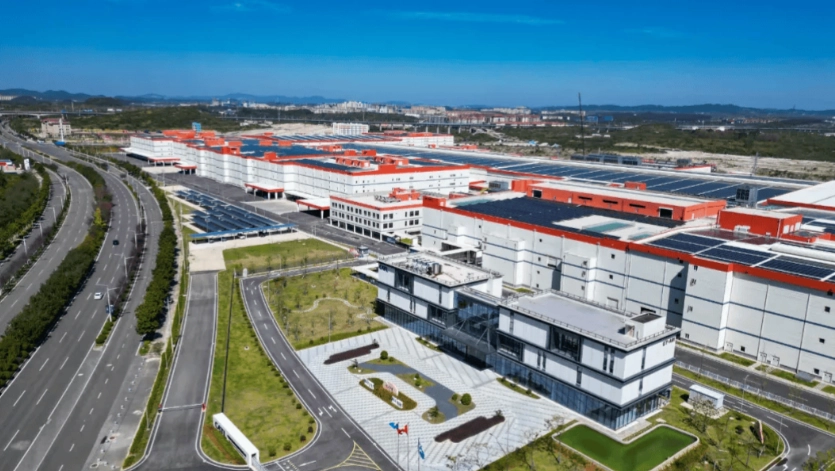
CATL's factories are still churning out battery cells by the minute. But in the 2026 battery market, the air has changed. Latecomers are circling like hyenas. Poach a few mid-level technical staff, buy a few second-hand coating machines, and you can produce a product with 70 percent of CATL's performance at 30 percent lower cost. The underlying technology curve is flattening, and the scaling advantage—the weapon that once let CATL sweep the globe—is becoming homework everyone can copy. The nine affiliated companies listed on Tianyancha, five still active, spread out like a map: Times Chery, joint venture lines, defensive outposts around this aircraft carrier. But every coordinate on that map is burning cash. Heavy-asset depreciation isn't just an accounting line item; it's a physical reality you face the moment you wake up—equipment aging, production lines iterating, and overseas walls being built higher and higher.
Zeng Yuqun knows better than anyone that the word "passive income" doesn't exist in the battery industry. The trillion-dollar market cap is an illusion handed out by the capital markets; the real battlefield is on the factory floor, at 3 a.m. in the materials lab, in every failed attempt to push energy density up another percentage point. That's why there was that investment that borders on science fiction: nuclear fusion. Beta Fusion. Seed round. CATL leading the investment. Controlled nuclear fusion—that holy grail of technology that is always "fifty years away." This isn't a financial investment; it's using real money to buy an option that may never pay out, betting on a singularity that could upend the entire energy economy model. What is Zeng Yuqun doing? He's searching for the next story for this trillion-dollar titan. When power batteries become a commodity, and when the title "King Ning" turns from a moat into a target, he has to find a new continent, even if that continent currently exists only in equations and plasma confinement experiments. This demands incalculable brainpower and capital. It demands "struggle"—not the slogan on the corporate culture wall, but a rigid safety valve welded into the organizational structure. It's the late-night meetings, the rejected proposals, every order fought back from competitors. At the end of the interview, he says, "The only option is to throw ourselves into hand-to-hand combat at full speed."
The camera cuts away, but in the trailing tone of that sentence there's a weary lucidity. This isn't Silicon Valley's romantic innovation narrative, nor is it European welfare capitalism. This is the unique survival grammar of Chinese manufacturing: on a table where resources don't favor you, counter technology diffusion with organizational intensity, bet on the next cycle with capital density, and fight asset erosion with an almost paranoid sense of crisis. The affiliated companies quietly listed on Tianyancha are Zeng Yuqun's defensive formation, and also his anxiety inventory. Every surviving subsidiary is a front line that must be held; every cross-industry investment is a breakout into unknown territory.
As the global energy landscape reshuffles again, and as the twin pressures of regulatory radar and inventory cleansing bear down, that middle-aged man in the work uniform, talking about "cake," is tightening every bolt on the foundation of his trillion-dollar empire with a nearly cold-blooded pragmatism. Business never believes in easing up. It only rewards one kind of person: those who, in late-night offices, inject a pixel-level sense of crisis into the organization's capillaries, then show up on the factory floor again the next day.