Yongtai Technology is spending 100 million yuan to build a plant in Fujian, making a countercyclical bet close to CATL, trading heavy assets for the right to survive in the supply chain.
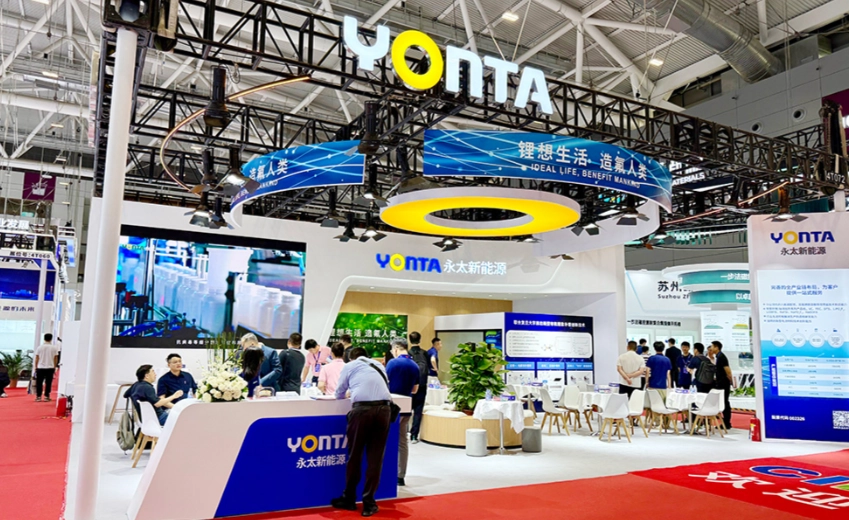
At a time when electrolyte and lithium hexafluorophosphate prices have long since fallen below the cost line for second-tier manufacturers and the entire industry is moaning about overcapacity, veteran fluorochemical giant Yongtai Technology has chosen to keep plowing heavy investment into the South China map. This 100 million yuan in paid-in registered capital directed at Fujian is by no means a routine expansion of a regional sales subsidiary—it is a brutal microcosm of survival in which an upstream materials supplier, in the depths of a cyclical winter with profits squeezed to the limit, is willing to engage in heavy-asset hand-to-hand combat in order to desperately hold on to its supply chain share with core battery makers.
The Capital Trail at the Commercial Registry Level
Following the capital trail at the commercial registry level to penetrate this contrarian capacity move, the position layout left in Tianyancha records is extremely precise. Tianyancha business registration data shows that Fujian Yongtai New Energy Technology Co., Ltd. was swiftly established on September 16, with registered capital of up to 100 million yuan, wholly controlled by Zhejiang Yongtai New Energy Materials Co., Ltd. What is even more telling is the hidden thread: this is not Yongtai's first large-scale out-of-province move this year.
Also according to Tianyancha's penetration, as early as April this year, this wholly owned shareholder had already established Yancheng Yongtai New Materials Co., Ltd. in Jiangsu with registered capital of 200 million yuan.
Betting 300 million yuan within half a year to lay down heavy-asset wholly owned entities in succession in Fujian and Jiangsu—this seemingly cycle-defying countertrend expansion has a spatial-geography calculation behind it that hits the nail on the head.
The Calculation of Spatial Geography
Fujian is the home base of CATL, the global power battery overlord; while Yancheng, Jiangsu, is a dense production hinterland for leading automakers and battery giants such as BYD and SK New Energy. In the seller's market era when lithium battery materials were in short supply, upstream fluorochemical companies could well sit at their Taizhou headquarters waiting for customers to line up for goods;
but when the tide recedes and both lithium hexafluorophosphate and new-type lithium salts fall into a price bloodbath, the core competitiveness of materials plants has long since descended from a pure chemical synthesis formula to the ultimate response speed to downstream OEM demand and logistics and transportation costs.
Electrolyte core materials are essentially fine chemical products with a certain hazardous nature. Long-distance hazardous chemicals transportation is not only costly but also highly susceptible to regional compliance controls. Yongtai Technology's building of heavy-asset plants worth hundreds of millions directly outside the walls of battery giants has an extremely naked intent: by absolutely shortening physical distance, squeezing out the last drop of logistics and warehousing moisture, and using a door-to-door zero-inventory direct supply model to weld itself firmly into the core supply chain lists of battery oligarchs.
Trading Heavy-Asset Capacity for the Right to Stay at the Table
This is a brutal reshuffle in which heavy-asset capacity is traded for the right to stay at the table.
Traditional fluorochemical companies once enjoyed extremely high new energy valuation premiums when crossing over into new energy. But as industry capacity surged forward, the technical barriers of electrolyte additives and core lithium salts were rapidly flattened. The real dilemma facing Yongtai Technology is that if it does not follow the geographic distribution of its major customers' capacity and sink supporting operations accordingly, its original market share will instantly be devoured by peers willing to build plants right next door.
And these two high-value capital contributions in Fujian and Jiangsu mean the company must bear extremely heavy fixed asset depreciation and production line operation and maintenance expenses in the coming years.
The Cost of Vassal-Style Expansion
This contrarian heavy bet made in early autumn tears open the most brutal underlying game in China's lithium battery industry chain midstream. When the materials track completely slides from competing on technological iteration to a meat grinder competing on capital thickness and the size of one's patron, leading materials suppliers can only grit their teeth and keep leveraging up under the overcapacity alarm. This vassal-style expansion, which deeply binds the company's fate to a single giant, can certainly buy short-term roaring production lines, but it also drags the company into a contract manufacturing quagmire with no pricing power at all.