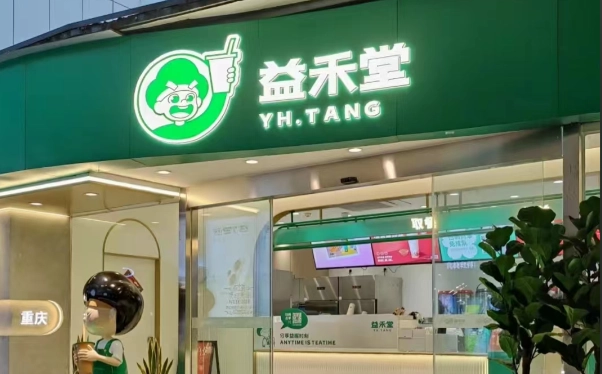
Under the Scepter of Inspection: Bullying and Runaway Franchising—How the Yihetang Assault Scandal Exposes a Distorted Tea-Chain Management System
An Yihetang supervisor's assault on an employee reveals unchecked power in franchise networks and a collapse of grassroots governance, shaking brand trust to its core.
When a supervisor at Yihetang with inspection authority was exposed for sexually assaulting a female employee during working hours, public outrage quickly focused on individual moral depravity and illegal conduct. However, if this scandal is treated merely as an isolated act of personal wrongdoing, it completely obscures the most hidden and distorted power-rent-seeking mechanism within the rapid expansion of affordable tea chains across thousands of stores.
This bullying incident in a budget tea shop ruthlessly exposed the total collapse of grassroots governance and quality-control oversight mechanisms within tea chain systems during their breakneck scaling phase.
The Supervisor Role: Concentrated Power Without Checks
In the commercial empire of franchised budget tea brands, the supervisor is a position endowed with enormous privileges yet severely lacking institutional constraints. Within the loose network connecting headquarters to thousands of franchisees, supervisors serve as the brand's only physical point of contact reaching individual stores. They hold life-or-death authority over store hygiene assessments, operational compliance, and supply usage evaluations, and can even directly decide whether a franchise is fined, publicly cited, or shut down for rectification.
This inspection mechanism, which concentrates such decisive power in a single individual, becomes highly susceptible to evolving into private power-rent-seeking against frontline employees when third-party oversight and transparent evaluation processes are absent.
The Labor Dilemma Behind Extreme Cost-Effectiveness
Meanwhile, the budget tea model centered on extreme value pricing of 7-8 yuan per cup dictates that franchise stores must aggressively compress labor costs. To squeeze meager profits from thin per-cup margins, a large number of franchise stores rely long-term on young workers who earn minimal hourly wages, lack social experience, and in some cases are not yet adults. When an adult manager representing headquarters authority and wielding disciplinary power faces young employees who have no bargaining leverage and stand in a position of absolute weakness regarding labor contracts and rights protections, the extremely imbalanced power structure quickly spirals out of control.
Business Records Reveal Governance Wounds
Tracing through corporate filings to examine the operational foundation of this tea beverage giant, the governance scars from its rapid and loose expansion become evident. According to judicial and business records captured by Tianyancha, Yihetang's affiliated entity Wuhan Yihuiyin Beverage Co., Ltd. has a registered capital of 30 million yuan, yet its business profile includes not only historical records as a person subject to enforcement, but also dense involvement in multiple sales contract and service contract disputes.
These judicial frictions documented on Tianyancha are a genuine reflection of the ongoing interest conflicts between headquarters, the upstream and downstream supply chain, and the franchise system during the group's rapid expansion.
Hollow Management: Prioritizing Recruitment Over Internal Controls
When headquarters' core focus is locked onto earning equipment fees, raw material price differentials, and franchise fees, store count and material turnover rates become the sole performance metrics. Within sprawling networks of thousands of stores, the organization's management capacity simply cannot effectively reach the capillary endpoints. The selection, ethical vetting, and power constraints for key risk-control personnel such as supervisors have long been left in a state of neglect.
This hollow management approach—emphasizing recruitment over internal controls—has turned the supervisory system meant to uphold brand standards into a breeding ground for workplace bullying and illegal conduct.
Conclusion: Scale Success Cannot Ignore Employee Safety
The scale success of budget tea brands cannot be built on indifference to the basic personal safety of frontline staff. A tea beverage empire assembled from franchise fees of a few hundred yuan and hefty supply markups, if it cannot even enforce basic employee protections and compliance standards at the store level, will see the brand trust built on low-price appeal gradually destroyed by this systemic decay through repeated scandals at the operational front lines.