Yifei Laser's RMB 220 million overseas mega-order equals 27.6% of last year's revenue. Pre-positioned patents help pave its overseas push, but the 30% advance payment and acceptance cycle conceal performance risks.
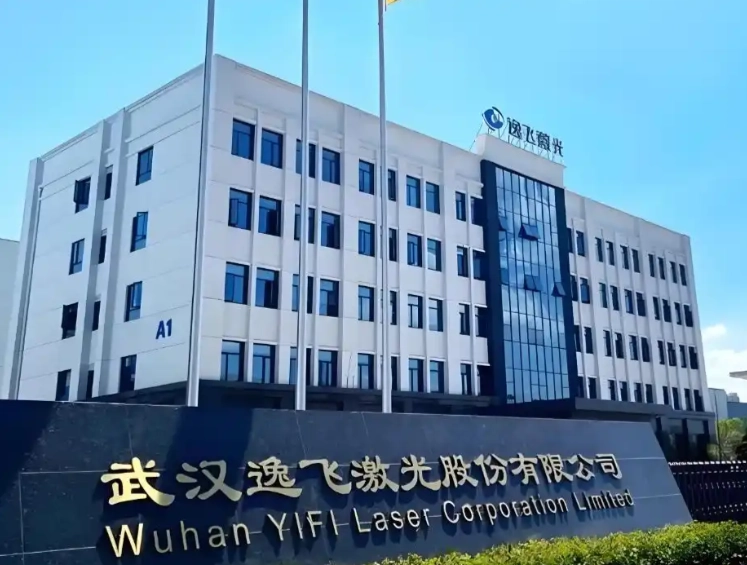
When Efly Laser, the leading cylindrical battery equipment maker on the STAR Market, threw out a $32.6812 million (approximately RMB 222 million) overseas lithium battery equipment assembly line contract on the last day of August, the capital market's first reaction was often to file it under the ordinary narrative of the lithium battery overseas expansion boom. However, simply comparing it against its full-year 2025 revenue base reveals that the single contract amount has single-handedly swallowed 27.60% of last year's total revenue;
If you add the $26.81 million overseas order secured last November, the two major overseas orders have cumulatively exceeded RMB 412 million in less than a year. Amid the residual endgame of periodic overcapacity in domestic power batteries and extreme price squeezing of upstream equipment suppliers by OEMs and battery makers, this momentum of repeatedly landing deals in overseas markets with over twenty percent incremental growth has torn open not only the survival instinct of domestic non-standard automation equipment suppliers spilling over into high-margin overseas strongholds, but also a technology and legal race centered on the industrialization of large-capacity cylindrical batteries.
Over the past two years, the domestic power and energy storage lithium battery industry chain has undergone a brutal destocking reshuffle. Leading battery giants have successively slowed their domestic expansion pace. Equipment tendering not only saw commercial payment terms stretched to the limit, but the withholding of final acceptance payments and endless production line modifications also left a large number of equipment manufacturers' cash flows under severe strain. In contrast, localized supply chains in Europe, America, and emerging markets have just started. They not only lack mature high-speed, high-precision assembly equipment supply, but also offer highly attractive gross margin premiums to East Asian equipment suppliers with mature engineering delivery experience.
For Efly Laser, which has long been positioned in cylindrical full-tab laser welding and automated assembly, overseas orders have evolved from an early nice-to-have into a core pillar that props up the revenue base and withstands the waves of domestic involution.
Tracing this laser equipment enterprise's overseas springboard through the underlying commercial records, its coordinated approach in qualification reserves and R&D depth is clearly visible in Tianyancha archives. Tianyancha business registration data shows that Wuhan Efly Laser Co., Ltd. has been officially registered with customs authorities as an import and export goods consignor and consignee, opening up a normalized compliance channel for cross-border customs clearance of complete sets of non-standard heavy industrial equipment.
In the intellectual property map penetrated by Tianyancha, a set of highly dramatic high-frequency actions erupted in late August: the invention patent "A Single Large-Capacity Battery Assembly Line" jointly applied for by the company and its Jiangsu subsidiary was submitted on June 29 and officially published on August 28; another key patent, "Large-Capacity Battery Cell Insertion Station," was published on August 25.
Between the patent publication and the landing of the RMB 222 million overseas mega-order, only 3 days elapsed.
Such tight temporal interlocking is by no means mere coincidence, but rather the most seasoned legal defense employed by high-end non-standard equipment enterprises when entering international supply chains. Large-capacity cylindrical batteries (such as the 46 series and even larger energy storage cells) face extremely high challenges in assembly processes regarding shell deformation tolerances, tab cutting flatness, and electrolyte injection sealing. International buyers, before placing tens-of-millions-of-dollars mega-orders, typically conduct geopolitical legal due diligence on suppliers' technological exclusivity and freedom to operate (FTO).
Solidifying the core processes of the parent and subsidiary companies in assembly lines and cell insertion stations into published patents in advance not only fortifies technological discourse power for commercial negotiations, but also physically blocks the patent sniper space of overseas competitors on similar equipment solutions.
However, the commercial realization process of this mega-contract accounting for nearly thirty percent of revenue is by no means smooth sailing, but rather fraught with stringent cash flow and engineering cycle barriers.
The contract stipulates an extremely critical precondition: the entire contract must only be formally established and effective after the buyer pays 30% of the total price. In cross-border large-scale industrial equipment transactions, a 30% down payment is the most solid moat against overseas customers' temporary breach or project shelving. As of the announcement date, the company has not disclosed whether the down payment has been received in full.
If any disturbance occurs in overseas geopolitical approvals, foreign exchange supervision, or the customer's own financing progress, causing the nearly ten-million-dollar down payment to be delayed in disbursement, the contract will remain suspended in the gray zone between effectiveness and non-effectiveness.
An even harsher test lies in the long delivery and revenue recognition cycle of non-standard production lines.
Lithium battery automated assembly lines are not standardized hardware sold off-the-shelf. From completing parts processing and assembly at the Wuhan and Jiangsu bases, shipping overseas in batches, to arriving at the overseas buyer's factory for on-site installation, full-line software and hardware multi-axis linkage debugging, no-load trial operation, and finally signing the customer final acceptance report (FAT/SAT) after reaching designed utilization rate and yield targets, the entire cycle typically spans 9 to 18 months.
During this period, exchange rate fluctuations, overseas engineering personnel travel visa barriers, and local union and environmental compliance costs will continuously erode book profits. As long as the final acceptance certificate is not obtained, this RMB 222 million can only sit on the balance sheet in the form of massive inventory, continuously occupying the company's precious working capital.
This cross-border overseas expansion mega-order occurring in late summer sends a stark reality check to the entire pan-new energy equipment manufacturing sector: the days of relying solely on domestic stock competition are over, and moving toward global high-value chains is the inevitable destination for hard-tech equipment. But while celebrating the resonance of high-value contracts and patents, one must examine the lengthy realization risks of overseas non-standard heavy asset delivery. Whoever can lock down the intellectual property firewall while grasping down payment collection and perfecting cross-border engineering debugging and localized acceptance capabilities will truly convert paper contracts into substantial operating net profits in this cross-border expedition from the domestic red ocean to the global blue ocean.