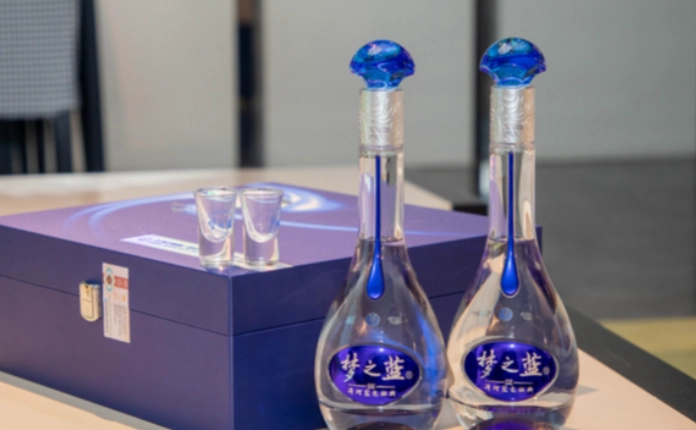
Yanghe Pumps $1.2 Billion into Dealers? The Financial Lifeline Behind the Liquor Giant
Yanghe Group injects 1.2 billion yuan into its factoring subsidiary to provide financial support to dealers, navigating industry adjustment and cash flow pressures.
Before a full bottle of baijiu ever makes it to the dinner table, it endures a high-stakes tug-of-war over cash flow within the complex distribution channel network. Recently, news of a defensive capital injection emerged from the home base of a baijiu giant. According to the Tianyancha app, Suqian Chanfa Commercial Factoring Co., Ltd. recently underwent a business registration change, with its registered capital surging from 500 million RMB to 1.2 billion RMB—a 140% increase.
This 700 million RMB liquidity injection, wholly owned by Jiangsu Yanghe Group Co., Ltd., may appear to be a routine adjustment in the financial sector, but in reality, it represents Yanghe's deployment of a hardcore channel defense tool as its vast baijiu empire faces a cyclical industry downturn.
In the baijiu market of 2026, the industry's long-standing consensus of relying on continuous channel stuffing and earning high premiums with minimal effort has been ruthlessly shattered. The core survival anxiety across the entire industry is no longer about production capacity, but rather how much longer distributors at the end of the channel can hold on. As end-consumer demand diverges and inventory turnover cycles lengthen, distributors' cash flow chains become dominoes ready to topple at the slightest push. Once distributors begin dumping inventory at low prices to free up capital, the rigidity of brand retail prices faces systemic collapse. Factoring is fundamentally accounts receivable financing, and Yanghe Group's decision to directly double its factoring company's capital base is, at its core, aimed at building a low-cost financial buffer zone for its core distributors downstream who face the risk of capital depletion.
By penetrating the business foundation of this factoring company through Tianyancha, its decade-plus history and pure Yanghe lineage confirm that it serves as the reservoir the giant uses to regulate capital surpluses and shortfalls within its ecosystem.
After this financial entity, led by Yin Meng, accepted this infusion of real capital, its credit and financing capabilities experienced a surge. In actual operation, distributors across the country can use their accounts receivable from Yanghe as collateral to instantly convert large amounts of liquidity from this factoring company. This money not only helps channel partners cover high store rents, but also helps them survive difficult inventory digestion cycles, sparing them from being forced into the abyss of price inversion due to capital exhaustion. For Yanghe itself, this is a sophisticated technique of transforming the group's substantial corporate deposits into targeted support for the long-term survival assets of its own ecosystem.
The endgame of commercial competition has never believed in empty slogans—it only recognizes the efficiency of capital generation at the very bottom of the supply chain.
Second-tier brands that rely purely on painting rosy pictures for their channels, lacking hardcore supply chain financial support, are watching helplessly as their networks are eroded by competitors during this long-term adjustment period. The 1.2 billion RMB capital injection record Yanghe left in corporate registration files is an exceedingly sober defense bill. In this stock-cycle era defined by cash flow density and channel control, the ultimate moat of a baijiu giant is no longer merely the vintage of aged liquor in the cellars, but rather how thick and how timely a financial bulletproof vest its distributors at the very end of the ecosystem can obtain before the storm hits.