Xiaomi's 'Xuntian' Leaves Out CATL: Kunlun EREV Launch and the Encirclement by New Battery Rivals
Xiaomi Auto's third model, Kunlun, brings in CALB as a second battery supplier, breaking CATL's monopoly, using a 60/40 split to balance battery costs and strengthen supply chain control.
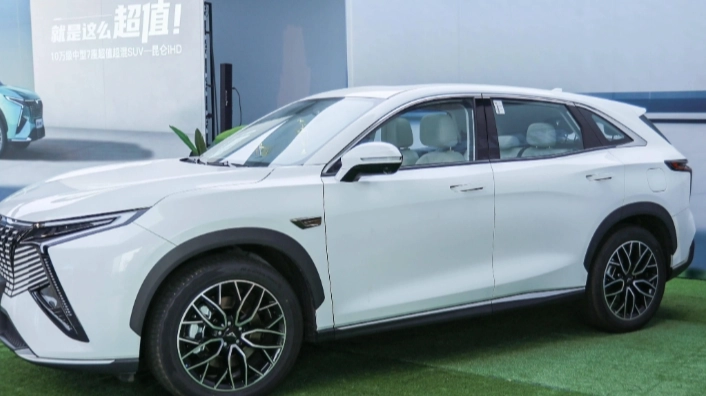
When Xiaomi's first large extended-range SUV, "Kunlun," was formally spun off as a standalone sub-brand, "Xuntian," aiming for a strong second-half surge, Lei Jun's decisive move to rebalance the supply chain fundamentally upended the battery landscape previously dominated by CATL. On May 19, according to exclusive reporting by Jiemian News and 21财经, Xiaomi has brought in CALB as a second battery supplier for "Kunlun," its third strategic model.
As early as the start of 2024, the battery sourcing for this model had already been quietly finalized, with Sunwoda, the veteran hybrid battery maker, initially selected as the primary supplier. Under the current allocation, Sunwoda holds 60 percent, while CALB takes the remaining 40 percent.
This strategic shift, tilting core leverage heavily toward emerging second-tier battery players, is deeply rooted in Lei Jun's intense cost-control and operational anxieties as he prepares for the increasingly crowded extended-range market in mid-2026, engaging in close combat with AITO and Li Auto.
In the narrative of the SU7 pure electric sedan, Xiaomi had to lock in CATL's premium-priced batteries to deliver the extreme performance needed for a first-battle victory. But when the battleground shifts to the cost-sensitive extended-range segment, which emphasizes family utility, excessive battery premiums become a heavy asset burden that erodes gross margins. Sunwoda and CALB already rank among the top globally in terms of shipment volume and installed capacity for hybrid and extended-range batteries. Through a carefully calibrated 60-40 split, Xiaomi not only uses the ultra-low prices of these two mid-tier giants to counter single-supplier price inflation but also establishes a horse-race mechanism, securing the most stable production sovereignty for "Xuntian," its overseas vanguard, amid potential future supply chain disruptions.
This defensive chess game against supply chain monopolies extends to the top-level design of corporate and capital investments, exhibiting pixel-level, integrated large-scale operational characteristics.
Tianyancha App shows that CALB Group Co., Ltd. was established in December 2015, with legal representative Liu Jingyu and registered capital of approximately 1.77 billion RMB. Its shareholders include Changzhou Jinsha Technology Investment, Sichuan Chengfei Integration Technology, and Xiamen Lithium Aviation Jinzhi. In the core landscape disclosed by Tianyancha, this super battery entity, intertwined with state-owned capital and heavy-industry military backgrounds, not only vertically integrates lithium battery materials and battery management systems across its product lines but also, through its foreign investment record last year, frequently established entities such as Zhongchuang Kaibo in Zigong, Sichuan, and the Kaibo Hongtai private equity investment partnership in Hubei.
These newly established companies and industrial investment funds, densely recorded in the Tianyancha database, fully reveal CALB's hardcore strength in its heavy-asset expansion cycle.
It demonstrates that this new second supplier is using a financial combination of "industrial funds plus dedicated production lines" to compensate for its own capital turnover shortcomings. The deeper strategy behind CALB's establishment of multiple new entities in Zigong, Hubei, and elsewhere is precisely to rapidly convert local state-owned preferential land and capital into dedicated production lines that can directly serve major automakers like Xiaomi and GAC through cross-regional coordination. For Xiaomi, which is eager to make a targeted push into the lower-tier household market through the "Xuntian" brand, CALB's extensive, multi-point capital defense network as shown on Tianyancha is precisely the foundation of trust that emboldens Xiaomi to entrust its core allocation for the late-2026 competitive fray.
The industry's long-standing consensus holds that as long as automakers get the technology right and generate enough traffic, extended-range models will naturally create brand appeal. This platitude seriously underestimates the current inflection point driven by volatile battery raw material prices and aggressive OEM cost-cutting pressure.
The latest supporting supply chain lineup for Xiaomi's "Xuntian," revealed under the spotlight of Tianyancha and the media, stands as a sober declaration that the second half of the EV race has fully returned to classical cost competition. No longer fixated on CATL's premium pricing, Lei Jun's strategy of nurturing multiple second-tier suppliers like CALB, while simultaneously building its own pack plant in Yizhuang, has become the coldest asset hedging maneuver in the current era of market saturation. In this brutal contest defined by per-unit margins, capital efficiency, and supply chain control, whoever can push the procurement cost per kilowatt-hour to the absolute floor will be the first to seize the ultimate ticket to harvest the cycle under the gravity of a saturated market.