With ¥100 million in paid-in capital and a lightweight structure of just three Beijing branches, Xiaomi Jingming runs direct-control delivery alongside agency sales to expand channels while isolating risk.
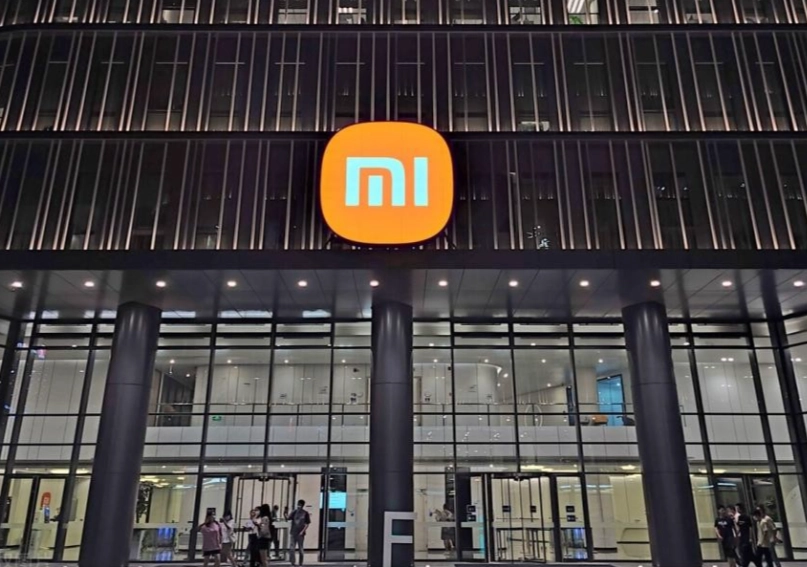
As Xiaomi Auto's core sales entity, Xiaomi Jingming Technology Co., Ltd., just turned three years old this summer, the most thought-provoking contrast emerges when the spotlight is placed on its business registration foundation: a sales hub responsible for the nationwide delivery surge of hundreds of thousands of SU7s and subsequent pure electric SUVs has, in terms of directly affiliated branches, left behind only three direct branches, all located within Beijing.
The reality of stores blossoming across the country and delivery centers densely landing in major new first-tier cities stands in sharp contrast to the extremely restrained "three within Beijing" on the business registration ledger. If this phenomenon were misread as sluggish expansion, it would completely underestimate the sophistication of an internet giant operating heavy-asset automobile channels—this is by no means a shrinkage of physical presence, but rather the precise fiscal, tax, and compliance architecture Lei Jun devised after weighing the risk of runaway direct-operated heavy assets against the coordination of dealer interests, using a highly centralized lightweight parent entity to penetrate the nationwide dual-track system of "direct-operated delivery plus agency sales."
Light-Asset Channel DNA and the "1+N" Model
Building an automobile sales system has always been one of the heaviest financial shackles for automakers. The fully self-operated networks that NIO and Tesla pursued in their early years brought hundreds of shopping mall stores, body and paint repair centers, and delivery centers across the country under the direct branches of listed companies. While this ensured absolute consistency in service standards and brand experience, it also piled astronomical long-term property lease expenses and cross-regional administrative tax burdens onto the balance sheet.
Once delivery pace slows due to market competition, the rigid expenditures of a massive self-operated channel will quickly devour vehicle profits. For Xiaomi, which started with mobile phone consumer electronics, the underlying DNA that powered its offline success was never about building everything itself, but about leveraging social capital through light-asset "directly controlled agents." This playbook was upgraded and re-engineered for the automotive track into a "1+N" channel combination: Xiaomi Jingming firmly controls the nationwide high-standard direct-operated delivery centers and full-license qualifications, while the high-traffic showrooms and 2S sales outlets in major core commercial districts are widely opened to traditional auto dealer giants such as Baidaisheng and Harmony Auto for joint franchising.
The Registration Card: 100 Million Paid-In Capital and Three Beijing Branches
Following the commercial registration traces to penetrate the governance structure of this sales lifeline entity, its asset foundation in the Tianyancha archives demonstrates extremely high purity. Tianyancha business registration data shows that Xiaomi Jingming Technology Co., Ltd. was established on July 18, 2023, with Liu Lingdi as the legal representative, a registered capital of 100 million yuan that has been fully paid in, an enterprise type of limited liability company (sole proprietorship by legal person), and 100% wholly owned by Xiaomi Intelligent Technology Co., Ltd.
In the branch institution map penetrated by Tianyancha, there are only three branches under its name, all established in Beijing: the First Beijing Branch established in November 2023, the Second Branch established in May 2024, and the Third Branch that just landed this April.
In three years, only three direct-operated branches have been established in its registered location of Beijing. The annual report shows 384 insured employees, and it is registered as a small and micro enterprise. Such a miniature direct establishment is extremely disproportionate to the annual sales expectations of Xiaomi Auto, which are in the hundreds of billions.
This miniature form directly confirms Xiaomi Jingming's positioning as a "central settlement platform and license hub."
The business scope disclosed by Tianyancha provides the strongest supporting evidence: Xiaomi Jingming not only holds automobile sales and new energy vehicle whole-vehicle sales qualifications, but also comprehensively covers charging pile sales, fast charging station construction, charging infrastructure operations, used car brokerage, and motor vehicle repair and maintenance businesses.
In other words, it is by no means a mere shell for passing through accounts and issuing invoices, but a full-capability card loaded with business licenses for the entire automotive lifecycle of services.
Multi-Layer Legal Person Isolation and Central Penetration Architecture
In nationwide cross-regional expansion, Xiaomi did not choose to have Xiaomi Jingming tediously establish non-legal person branches in every second- and third-tier city in bulk. Instead, it adopted a more defensive multi-layer legal person isolation: on the one hand, directly establishing independent subsidiaries at key strategic hubs (such as Shenzhen and Wuhan) to avoid a single region's operational risk piercing back through to headquarters; on the other hand, in the broader lower-tier markets, directly handing over the sales end and showroom delivery to external auto dealer groups with existing properties and operating licenses, with Xiaomi Jingming only needing to serve as the digital order backend, capital cashier, and standards exporter to achieve central penetration.
The financial and compliance flexibility brought by this architectural design is astonishing.
First is the establishment of cross-regional tax and compliance firewalls. If the parent entity were to establish hundreds of non-legal person branches nationwide, it would not only face complex regulatory coordination with tax authorities in each province and city regarding consolidated corporate income tax filing and local prepayment of value-added tax, but any fire safety, labor dispute, or delivery breach at any out-of-town store would directly point lawsuits and administrative penalties at the Beijing headquarters.
Strictly limiting headquarters' directly affiliated branches to three within Beijing and delegating the nationwide network to independent legal persons or agents for absorption can firmly isolate operational friction on the outside.
Second is the extreme compression of fixed costs. The insured scale of 384 people means that Xiaomi Jingming itself only retains the most core delivery standard supervision, cross-departmental coordination, and qualification compliance legal teams. The massive showroom sales staff, cleaning and security personnel, and basic delivery specialists are largely stripped away to third-party channel partners or labor outsourcing systems.
In a cycle of price wars and drastic fluctuations between peak and off-peak delivery seasons in the automotive industry, this lightweight entity can contract or expand its sales front at any time according to market conditions, without bearing the severance compensation and store closure sunk costs brought by building a massive self-owned channel network.
The Deep Waters of After-Sales and Hidden Reefs of the Model
However, this light cavalry model that has been proven through exquisite architecture also harbors hidden reefs when facing the more brutal large-scale delivery and after-sales tests in the second half of the year.
As deliveries of mainstream models comprehensively break through the 100,000-unit mark, the high-frequency maintenance, chassis scrapes, and battery body repair needs of the first batch of early owners begin to erupt in concentrated fashion. Franchised agents are enthusiastic about opening stores in shopping malls to sell cars, but professional motor vehicle repair and after-sales service stations with high investment and long return cycles often face the test of prolonged profitability periods. If Xiaomi Jingming itself does not personally enter core cities to invest heavily in building direct-operated after-sales repair infrastructure, and relies solely on external partner dealers' networks to absorb demand, the consistency of its service standards and timeliness of parts supply will easily suffer reputational backlash in the deep waters of after-sales service.
Strategic Insight: The Ultimate Test of Lightweight Channels
This three-year business registration review occurring in midsummer and early autumn releases the most pragmatic strategic insight to the entire intelligent new energy vehicle track: car manufacturing is not only a head-on collision of electric powertrains and algorithms, but also a meticulous calculation of back-end fiscal architecture, legal entities, and channel governance. Using a pure entity with 100 million yuan in paid-in capital to lock down core licenses, and using restrained staffing and light-asset cooperation leverage to mobilize nationwide traffic, Xiaomi Auto has demonstrated Lei Jun's consistent internet high-turnover底色 on the sales end.
But when the flames of war shift from front-end showrooms to the complex depths of back-end after-sales repair and used car residual value management, whether this thin yet efficient channel network can withstand the heavy test of full-lifecycle service is the final puzzle piece Xiaomi Auto must complete on its journey to becoming a mature automotive giant.