From Hit Product to Wolf Pack Tactics: Xiaomi Auto's 2026 Product Blitz Behind the Scale Purge
Xiaomi Auto will launch multiple models in 2026, shifting from a single hit product to a multi-line strategy, using trademark positioning and ecosystem synergies to trigger a scale purge.
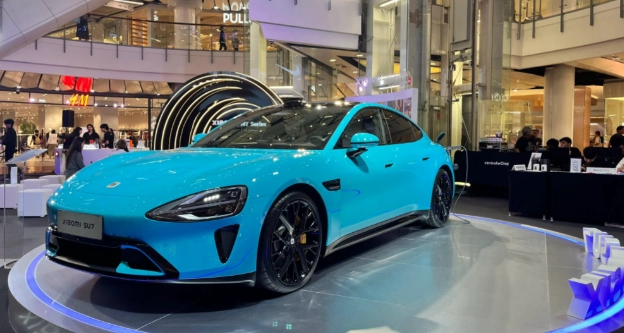
Lei Jun has completely torn off the veil of conservative market testing. While the outside world was still fixated on last year's SU7 phenomenon, Xiaomi Motors unleashed a violent, high-frequency barrage in mid-2026, rolling out a heavy-duty matrix aimed at four distinct market segments. From the thousand-horsepower all-electric GT SUV "YU7 GT," to a lightweight-focused entry-level family model, a five-point-one-meter executive-class sedan, and the first extended-range SUV "Xuntian Kunlun N3" under a new sub-brand — Xiaomi is rapidly dismantling its previous single-product strategy.
The core driver behind this密集 launch isn't blind capacity expansion, but a strategic recalibration in response to market gravity.
The moat built by a single hit product is extremely fragile in the face of competitors' frequent price cuts. While the all-electric market carries a technological halo, its growth ceiling by 2026 is becoming increasingly apparent. If Xiaomi wants to achieve an annual sales volume of one million vehicles, it must extend its reach into the profit strongholds of extended-range and executive-class segments. Spinning off its first extended-range SUV into a new sub-brand is the most brilliant repositioning move in this grand strategy. The independence of the new brand "Xuntian" is fundamentally about seizing the family long-distance travel market without any baggage, while maintaining the main brand's all-electric performance positioning. Meanwhile, the aggressive weight reduction of the YU7 entry-level version and the executive long-wheelbase model's posture benchmarking luxury cars represent Xiaomi applying the mature smartphone industry formula of "all-rounder base model plus ultra-large variant" as a pixel-level disruption to the heavy automotive industry.
Before this product beachhead assault could begin, Xiaomi's defense lines were already firmly locked down on the intellectual property front.
Through the intellectual property map revealed by Tianyancha, we can clearly reconstruct this tech giant's ecosystem enclosure logic. Tianyancha data shows that Xiaomi has recently filed and successfully registered multiple key trademarks including "XIAOMI YU7" and "XIAOMI YU7 GT." These trademark registrations are not limited to transportation vehicles but extend broadly into categories such as scientific instruments, hand tools, and even leather goods.
This is by no means the passive defense against counterfeiting typical of traditional automakers; it is quintessential tech giant ecosystem-closure thinking. In Xiaomi's commercial closed loop, the car is not an isolated piece of hardware but the largest mobile terminal in its ecosystem. Preemptively registering new vehicle names across multiple categories is about clearing the path for future development of in-cabin accessories, co-branded lifestyle hardware, and ecosystem chain derivative products by eliminating infringement risks in advance. With these solid rights backed by Tianyancha records, any gray-market factory will be precisely removed by Xiaomi's lawful legal tools in future peripheral market contests.
Commercial evolution has always been a knockout tournament defined by efficiency and scale. As each newly registered trademark lands in Tianyancha's archive database, what remains on the road is the iron-blooded ledger of a sprawling hardware empire accelerating toward full formation. In this hardcore war where truth is defined by supply chain elasticity and concurrent multi-product-line development cycles, Lei Jun's wall built from new vehicles and trademarks is launching a physical-scale cleansing.