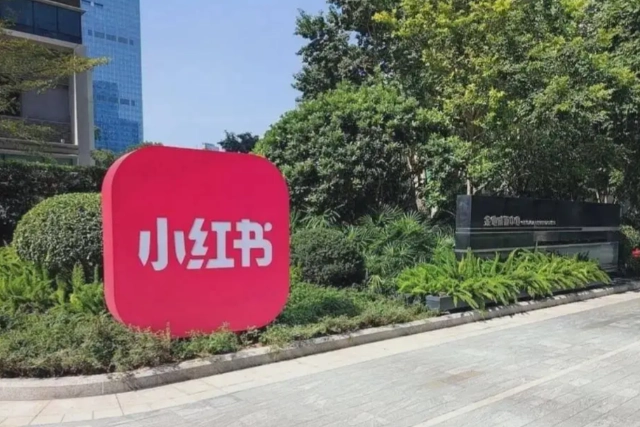
Xiaohongshu Accused of Opaque Labor Practices in IPO Compliance Storm
A former executive of Xiaohongshu, after winning 850,000 yuan in compensation, reported the company for labor violations, raising IPO compliance risks and testing its 100-billion-yuan valuation.
As major internet companies collectively enter a period of shrinkage and belt-tightening where cost reduction and efficiency improvement have become the only political correctness, a departing executive's scorched-earth battle can often strike a giant's capital soft spot more precisely than any bleak financial report. Recently, a compliance bombshell shook the internet and financial circles: a former executive of Xiaohongshu (Little Red Book), after having their employment terminated, successfully secured 850,000 RMB in mandatory compensation through long-term legal action. However, this labor-management standoff did not end with the money hitting the account. The former executive has since filed a formal whistleblower complaint with the Hong Kong Exchange (HKEX), directly targeting Xiaohongshu's underlying compliance violations in its employment structure and information disclosure. This complaint letter, delivered straight to the HKEX listing hearing panel, has instantly thrust this unicorn—long galloping on the myth of a "lifestyle-sharing community" and a "hundred-billion valuation"—into the coldest and most penetrating audit scrutiny of the capital markets.
Most industry observers, accustomed to evaluating Xiaohongshu through product notes, e-commerce conversion rates, or daily active user (DAU) data, tend to dismiss this incident as ordinary post-departure infighting or a labor dispute. Such a simplistic interpretation completely underestimates the systemic collapse in defenses that a company on the verge of an IPO faces when confronted with labor compliance and disclosure integrity reviews. To understand the deep-rooted causality behind that 850,000 RMB verdict, one must turn to the litigation records disclosed by Tianyancha and look through Xiaohongshu's meticulously packaged organizational foundation.
Employment Risks Revealed by Tianyancha Data
Tianyancha business registration information clearly shows that Xiaohongshu Technology Co., Ltd. was established in October 2018, with its legal representative being Ren Shuang and a registered capital of USD 100 million, wholly owned by Redbook Holdings Limited, registered overseas. Opening its litigation map registered in the Tianyancha system exposes a glaring risk profile: this internet giant, which champions the banner of lifestyle aesthetics, has been mired in multiple legal disputes in recent years, and in the vast majority of cases it appears as the defendant, with causes of action frequently concentrated on "labor contract disputes" and "labor disputes." This slow-moving business, which relies on massive algorithms and meticulously managed community operations, saw its ultimate settlement method completely rewritten on the eve of its IPO.
The dense red flags of labor disputes on Tianyancha plainly expose the organizational aftermath left behind by Xiaohongshu's reckless team expansion in pursuit of its valuation myth over the past few years. Executive-level labor contract disputes often involve highly complex non-compete agreements, equity option custody disputes, and consolidated financial accounts from disguised layoffs. The fact that a former executive in possession of core commercial secrets could secure a massive 850,000 RMB labor arbitration award proves that Xiaohongshu committed severely flawed legal procedure violations during the unilateral termination of the contract. What makes the interest chain far more destructive is that this executive has leveraged the judicial ruling in reverse, escalating the labor dispute directly into a compliance sniper attack on the IPO.
The Core Pain Point of the IPO Compliance Storm
For any internet company attempting to list on the Hong Kong Stock Exchange's Main Board, the HKEX enforces near-strict penetration review rules on "corporate governance compliance" and "material information disclosure." The former executive's named complaint alleging "information disclosure problems" strikes precisely at the most critical pain point of the listing hearing. If Xiaohongshu cannot quickly submit an immaculate independent investigation report to regulators to clarify that the numerous labor disputes recorded on Tianyancha do not constitute systemic employment violations, then the hundred-billion valuation bubble it has labored to sustain for years will be forcibly put on pause during the listing hearing's interrogation.
Industry Signal: Internal Governance Determines Capital Fate
When community traffic dividends peak, what tests the vitality of a star company is no longer how beautiful its filters are, but the cleanliness of its internal governance and the precision of its capital credibility. The USD 100 million equity base registered under Mao Wenchao and Qu Fang on Tianyancha once served as their ultimate combat strength in the era of image-and-text content sharing. But this compliance alarm, jointly triggered by the former executive and the HKEX, is a jarring gear-shift signal for the industry: the careless era in which new consumer platforms relied on storytelling and crude cost-cutting to gloss over their financial reports is over. Only those who can complete organizational financial dehydration and legal cleanup first amidst the extremely muddy internal compliance meat grinder will be able to truly secure their voice in long-term settlement during the coming capital reshuffle.