After losing 12 million yuan, Xiangshan Co. rushed a restructuring within ten months to acquire an AI startup with net profit of only 11,100 yuan—a shell-preservation gamble harboring goodwill risks.
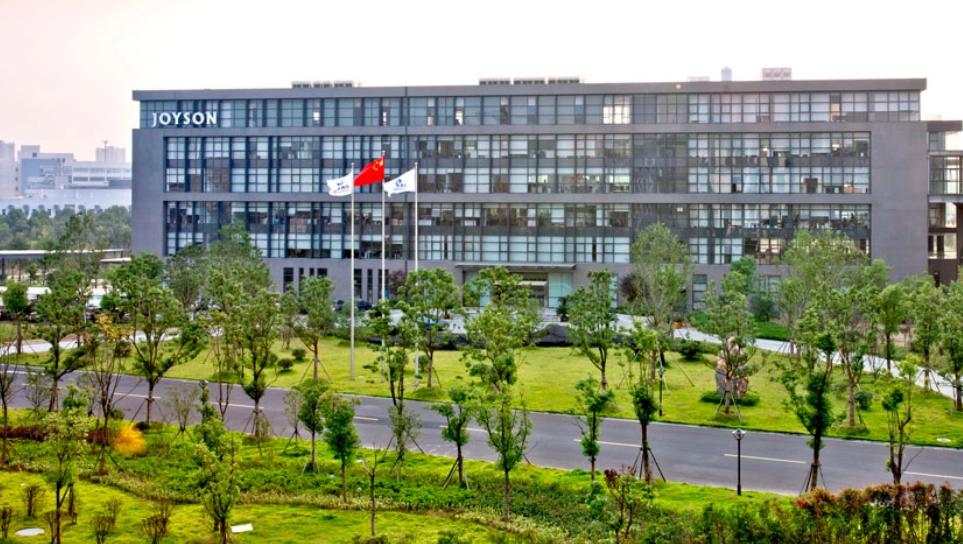
When Xiangshan Co., primarily engaged in automotive components and weighing instrument manufacturing, handed in a half-year report showing a net loss attributable to shareholders of 12 million yuan, a year-on-year plunge of 123.22%, and then turned around to announce a plan to acquire a start-up entity named Wuluo Smart in full through the issuance of shares and cash payment, what the secondary market smelled was by no means the warm spirit of industrial synergy, but a high-risk capital gamble driven by shell-preservation pressure and valuation anxiety.
Beneath this seemingly routine cross-sector restructuring into hard tech, what is even more intriguing is the extremely tight, step-by-step capital assembly line behind the transaction target.
Combining Tianyancha's business registration records and the listed company's past announcements, Wuluo Smart's development trajectory shows astonishing capital acceleration. Tianyancha data shows that another STAR Market-listed company, Ruisheng Intelligent, only formally entered Wuluo Smart in October 2025, becoming its largest shareholder with a 25% stake. Yet merely half a year later, in May 2026, this still small-scale enterprise applied to a bank for a large credit line of no more than 150 million yuan, and Ruisheng Intelligent generously assumed joint and several guarantee liability of no more than 37.5 million yuan in proportion to its shareholding.
Then, just a few months later, Xiangshan Co., whose main business had fallen into losses, quickly extended an olive branch for a 100% wholly owned acquisition.
From external industrial capital rushing in at the front line, to using the listed company's credit line to help leverage over 100 million yuan in credit, to being planned for full acquisition by another listed company, the entire capital loop was completed in one smooth stroke in just ten months.
Behind such a rigorous pace is the target's extremely bare real cash-generating ability. Financial data shows that Wuluo Smart's full-year revenue in 2024 was only 39.2281 million yuan, while net profit was even thinner than a blade, at only a mere 11,100 yuan. Such a software company with meager profits and highly dependent on external guarantee credit to maintain its capital chain was suddenly pushed onto the springboard of being wholly merged into an A-share platform, and the interest demands behind it are extremely naked.
For Xiangshan Co., mired deep in the quagmire of performance deceleration, its traditional automotive trim and weighing sensor businesses have long fallen into red-ocean competition, and rapidly deteriorating profitability is pushing it toward the regulatory red line of ST or even delisting. Bringing in hot artificial intelligence assets is not only a strong shot in the arm to boost market value, but also a self-rescue line attempting to reshape its business story through capital operations.
But what truly tests the nerves of regulators and investors in this transaction lies in the unresolved valuation consideration and debt transfer.
If Ruisheng Intelligent, at the point of only ten months after taking a stake, realizes equity cash-out or exits through share exchange via Xiangshan Co.'s restructuring, it will complete a textbook short, flat, and quick arbitrage. However, how will Wuluo Smart's credit exposure of up to 150 million yuan and the 37.5 million yuan guarantee liability assumed by Ruisheng Intelligent be segmented and taken over after the wholly owned acquisition is completed? If Xiangshan Co. buys this shell with only a little over ten thousand yuan in profit at a high premium, the huge goodwill will become a time bomb hanging over the listed company;
and once future performance cannot be delivered, the already fragile cash flow will also have to face the rigid repayment pressure of bank loans.
This cross-sector takeover case occurring in midsummer exposes the coldest survival rule of the capital market: the bleeders of the old cycle are eager to buy concept cover to hide the failure of their main business, while the operators of the new cycle use restructuring as a channel to accelerate cash-out and exit. When the feverish AI story collides with the cruel reality of only a little over ten thousand yuan in net profit, will this high-risk chip handover ultimately bring Xiangshan Co. back to life, or will it evolve into the next goodwill-devouring battle that triggers a chain of explosions?