Wuyou Media Takes Full Ownership Stake in Shanghai Content Hub as Influencer Factory Reshuffles with Asset-Light Strategy
Wuyou Media has established a wholly owned subsidiary in Shanghai, positioning itself at the content forefront while advancing a strategic shift toward an asset-light model.
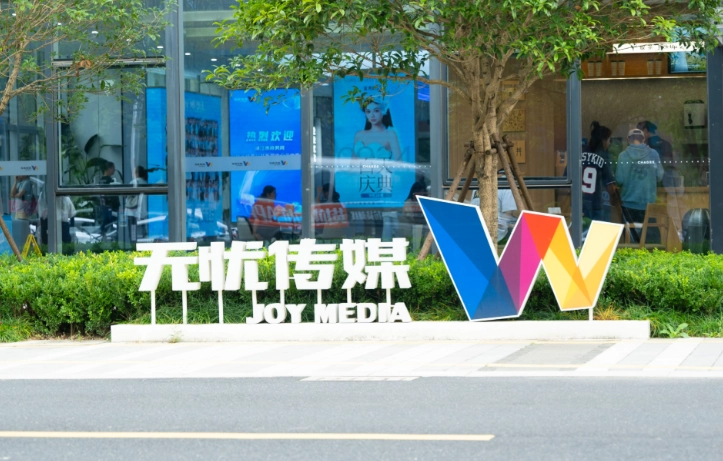
As wild traffic from short video and live-streaming e-commerce channels becomes an extreme zero-sum battleground in coastal first- and second-tier cities, the top MCN giants are aggressively and shrewdly extending their defensive and expansionary reach toward core content hubs.
Recently, a new company registration notice on Tianyancha App fully exposed the key long-term chess move in Wuma Media's grid-based expansion across the Yangtze River Delta: Shanghai Wuma Xingchao Culture Media Co., Ltd. has been quietly established, with registered capital set at a solid and pragmatic 1 million RMB. Amid peers stuck defending their Hangzhou live-streaming bases and scrambling over rising customer acquisition costs and talent departures, this fully owned, million-level content entity registration comes across as extremely low-key yet strategically aggressive.
Most industry observers accustomed to judging the influencer economy through the lens of viral streamers, top anchor GMV, and fan tipping revenue tend to interpret this new company as a routine regional office expansion, or a formality for the parent entity to accommodate local tax policies. Such a superficial reading completely underestimates the systemic monetization anxiety that Lei Binyi and Wuma's core operations team are facing amid algorithm iterations that backfire and the collapse of premium pricing in traditional live-show streaming — as well as the deeper logic behind their attempt to use the purest content production and talent agency shell to aggressively harvest the dividends of long-tail influencers in Shanghai.
This capital game, which is advancing from pure e-commerce selling toward a full internalization of "content sovereignty," has its real value chain hidden in the cold business registration data slices on Tianyancha.
Strategic Layout Revealed by Tianyancha Data
Tianyancha business registration data clearly shows that this newly established Shanghai Wuma Xingchao Culture Media Co., Ltd. is 100% wholly owned by Hangzhou Wuma Media Co., Ltd., with Lei Binyi, the head of Wuma Media, personally serving as the legal representative. Looking at the registered business scope in the Tianyancha system, a professionally refined content blueprint becomes apparent: in addition to traditional cultural and artistic exchange activities and cultural entertainment agent services, photography and video production services, as well as digital content production services, prominently occupy the core positions.
The driving force behind this move — absolute control by the Hangzhou parent entity with operational granularity precisely locked into the intersection of "digital content production" and "agency services" — lies in Wuma Media's urgency to break the regional stereotype that "Hangzhou is only about e-commerce, while Shanghai is where content lives," and to upgrade its massive influencer incubation pipeline through cross-sector innovation and extreme quality control.
In today's influencer ecosystem, relying purely on the standardized "live-streaming e-commerce" model of the Hangzhou base, along with high-frequency, energy-intensive paid traffic acquisition, is seeing profit margins ruthlessly squeezed under the extreme pressures of platform algorithms, with marginal returns in steep decline. The only future profit defense for MCNs lies in long-term intangible assets built on quality content and brand perception — such as micro-drama development, direct signings with high-end fashion brands, and high-margin customized digital content. Shanghai, as the absolute heartland of global fashion giants, top-tier advertisers, and high-spending influencers, possesses the most mature commercial direct-signing and content risk-control supply chain in mainland China.
Strategic Intent Behind the 1 Million RMB Entity
This 1 million RMB incremental entity in Shanghai is essentially Wuma Media's externally welded "independent content hub" and "agile incubation probe."
By capping registered capital at the physical boundary of a 1 million RMB limited liability company, Wuma Media is directly signaling its shrewd calculus of "high-frequency, low-cost trial and error" during its strategic transformation. By establishing a content shell in Shanghai capable of nationwide settlement, Wuma can bypass the complex management bandwidth of the massive Hangzhou headquarters and, as an independent legal entity, aggressively restructure and reorganize its upstream influencer and director ecosystem. The "digital content production" listed on Tianyancha points directly to its ambitions in premium short video production, micro-drama expansion overseas, and even long-term heavy-asset positioning in virtual digital humans.
Whether signing more sophisticated lifestyle influencers based in Shanghai or landing digital content marketing deals from multinational brands, all of this can be settled independently through this clean consulting and production entity, converting traffic into high-margin content copyrights and commission revenue at extremely low customer acquisition costs — without any single project's volatility threatening the sustained premium on the parent company's balance sheet.
The second half of the influencer story has long left behind the false prosperity of blindly burning cash on signings and using crude mass-talent tactics to buy user time. When the dividends of unbridled growth have been fully squeezed dry, the true measure of an MCN's survival quality is no longer the flashy total follower count announced at press conferences, but rather the cleanliness of its core entity and the turnover efficiency of its assets under high-frequency depreciation.