WeNeng Battery's Proactive Capital Reduction Reveals Asset Restructuring Behind High BaaS Valuation
WeNeng Battery reduces capital by 140 million yuan, exposing asset impairment and depreciation misalignment under the BaaS model, and shifting toward deleveraging and financial optimization.
NIO's Battery Asset Arm Cuts Capital, Revealing the Truth Behind Asset Restructuring After Overvaluation of BaaS Model
In the narrative of national-level battery banking for new energy vehicles, any slight trim to the balance sheet signals that the underlying business logic is undergoing a cold restructuring. Recently, Wuhan Weineng Battery Asset Co., Ltd. underwent a business registration change, with its registered capital quietly reduced from approximately 2.81 billion yuan to approximately 2.67 billion yuan. This 140 million yuan reduction in registered capital may seem unremarkable in an automotive and battery sector where deals routinely reach tens of billions, but the strong signal behind it points directly to the new energy battery-swapping ecosystem shifting into an extremely cautious "retreat to a heavy-asset defensive line" after its period of rapid expansion. Many industry observers accustomed to judging the battery-swapping model based on NIO's "battery-as-a-service (BaaS)" sales figures tend to view this capital reduction as a routine regional financial adjustment. Such a superficial interpretation completely underestimates the systemic financial anxiety facing the battery bank model amid violent declines in battery raw material prices and cliff-like drops in used-vehicle residual values.
To understand the deeper causes and interest chains behind this 140 million yuan capital retreat, one must use Tianyancha to see through the cross-industry partner structure of this battery asset control hub. Established in August 2020, Wuhan Weineng's legal representative is Lai Xiaoming. In the shareholder matrix disclosed by Tianyancha, NIO Holding Co., Ltd., battery giant CATL (300750), and supply chain veteran Shandong Weida (0002026, originally miswritten as 002026 in the prompt, integrated into the narrative here) are all prominently listed. According to its business scope registered with Tianyancha, electric vehicle charging infrastructure operations, battery leasing, battery sales, and resource recycling technology R&D form its core profit-generating loop. When the major automaker, battery giant, and equipment manufacturers joined forces five years ago, the underlying interest game was about jointly supporting a massive battery asset operation pool.
The Ideal and Reality of the BaaS Model
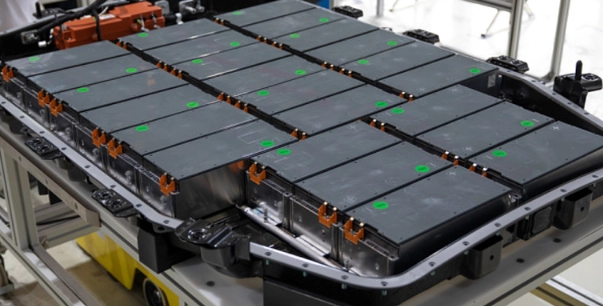
In the ideal model of BaaS (Battery-as-a-Service), Wuhan Weineng acts as an extremely cash-consuming "heavy-asset reservoir." When car buyers save tens of thousands of yuan on battery costs at the time of purchase, Weineng pays for those batteries and converts them into leased assets under its name, with car owners paying monthly rental fees to Weineng. This approach was an ultimate shot in the arm for boosting new car sales in the early stages of new energy adoption. However, this seemingly slow business of earning interest with minimal effort has had its long-term settlement method completely rewritten in the current inventory-driven cycle.
The most critical blowback from heavy assets comes from the actuarial mismatch between battery residual value and asset depreciation. Over the past two years, the price of lithium carbonate, a core battery raw material, has plummeted from record highs, causing manufacturing costs for new batteries to collapse sharply. For Weineng, which holds large inventories of high-cost older battery assets, this means severe asset impairment pressure on its balance sheet. At the same time, as the first batch of BaaS users' batteries enters aging, the technological inflection points and cost losses required to achieve efficient "resource recycling" before the large-scale retirement wave far exceed expectations. Against this backdrop, continuing to maintain an oversized capital position not only fails to deliver proportional interest returns, but also relentlessly erodes the parent company's overall gross margin through massive depreciation charges.
The Financial Logic Behind the Capital Reduction
Weineng's decision to flag this capital reduction through the Tianyancha system is essentially a cold, business-minded move to "dehydrate finances" and "deleverage capital." Legally withdrawing excess registered capital that cannot generate above-average returns directly improves the company's return on equity (ROE), providing a more streamlined and healthier financial profile when issuing battery asset-backed securities (ABS) and other financial derivatives in the capital markets.
As the traffic bubble of new energy fades, what tests the vitality of a battery bank is no longer how many tens of thousands of batteries it controls, but rather its precision in actuarial depreciation across the full asset life cycle. This new 2.67 billion yuan foundation built by giants like NIO and CATL is a clear industry gear-shift warning: the second half of the battle in battery swapping and battery asset operations has completely moved away from the romanticism of blindly expanding asset scale. Whoever can first complete asset cost reduction and cleanup in the deeply muddy battery residual value grinder will be the one to truly stabilize the profit flow of the entire supply chain in the upcoming near-field energy competition.