Wen Zhang's 'Alcohol' Exit: When Entertainment IPs Scavenge Residual Value in the Culinary Arena
Actor Wen Zhang moves from noodle shops to bars, leveraging residual IP value for commercial gain, facing the dual test of repeat customers and market reckoning.
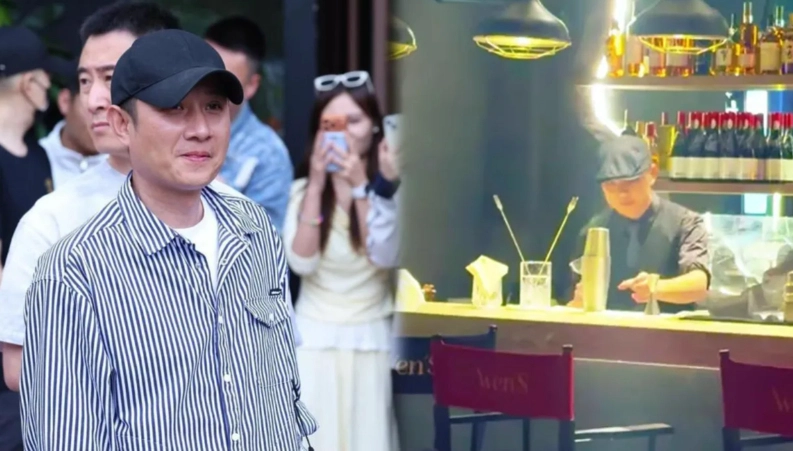
On May 8 in Shanghai, the early summer evening breeze had yet to dispel the restless energy of alcohol as actor Wen Zhang's bar opening became a hotbed of social media traffic. The presence of Deyun She members not only bolstered the event's prestige but also served as a powerful cross-industry endorsement. In the fiercely competitive entertainment market of 2026, the former heartthrob actor is attempting, beyond the screen, to execute the final descent and leap of his personal business empire through alcohol and flour.
This is not Wen Zhang's first venture into the restaurant industry. As early as last September, he established Shanghai Piganhou Catering Management Co., Ltd. Shortly thereafter, in November, through this management company, he quickly set up Shanghai Wenjiage Catering Co., Ltd., which later became the much-talked-about "No. 8 Courtyard" noodle shop in Shanghai. If the noodle shop represented a low-risk, asset-light operation with exploratory intent, then this high-profile bar opening marks a shift in his business logic from "sentimental side project" to a heavyweight track focused on "high-margin harvesting."
From Noodle Shop to Bar: A Dimensional Blow Using Traffic Dividends
In business narratives, the restaurant industry has long served as a safe harbor for entertainment figures during career fluctuations. But by 2026, the market has moved far beyond the wild-west era where "just slapping a name on it guaranteed easy profits." The equity structure visible on Tianyancha clearly outlines Wen Zhang's strategy: using "Piganhou," a management platform with a distinctly personal flavor, to radiate outward into different categories of dining entities. This structured approach is inherently designed to reduce operational risk for individual stores while maximizing the utilization of brand premium.
Why noodles and a bar? A deeper analysis reveals this as the most sober assessment of residual traffic value. The noodle shop targets a high-frequency, low-ticket, essential demand scenario, leveraging cultural labels like "No. 8 Courtyard" with its hutong nostalgia to accumulate the first wave of social currency in a city as style-conscious as Shanghai. The bar, however, operates on an entirely different profit logic—it's a quintessentially high-margin industry. What's being sold isn't alcohol per se, but an exclusive social circle built around a celebrity IP. When Wen Zhang, drawing on years of industry connections, attracts top-tier cross-industry figures like Deyun She to the venue, the bar ceases to be a mere physical space and transforms into a high-concentration point for liquidating social assets.
Capital Closure and the Physical Separation of Identity
Looking through these snapshots of business registration changes, one can discern a clear sense of identity anxiety and reinvention. Among the nine companies currently associated with Wen Zhang, only three remain active. This transition from film and television culture to restaurant management reflects a mid-career actor's reassessment of asset liquidity within the 2026 entertainment ecosystem. Film and TV production involves long cycles, slow payment recovery, and high uncertainty, whereas the restaurant business, though demanding, offers the advantage of faster cash flow returns.
Wen Zhang's roles as executive director and legal representative in these restaurant companies indicate he is no longer a "phantom shareholder" merely licensing his image, but rather deeply involved in management and operations. This "hands-on" approach represents his final defensive measure to preserve financial autonomy after setbacks in his primary career. The million-yuan registered capitals shown on Tianyancha each correspond to real expenditures on rent, labor, and supply chains at his physical locations. As his entertainment star fades, he must construct a moat against cyclical fluctuations through this deeply burdensome real-economy footprint.
Interest-Chain Drivers and the Warning Signs of Social Currency Depreciation
However, the core pain point for celebrities opening restaurants lies in converting "fan support" into "repeat patronage from regular consumers." The current buzz around the bar opening relies heavily on the residual appeal of his personal IP within a specific circle. By 2026, consumers are more exacting than ever; they won't pay sustained premiums for a gradually fading celebrity label.
Deyun She's appearance can generate instantaneous hype, but it cannot solve a bar's repeat-customer problem after midnight. If "No. 8 Courtyard" sells Beijing nostalgia, then this bar sells Wen Zhang's "inner circle." Once that novelty wears off, the newly established companies under his name may well face the same fate as his previously deregistered enterprises.
The endgame of business should be a competition of efficiency, not the consumption of personal favors. Wen Zhang's establishment of two new restaurant entities in less than a year underscores a sense of urgency in capital allocation. He is attempting a major asset shuffle through real-economy ventures before his entertainment IP completely loses its monetization capacity. But on this track saturated with grease and alcohol, the market's logic of accountability has never made exceptions simply because the owner is a celebrity. For Wen Zhang right now, sustaining this bar's cash flow is far more pragmatic a concern than making a comeback on the big screen.
This performance centered on "No. 8 Courtyard" and the queued-up bar is a business parable about how a major entertainment IP can land gracefully under the pull of real-world gravity. In an era where data defines truth, any attempt to bridge industry gaps purely through name recognition will ultimately be reduced to the most authentic and unforgiving issue of profit or loss within increasingly refined business credit systems. Having chosen to go deep into the real economy, what awaits him is no longer the applause of fans, but the bottom-line verdicts on gross margins and turnover rates in the ledger.
Within the 2026 restaurant landscape, this series of moves by Wen Zhang is essentially a zero-sum struggle for survival with dignity. Whether the entity named "Piganhou" can secure its footing in this rapidly shifting market depends on whether he can genuinely shed the actor's persona and learn to calculate, like a pure businessman, the residual value behind every bottle of whiskey and every bowl of noodles.