Weilan New Energy Spends Millions to Set Up AI Company: Not a Trend, but Battery R&D Is Exhausting
Weilan New Energy has set up an AI company to use computing power for material R&D, tackling the high costs and low efficiency of battery development.
While everyone is fixated on when the semi-solid-state batteries in the chassis of new energy vehicles will be fully deployed at scale—or even evolve entirely into all-solid-state—the hardcore leaders in the race have quietly reached into the seemingly unrelated domain of AI computing power pools.
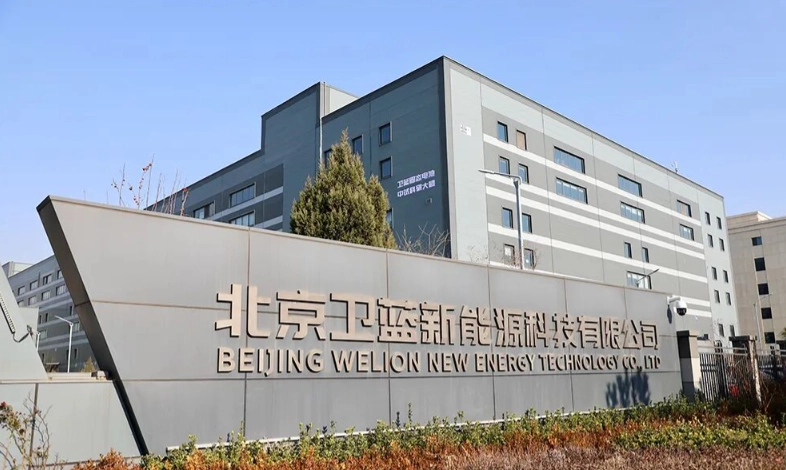
As a critically important battery supplier behind EV startups like NIO and Xiaomi, WeLion New Energy recently established a new entity in Beijing with a distinctly cross-industry flavor. The launch of Futa (Beijing) Artificial Intelligence Technology Co., Ltd. has left many industry observers—who are accustomed to finding growth logic in electrochemical formulations and capacity reports—feeling deeply unsettled. Why would a heavy-asset manufacturing unicorn, one that is mired in mud and spends its days brewing electrolytes in physics labs, suddenly dive into the ethereal world of system integration and general-purpose large models?
To understand the deep profit-chain logic behind this cross-industry move, one must not settle for superficial platitudes like "embracing the tech wave." What it truly reflects is the brutally cold gravitational pull of chemical R&D that the entire power battery industry faces as it sprints toward the endgame.
Over the past few decades, humanity's methods for discovering new battery materials have essentially remained stuck in the traditional "Edisonian trial-and-error" approach. Researchers endlessly tweak the ratios of polymers, oxides, and sulfides in the lab, then wait months for charge-discharge cycle tests to run. This brute-force path of hoping to strike gold, when confronted with the extremely complex solid-solid interface contact impedance and lithium dendrite penetration challenges of all-solid-state batteries, has pushed the cost in time and capital to a breaking point that early-stage investors can no longer tolerate.
WeLion's move this time is not at all about competing with internet giants over generative conversational products. Rather, it is about forcefully carving out a data-driven digital lifeline from the dead end of electrochemistry.
Tracing the underlying business registration details disclosed in the Tianyancha system, this new company's initial registered capital is a mere one million yuan. In an ultra-heavy-asset cycle where building a mega battery factory routinely costs tens of billions, one million yuan is not even enough to buy a high-end precision coating machine. But if you focus on the legal representative, Yang Youwen, and the phrase "AI public data platform" prominently listed in the business scope, the true strategic intent behind this micro legal shell is fully exposed.
That one million yuan base is WeLion's way of carving out a clean, high-fault-tolerance algorithmic special forces unit from within its massive, lumbering manufacturing parent body.
Traditional heavy chemical plants' compensation systems and management structures make it difficult to attract and retain top-tier machine learning and molecular dynamics simulation experts. By leveraging the joint-ownership structure—featuring natural persons, partnership enterprises, and the WeLion parent company, as shown in the Tianyancha records—WeLion has effectively completed a legal and interest-based binding of core algorithm talent at an extremely low trial cost.
What they are trying to build is a proprietary data hub that feeds the machine all the material waste data, formulation evolution trajectories, and core test curves accumulated over years of failed experiments. By building virtual twin models of battery materials, they can simulate tens of thousands of crystal structure evolutions in a single day within the computing network, directly eliminating commercially worthless formulations in the digital space—thereby boosting the success rate of physical lab experiments by several orders of magnitude.
The elimination game in the commercial world never shows mercy for crossing industry lines. In this brutal arena where life and death are defined by energy density purity and mass-production timelines, the battery war has long since moved past the stage of simply comparing factory floor space and entered the deep waters where computing power and data cleaning are used to seize control over formulations. Old-school players who still rely solely on human trial-and-error in the lab, groping like blind men trying to size up an elephant, will ultimately face elimination under the dimensional strike of pixel-level computing power. The establishment of this micro AI company is exactly the digital shot in the arm that this battery unicorn has had to take in advance to survive the coming materials science purge.