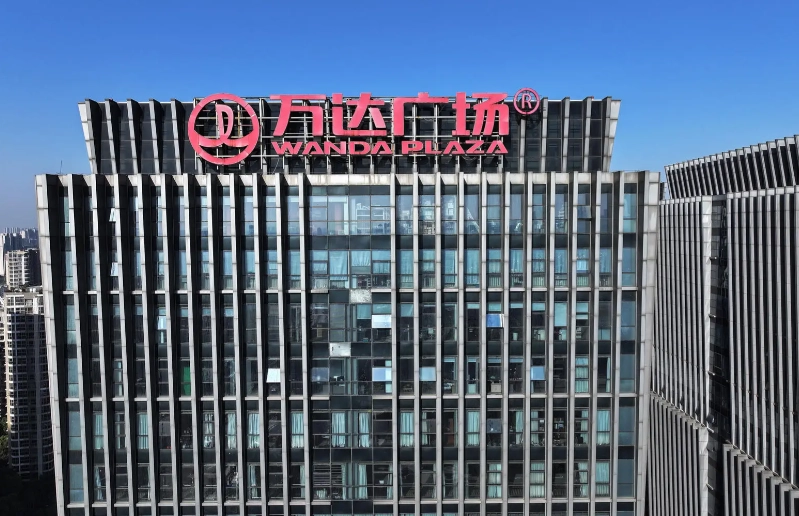
Wanda Dalian Commercial Management Faces Another 250 Million Yuan Enforcement: Judicial Shoals and Debt Aftermath
Wanda Dalian Commercial Management has been hit with another 250 million yuan in enforced execution, intensifying debt collection and liquidity pressure, as judicial enforcement becomes the only avenue for creditors to seize remaining liquidity.
When news emerged that Dalian Wanda Commercial Management Group had again added RMB 250 million to its enforcement targets, with the case filed and executed by the Nantong Intermediate People's Court in Jiangsu Province, the capital markets were no longer shocked by such debt recovery actions. This enforcement amount of over RMB 200 million may appear to be a mere ripple against Wanda's vast asset base, but the densely exposed trail of judicial enforcement has sharply pierced through to a brutal reality: even though the top-level capital operations have completed a hair-raising restructuring at the equity level through the introduction of strategic investors, the quagmire left behind at the grassroots level—stemming from historical project development, construction settlement, and regional borrowing—continues to drain liquidity from this commercial real estate giant through relentless judicial enforcement measures.
Over the past year or more, Wanda, in order to resolve its VAM (Valuation Adjustment Mechanism) crisis and liquidity gap, has not hesitated to cut off its own limbs to survive, intensively divesting control of various Wanda Plazas across the country while bringing in international capital such as Middle Eastern sovereign funds and PAG to restructure the newly formed Daming. This set of macro-level capital maneuvers appears to have bought the group precious breathing room, but the debt backlash accumulated during the aggressive expansion period of commercial real estate can never be completely erased by a few closed-door agreements.
Examining the judicial and commercial records accumulated on Tianyancha to scrutinize this commercial parent entity, the legal repayment pressure it faces is extremely heavy. According to Tianyancha's legal litigation information, the enforcement target executed by the Nantong Intermediate Court against Dalian Wanda Commercial Management amounts to as much as over RMB 250 million, and the company has encountered multiple judicial enforcements throughout its history. On this massive commercial entity, with a registered capital of RMB 27.16 billion and Chen Hongtao serving as its legal representative, the series of enforcement traces and related lawsuits recorded by Tianyancha precisely map out the enormous fault line between macro-level restructuring and micro-level debt repayment.
This enforcement case at the Nantong Intermediate Court most likely involves construction settlement payments, supply chain debts, or guarantee recovery claims by regional financial institutions arising from the development of regional commercial projects.
This rigid enforcement from a local intermediate court has created a highly damaging "slow knife cutting flesh" effect on Wanda's daily operations. When Wanda Commercial Management, as the parent entity, provides guarantees or assumes joint liability for grassroots regional projects, any dispute outbreak in a local project will directly penetrate through to the parent company's accounts via judicial enforcement procedures. Under the high pressure of compulsory enforcement, the precious cash flows originally intended to maintain mall operating turnover and rent collection are highly susceptible to being legally deducted by the court system.
This not only directly erodes the commercial management operating profits on which Wanda depends for survival, but also continuously worsens its credit profile within the financial system, making subsequent financing extensions face even greater resistance.
The deeper crisis lies in the fact that in today's commercial real estate landscape, which has shifted from high-growth expansion to stock competition, the liquidity and premium capacity of shopping center assets in second- and third-tier cities are shrinking dramatically. The previous channels of robbing Peter to pay Paul through project mortgages or asset refinancing have been completely sealed off. When local engineering contractors, material suppliers, and small and medium-sized financial institutions exhaust their patience with debt extensions, resorting to litigation and applying for compulsory enforcement has become the only avenue for creditors to compete for residual liquidity.
These judicial shackles on Dalian Wanda Commercial Management reflect the cold price being paid as China's entire high-leverage era in commercial real estate comes to an end. During the prolonged painful period of clearing legacy burdens, relying solely on top-level equity maneuvers is far from sufficient. How to untangle the debt knots amid project lawsuits scattered across various regions, and how to withstand the successive blows of the judicial hammer under limited rent-generating capacity, are the real-world trials that this former behemoth must confront head-on in deep waters.