The Volvo S90 cuts its price by 170,000 yuan, making a desperate bid for survival through a manufacturing-dominated dealership model as the traditional luxury pricing system collapses.
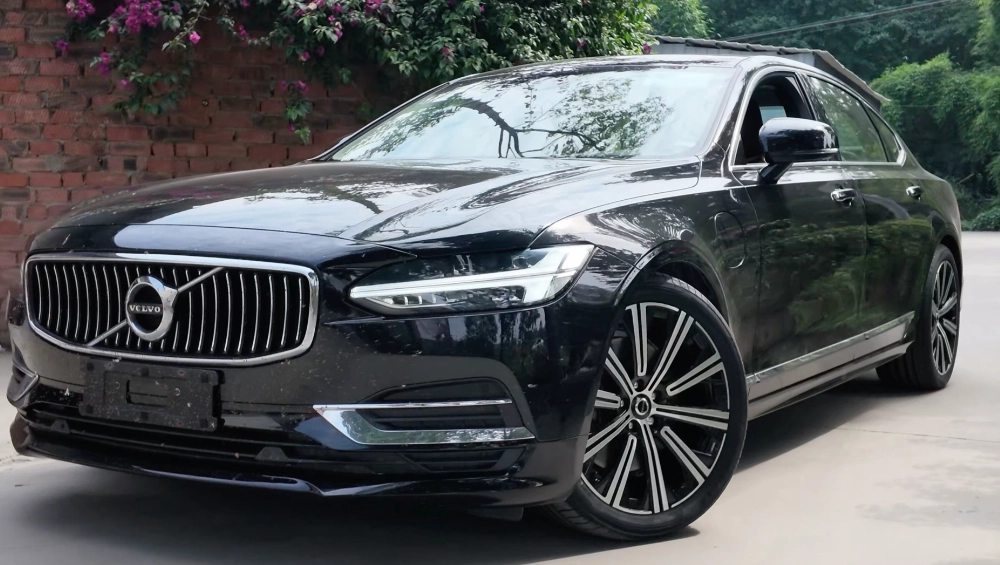
When the Volvo flagship sedan S90 slashed its terminal starting price into the deep waters of 229,900 yuan, tearing open the defense line with discounts of up to 177,000 yuan, what the market saw was a set of brutal yet immediately effective harvest data. In August, retail sales of the model instantly climbed to 1,554 units, a threefold surge from the glaring 388 units in July.This is by no means a comeback worth celebrating, but rather a break-one's-arm-to-survive bid by second-tier luxury fuel vehicles under the double crush of new energy vehicles and the BBA price war, frantically sacrificing brand premium in exchange for the right to survive.
The ability to resolutely carry out a price cut of nearly half without triggering violent internal channel backlash on the manufacturing and sales sides lies in Volvo's highly unusual inverted production-sales equity structure. Through the industrial and commercial equity penetration chart retained by Tianyancha, it can be clearly seen that Daqing Volvo Car Manufacturing Co., Ltd., the sole global manufacturing base for the S90, wholly owns Volvo Car (Asia-Pacific) Investment Holding Co., Ltd., which has registered capital of as much as 7.5 billion yuan.
The latter is precisely the core hub for Volvo's Asia-Pacific brand general distribution and wholesale business.In the gaming ecosystem of traditional joint-venture automakers, the production plant and the sales company are often two parallel teams, and every major terminal price cut requires lengthy negotiations over ex-factory price subsidies and a re-division of profits.
This centralized model of "manufacturing governing distribution" at the Daqing plant has fully revealed its hidden trump-card value in this price war. Modern automobile manufacturing is a heavy-asset industry extremely dependent on capacity utilization, and the Daqing plant carries enormous production-line depreciation, employee salaries, and local industrial output expectations. When terminal demand freezes and finished-vehicle inventories pile up, the cost of halting production and shutting lines is far more fatal than selling cars at a loss.
Direct control of the sales system by the factory means internal transaction friction costs are reduced to absolute zero.This 177,000 yuan terminal discount is essentially the manufacturing side directly draining the industrial profit originally reserved, using the floor of the ex-factory unit price to forcibly break through consumers' psychological defenses. As long as the assembly line is still roaring and cash flow is still circulating, shipping goods at a discount to preserve the base is better than a heavy-asset factory falling into stagnation.
The S90 falling into the price band of just over 200,000 yuan marks the structural collapse of the traditional luxury car pricing system. A large C-segment executive sedan is forced to lower itself to compete with mainstream joint-venture B-segment cars and independent mid-to-high-end new energy models for customer traffic. After stripping away the Nordic luxury filter, what is displayed is merely the bare floor price of industrial materials.At a time when domestic new car-making forces are frantically reshaping high-end perceptions with smart cockpits and electric drive technology, traditional fuel luxury cars lacking the narrative capability for cutting-edge intelligentization have no leverage left to pry open incremental demand other than lowering themselves to the absolute minimum.