A U.S. fried chicken brand enters China asset-light via a 300,000-yuan shell company, its queue frenzy masking supply chain gaps and long-term risks.
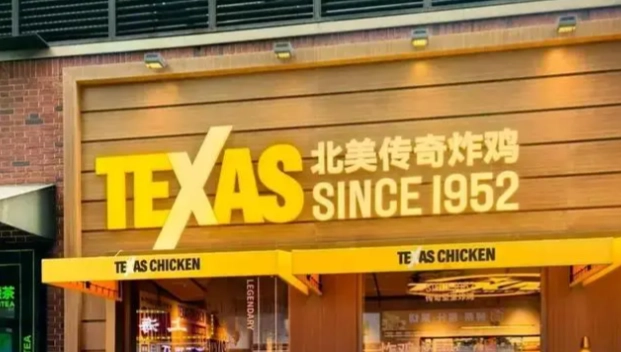
When America's long-established fast-food brand Dixie Salvation Fried Chicken, with more than seventy years of history, dropped its first China store onto Wujiang Road in Shanghai and quickly swept social media with an opening-day check-in craze that had people lining up in the rain for more than two hours, public attention was mostly drawn to the $15.9 per-piece American fried chicken pricing and the surging crowds eager for a taste. Yet if one looks past the surface noise of the long lines and examines the underlying path by which this multinational fast-food giant arrived in China decades late, it becomes clear that this seemingly spectacular first-store landing lays bare the deep contradiction facing overseas restaurant brands after missing China's golden window for fast food: they covet the huge local consumer market, yet are extremely afraid of heavy-asset investment in the supply chain.
Heavy-Asset Dilemma in a Red-Ocean Landscape
In China's current fried chicken fast-food landscape, the market is no longer the wilderness it was thirty years ago when Western fast food first entered the country. KFC and McDonald's have built an extraordinarily formidable centralized procurement supply chain and location monopoly through their ten-thousand-store scale, while domestic upstarts such as Tastien engage in close-quarters combat relying on extreme cost-effectiveness and a downward-penetrating network. In a red ocean where customer unit prices are polarized and cheap substitutes abound, if a U.S. regional brand that previously lacked broad local brand recognition wants to build its own cold chain, warehousing, and central kitchen through a heavy-asset direct-operation model costing tens of millions, its investment payback period will be stretched to an unbearable and dangerous level.
This defensive, step-by-step calculation is fully exposed in the store's underlying business registration structure.
The Capital Mystery of a 300,000-Yuan Shell Company
Looking through the legal entity behind this new store, its ultra-lightweight capital configuration is telling. Tianyancha business registration data shows that the affiliated company of Dixie Salvation Fried Chicken's Shanghai first store, Shanghai Yuchen No. 1 Catering Management Co., Ltd., was established in August this year, with Huang Xiaoxuan as the legal representative, and registered capital of merely 300,000 yuan, with its business scope covering catering management, brand management, and food sales, among others.
In the equity penetration chart recorded by Tianyancha, this entity is wholly owned one hundred percent by Shanghai Yushi Catering Management Co., Ltd.
A registered capital of 300,000 yuan, placed in a prime location in Shanghai's prime commercial district where land is worth its weight in gold, is not even enough to cover several months of entry rent and hardware renovation costs. This typical single-store, single-entity, layer-by-layer isolated architectural design reveals that Dixie Salvation Fried Chicken has not adopted the large-scale wholly owned heavy-bet approach commonly used by international giants in their early days, but has instead chosen the extremely classic master-franchisee model.
By granting brand franchise rights to a local agency operation management company with catering experience, the overseas parent company not only locks in upfront brand licensing fees and subsequent revenue sharing, but also shifts the extremely heavy risks of site selection rent, renovation sunk costs, employment compliance, and ingredient loss entirely onto the front-end agency entity. And the move to set up a project shell company with 300,000 yuan is an extremely standard legal and financial firewall in single-store commercial real estate operations: once the first store's popularity fades and the single-store model fails to work, a limited liability entity of this size can quickly cut losses and exit at the lowest liquidation cost, ensuring that it will not drag down the parent company's capital chain through joint liability.
The Endurance Test of Internet-Famous Bubble and Ground Game
The deeper test lies in how long the internet-famous queue bubble can last in the fierce ground game.
The pricing range of 15.9 yuan per piece clearly exposes its premium ambition to cut into the mid-to-high-end boutique fast-food segment. In the early days after opening, relying on the first-store effect, novelty-seeking psychology, and social media store-visit paid promotion, it was enough to create the illusion of two-hour queues on Wujiang Road, a core commercial street with extremely dense foot traffic. However, as a highly standardized fast-food category, fried chicken has an extremely low technical barrier, and consumers' freshness toward price and taste fades extremely quickly.
The repeated changes of ownership, store closures, and even restructuring of similar American fried chicken brands such as Popeyes in the Chinese market have long proven that relying solely on American retro storytelling cannot support long-term single-store repurchase rates.
Once the first-store check-in wave recedes, agency operators lacking the support of deep local supply chain scale will directly collide with the two-way squeeze of high raw material procurement costs and sky-high rents in core commercial districts.
Traffic Flash Mobs Hard-Pressed to Build a Moat
This queue carnival in the early autumn rain of Shanghai sounds an alarm for all fast-food brands attempting to cross the ocean in search of gold. When the first-store economy is over-exploited as a traffic flash-mob tool, a lightweight 300,000-yuan trial certainly reserves a dignified exit for capital, but it also dooms it to being unable to build a moat against local supply chain behemoths in a short time. At a time when rational consumption has fully returned, if instant queue traffic cannot be converted into sustainable single-store cash-generating capacity, then no matter how tempting the old-brand American fried chicken is, it can easily become a fleeting passerby in the next round of restaurant industry reshuffling.