Unitree Robotics' high-pressure management draws attention, as the founder's unilateral decision-making and organizational mismatch become the biggest bottleneck for commercialization.
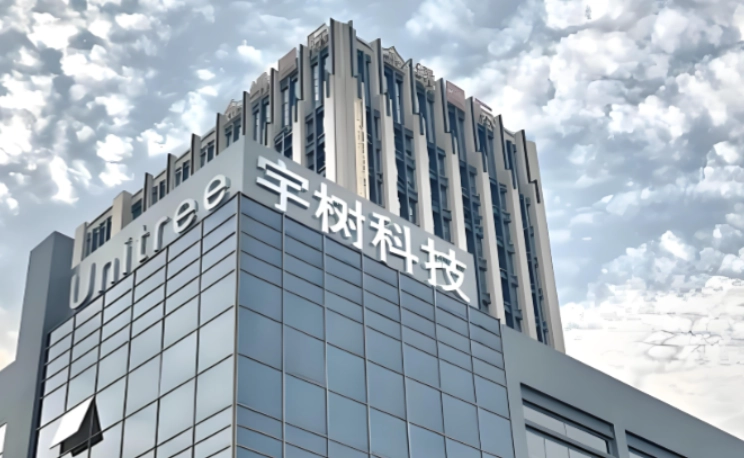
According to details disclosed by Caijing magazine, the internal micro-ecosystem of Unitree Robotics is showing a high degree of tension: executives under Wang Xingxing cannot receive a performance score above 1 point (out of a maximum of 1.5 points), R&D staff offset their frustration by comparing "who gets scolded less," people line up outside the door waiting for signatures, and the assessment system emphasizes heavy penalties over rewards. In the eyes of the public, it is a hard-tech star, but in the internal management slice, it looks more like a classical workshop with power highly contracted inward and an extremely low tolerance for error.
This is not merely the founder's personal authoritarianism, but the inevitable loss of balance of a technical genius at the node of organizational leap.
The mismatch between elevated industry narrative and organizational structure
The narrative rhythm of embodied intelligence has been severely elevated over the past two years. With capital pouring in, listing expectations pressing down, and competitors closing in step by step, industry competition has rapidly shifted from "gait elegance" in the laboratory to mass-production定点, cost reduction, and supply chain throughput capacity. In the startup phase, Wang Xingxing single-handedly covered the core breakthroughs from motor solutions to low-level code, relying on absolute technical intuition to push the company forward;
But in the organizational structure shown by Tianyancha, he still simultaneously serves as legal representative, chairman, general manager, and chief technology officer. This "one-man trunk" structure is destined to become the greatest resistance to the entire machine's operation.
Perfectionism evolving into management suppression
When the company expands in scale, the founder's perfectionism inevitably evolves into all-encompassing management suppression. Behind the queuing for approval is the fact that core decision-making power cannot be delegated to management for a long time; executive performance is always pinned below the baseline, directly exposing the technical boss's distrust of the professional manager system.
Under an ecosystem of strong assessment and weak incentives, organizational members will quickly develop learned helplessness: rather than actively taking risks in technical trial and error and being punished, it is better to retreat to the safe boundary of "making no mistakes and being scolded less."
The split between paper promises and real workstations
The labor disputes and previous non-compete lawsuits recorded in Tianyancha's judicial information may seem like only the unavoidable friction costs in the process of corporate scaling, yet they precisely step on the sensitive nerve of Unitree's commercialization turning point. The prospectus is filled with future-oriented employee shareholding and equity incentives, but what circulates at real workstations is a reimbursement and queuing culture of "only penalties, no rewards."
The real bottleneck is not technology
Hard tech has never been forced out by high pressure. As the external capital boom gradually enters a reshuffling period that requires real combat in commercialization implementation, Unitree's biggest bottleneck may long since no longer be in algorithm models or motor power, but in that office where people need to line up for signatures. How to smoothly transition a geek's personal will into a self-driven modern engineering system has become the answer Wang Xingxing must first provide before delivering the next robot.