United Imaging relocates to Fuyang with hundreds of millions in strategic investment, betting on the embodied intelligence supply chain and striking an industrial asset swap with local state capital.
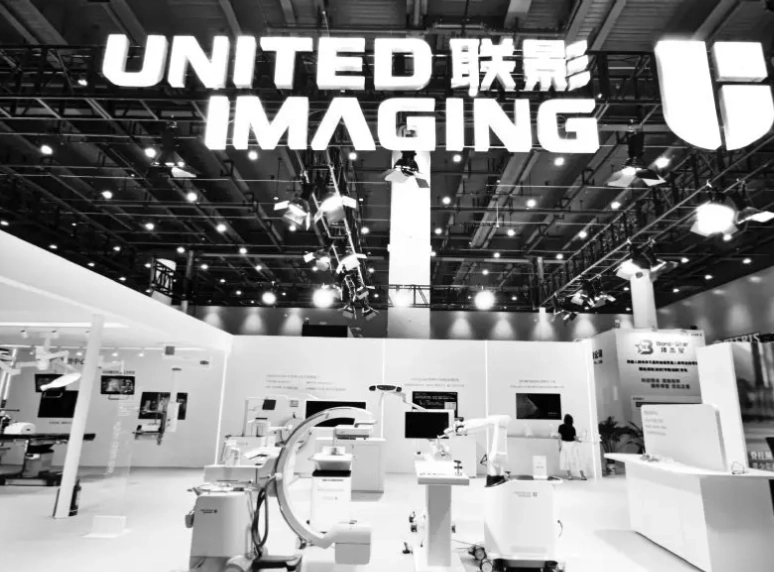
When United Imaging, which has already crossed the 2 billion yuan revenue threshold and securely holds the position of core vision supplier for leading robotics companies such as Unitree Robotics, announced at the beginning of September that it had completed a new round of funding worth several hundred million yuan, what drew the most attention was not the funding amount itself, but a series of highly strategically resolute relocation moves made on the eve of the capital's entry: pulling up by the roots a corporate entity that had been rooted for ten years and moving it from Shenzhen to Fuyang, Hangzhou; rapidly expanding its business scope from traditional camera modules to artificial intelligence public data platforms and industrial internet; and simultaneously tying itself to an intelligent vision industrial project with total investment reaching the billion-yuan level.
If this scene is understood merely as an ordinary relocation of the Pearl River Delta hardware supply chain to the Yangtze River Delta, then the intensity with which the embodied intelligence wave is reshaping upstream optical perception is completely underestimated—this is by no means a simple factory expansion, but rather a traditional consumer electronics optics veteran with annual sales of 2 billion yuan, at the intersection where the mobile phone and security dividends have peaked and the robot perception arms race has begun, using corporate relocation and new computing power and data businesses as bargaining chips to strike a mutually beneficial high-level industrial exchange with local state-owned capital.
From the Red Ocean of Consumer Electronics to the Incremental Gap in Embodied Intelligence
During the golden decade when the mobile internet and smart hardware were advancing triumphantly, Shenzhen, with Huaqiangbei's unmatched component distribution capabilities and the Pearl River East Coast's ultimate module contract manufacturing ecosystem, incubated thousands of camera module and optical solution providers. United Imaging started here and achieved a revenue scale of 2 billion yuan, with its underlying path highly dependent on the volume growth of consumer electronics, smart automotive, and security surveillance.
However, as global smartphone shipments step into the mire of stock or even negative growth, traditional two-dimensional (2D) imaging modules have been reduced to red-ocean contract manufacturing where profits are calculated down to fractions of a cent; even in the automotive camera sector, it faces scale suppression from established giants such as Sunny Optical and O-Film on automotive-grade production lines. Against this backdrop, the explosion of embodied intelligence represented by quadruped robot dogs and humanoid robots has torn open an incremental gap with astonishing compound annual growth for high-precision 3D depth cameras, binocular structured light, and time-of-flight (ToF) sensors.
The stringent requirements of complete machine manufacturers such as Unitree for visual obstacle avoidance, mapping, and hand-eye coordination have instantly elevated optical perception from a passive hardware peripheral that records images to the spatial cognitive neuron of robots.
The Timeline of Relocation and Asset Restructuring
Following the underlying business registration traces to penetrate the transformation trajectory of this optical entity, its timeline of relocation and asset restructuring dovetails clearly in Tianyancha archives. Tianyancha business registration data shows that Hangzhou United Imaging Co., Ltd. was established in 2014 and had long operated under the legal entity form of "Shenzhen United Imaging Co., Ltd." The key qualitative change occurred on July 22. Tianyancha change records show that the company formally changed its name and completed cross-province and cross-city relocation, with its registered address moved to Fuyang District, Hangzhou;
On the same day the relocation was completed, its business scope swiftly added "artificial intelligence public data platform, industrial internet data services," and other high-level AI software and data element chains.
Echoing the migration of the main entity is the physical deployment it had already completed in advance.
Information disclosed by Tianyancha shows that as early as April of this year, United Imaging had already established a wholly owned subsidiary in Hangzhou, Hangzhou United Vision Technology Co., Ltd., with registered capital of 30 million yuan.From the advance establishment of a subsidiary in April to undertake preliminary engineering, to the full relocation of the parent body valued at several billion yuan along with its tax registration into Fuyang in July, to the official announcement in September of the completion of several hundred million yuan in funding, this tightly linked pace of capital operations points directly to the powerful local industrial lever behind it.
The Essence of the Deal: State-Owned Capital Injection and Industrial Exchange
Looking at the list of investors in this round, the prominent inclusion of two local state-owned capital platforms, the Hangzhou Embodied Intelligence Industry Fund and Fuyang Industrial Investment, directly reveals the transactional essence of this "billion-yuan-level intelligent vision industrial project."
For the Fuyang and even Hangzhou local governments, after missing some early hardware manufacturing opportunities, Hangzhou urgently needs to rely on Alibaba's software ecosystem and Unitree Robotics' complete machine leader effect to build the country's first city for embodied intelligence in the Yangtze River Delta. However, the key shortcoming of robots often lies in precision sensors and high-barrier hardware.Pulling in by the roots a leading module enterprise with a mature revenue base of 2 billion yuan that has already entered Unitree's core supply chain can not only directly contribute substantial above-scale industrial output and local fiscal revenue, but also geographically compress the robot's "brain" (Hangzhou AI algorithms), "eyes" (United Imaging visual modules), and "limbs" (Unitree complete machines) within a half-hour drive industrial cluster radius.
In exchange, United Imaging obtained several hundred million yuan in real equity investment from local state-owned capital, endorsement from an industrial fund, low-cost industrial land quotas, and special landing support for a billion-yuan-level industrial project.
The Valuation Logic Behind the Addition of the Data Platform
A deeper strategic qualitative change is reflected in the rapid addition of "artificial intelligence public data platform" to its business scope.
In the valuation system of traditional hardware suppliers, camera modules can often only enjoy a price-earnings ratio of around 15 to 20 times as manufacturing. But once it enters the embodied intelligence era, merely selling depth camera hardware will fall into a new homogenized dead end. The biggest pain point of robot vision is not capturing point cloud images, but how to perform real-time structured annotation of massive 3D spatial point clouds and operating condition data under harsh lighting, and then feed them to edge-side AI large models.
While relocating to Hangzhou, United Imaging extended its business reach into industrial internet and AI data platforms, essentially attempting to evolve into an integrated solution provider of "hardware plus data plus edge-side algorithms." By providing customized vision modules to downstream customers such as Unitree while accumulating training data from real physical scenarios, the company seeks to break the ceiling of hardware contract manufacturing and exchange it for multiple premiums in technology software and data elements at the valuation level.
Hidden Shoals in Industrial Implementation
However, this seemingly perfect capital marriage still harbors hidden shoals in real industrial implementation.
First, the friction of restructuring after leaving the mature supply chain of the Pearl River Delta. Shenzhen has the world's densest ecosystem for precision optical lenses, VCM motors, optical filters, and ultra-fast prototyping and machining; after shifting its center north to Fuyang, Hangzhou, its procurement scheduling, engineering trial production, and mold modifications for key upstream optical components will inevitably lengthen the supply chain response cycle.
How to rapidly rebuild a lean manufacturing support system of equal efficiency in the Yangtze River Delta is the primary test for ensuring delivery cadence.
Second, the risk-resistance hidden danger of excessive business dependence on a single star customer. Although Unitree Robotics is riding high in public discourse and the embodied intelligence field, the current commercial shipments of humanoid robots and quadruped robot dogs worldwide are still in an early exploratory period climbing from thousands to tens of thousands of units.If the depreciation of heavy assets at the billion-yuan-level base begins to amortize while the downstream complete machine customer's volume ramp-up pace falls short of expectations, or if Unitree introduces a second or third supplier to drive down prices for supply chain security, United Imaging's massive capacity construction could easily suffer a backlash from fixed asset depreciation.
Conclusion: The Struggle for Pricing Power Under Scenario and Ecosystem Restructuring
This cross-province migration in late summer and early autumn releases an extremely vivid lesson to China's entire high-end manufacturing and hard-tech investment circle: as the curtain rises on the industrialization of embodied intelligence, the flow of manufacturing factors has evolved from early labor and land arbitrage to "scenario and ecosystem restructuring" deeply attached to chain-leader enterprises and local government collaborative innovation.Only hardware veterans who dare to break out of their regional comfort zone at key nodes, exchange their own manufacturing heritage for state-owned capital ammunition, and break through upward into software and data can truly seize the pricing power of the next generation of machine eyes in this wave of comprehensive migration from consumer electronics to general intelligence.