Uhue's store closures while keeping its corporate entity reveal the collapse of the guochao cosmetics traffic arbitrage model, as brands are reduced to temporary middlemen between contract manufacturers and platforms.
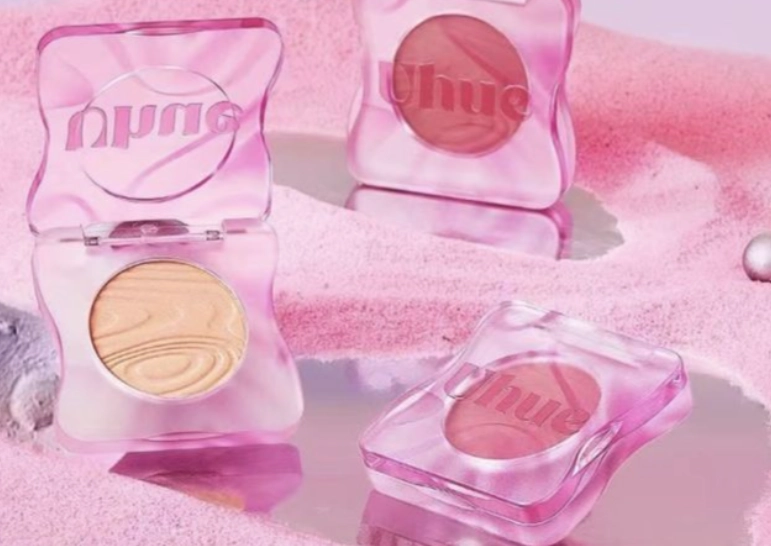
When the color cosmetics brand Uhue announced in late September that it was voluntarily cutting off its flagship store's operating network, this was by no means the accidental demise of a single emerging consumer brand, but rather a collective amputation by the entire domestic-trend color cosmetics camp—one that had been force-grown on contract manufacturing and paid traffic—when faced with the backlash of traffic. Behind the silence of media repeatedly calling the brand's phone with no answer lies an extremely shrewd financial stop-loss logic: decisively shut down the loss-making retail touchpoint at the front end, while firmly preserving the corporate legal entity shell at the back end.
This phenomenon of the store dying while the company survives precisely pierces the most hidden fig leaf of the new consumer track over the past few years.
The asset-light operating chassis revealed through business registration data
Through the penetrating view of Tianyancha's business registration data, this asset-light operating chassis is laid bare. According to Tianyancha information, Uhue's affiliated entity, Zhejiang Huacan Trading Co., Ltd., was established in 2019 with registered capital of 10 million yuan, wholly owned by Hangzhou Huacan Beauty. What is especially critical is that neither the Zhejiang Huacan parent entity nor its Hangzhou branch, just established in 2023, is currently shown as dissolved in the business registration system, and both still firmly hold the registered Class 35 commercial trademark.
This operation—in which the legal entity and commercial trademark remain intact, and only the e-commerce platform store is deregistered—proves that the operator has not fallen into a full liquidation due to insolvency, but is instead very rationally and proactively pulling the IV tube.
The underlying mathematical model of traffic arbitrage
To understand this decisive severance, one must strip away the sensory filter of color cosmetics and look directly at its underlying, brutal traffic mathematical model. China's mass color cosmetics market has never been a business about chemical R&D and formula patents, but a pure game of traffic arbitrage. With the extremely mature beauty contract manufacturing systems of the Yangtze River Delta and Pearl River Delta, a new brand only needs to complete outer packaging design and concept refinement to bring a product to market in just two or three months.
The brand's true core asset is not a chemical plant, nor an R&D center, but that precise traffic-buying algorithm that calculates input-output ratios across major content platforms.
Exhaustion of traffic dividends and algorithmic collapse
However, when platform traffic dividends are completely exhausted and customer acquisition costs surge exponentially, the underlying logic of this algorithm collapses entirely. For lip muds or eyeshadow palettes costing just a few dozen yuan, their razor-thin gross margin has long been unable to cover livestreamer commissions, slot fees, and platform commissions that often exceed half the selling price. In this model, as soon as you stop topping up the platform to buy traffic, the store's organic sales instantly drop to zero;
and once you continue投放, the more you sell, the faster your book cash flow bleeds.The flagship store is no longer a position for building brand mindshare, but has instead become a money-incinerating black hole that consumes store rent, customer service labor, and return-and-exchange logistics costs every single day.
Closing the store while keeping the shell: preserving the capital ember
In this extremely involuted red ocean, keeping an online store that could trigger customer complaints, refund waves, and platform fines at any time is a massive financial net liability for shareholders. Closing the flagship store means completely severing the most expensive operational entanglement with consumers and the platform. But keeping that surviving corporate entity with tens of millions in registered capital and the trademark preserves an ember for capital to pivot or transform at any time.
Tomorrow, this same team and the same business registration shell can completely abandon the profit-drained eyeshadow palettes, turn to contract manufacturing and white-labeling higher-premium press-on nails, colored contact lenses, or even fragrance and personal care, and continue repeating the story of buying low and selling high in the next traffic trough.
The dignified hibernation of a traffic porter
Uhue's exit reveals a cold reality to the entire beauty industry chain: emerging brands that have lost control over heavy-asset basic chemical materials are essentially just temporary porters between contract manufacturers and traffic platforms. When the arbitrage spread from porting can no longer cover the tolls along the way, pulling the internet cable and retaining the entity as a hibernation strategy is the most dignified posture these traffic operators can assume in this chilling consumer cycle.