Shedding Heavy Assets, Tuhu Car Trims One Move Back to Core Profit Zone
Tuhu Car withdraws from Qingyuan Leipeng, shedding heavy assets in new car sales to focus on high-margin maintenance services, signaling a strategic retreat.
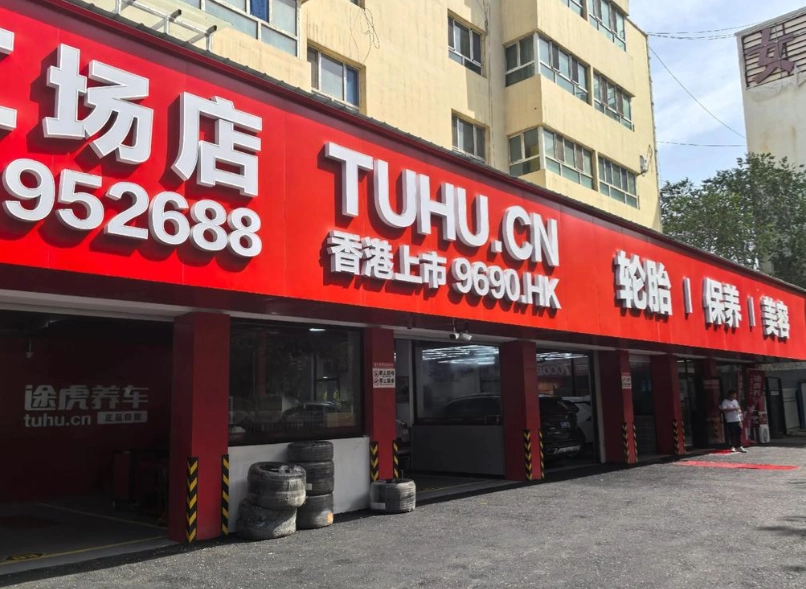
The silent reshuffling in the automotive aftermarket is redrawing the boundaries of survival for industry giants through a cold, asset-stripping approach. Qingyuan Leipeng Automotive Sales Service Co., Ltd. has undergone a business registration change, with the previous shareholder Tuhu Automotive (Shanghai) Automotive Services Co., Ltd. fully exiting, and Guangzhou Nanling Automobile Co., Ltd. added as the sole shareholder. Alongside the capital transfer, multiple key management personnel were also simultaneously replaced.
Stripping away the crossover new-car facade, a strategic retreat to the high-margin core zone
Many industry observers accustomed to seeing Tuhu's rapid nationwide expansion of service centers tend to view this equity transfer as a negligible regional business adjustment. This shallow logic underestimates the deep anxiety of aftermarket giants over bloated balance sheets amid the current brutal new-car price war cycle. During the surge of new energy vehicles a few years ago, independent aftermarket leaders like Tuhu were infatuated with the closed-loop story of new-car sales shells plus end-of-life maintenance, attempting to extend their reach into the vehicle sales market. This swift equity departure plainly reveals the strategic clarity of aftermarket players after hitting the wall of heavy assets: rather than squandering resources in the quagmire of heavy-capital, low-margin, and fiercely competitive new-car sales, it's wiser to decisively withdraw and fully retreat to their core competency—high-margin standard maintenance services.
Beneath the corporate structure, a causal reckoning between traditional heavy-asset games and asset-light platforms
To unpack the underlying interest dynamics behind this retreat, one must use Tianyancha to dissect the business framework of the transferred entity. This Qingyuan Leipeng entity, with a registered capital of five million yuan, lists in its business scope, alongside traditional motor vehicle repair and maintenance, asset-intensive activities such as new energy vehicle and new car sales. The five-million-yuan base may seem modest, but it squarely targets the heavy-asset game of new-car retail, which is extremely cash-flow intensive.
The hidden driver of vehicle sales is the brutal pressure of inventory turnover and capital advancement. In the current cycle where automakers aggressively push inventory onto channels to meet sales targets and new energy brands frequently engage in price undercutting, crossover new-car selling has evolved from a coveted opportunity into a liquidity black hole that can drag down a company's cash flow at any moment.
Tuhu's decision to offload this hot potato entirely to Nanling Automobile, a traditional dealer giant deeply rooted in South China for years, is an astute move for loss mitigation and asset monetization. Nanling, as a regional legacy chain dealer group, possesses a mature vehicle supply chain, financial credit channels, and local negotiation capabilities, enabling it to quickly integrate this Qingyuan entity into its existing traditional automotive retail framework. For Tuhu, which prioritizes asset-light efficiency and rapid turnover, this step back, as revealed through Tianyancha, is essentially its way of shedding the peripheral vehicle sales segment after abandoning indiscriminate crossover expansion, in exchange for healthier gross margin performance at the parent company level in the capital markets.
The way this slow business is settled has been completely rewritten. As the entire automotive aftermarket enters a phase of competition over existing stock, the ultimate fate of a platform is no longer determined by the breadth of its registered business scope, but by its precision in extracting profits from core supply chains and high-frequency mechanical repair services. Tuhu's decisive divestment serves as a clear industry warning: the arms race in the automotive aftermarket has moved beyond the romanticism of all-out expansion, and returning to fundamentals with a focus on high-margin standard maintenance services is becoming the coldest instinct for giants to fortify their defenses in the red ocean.