The Fractured Tourist Flows and Emotional Arbitrage Behind Fast-Made Shell Companies
Behind tourist traps lies a closed loop of 'psychological hostage-taking' and 'fast-made shell company' arbitrage, where low-cost violations lead to governance failure and require institutional breakthrough.
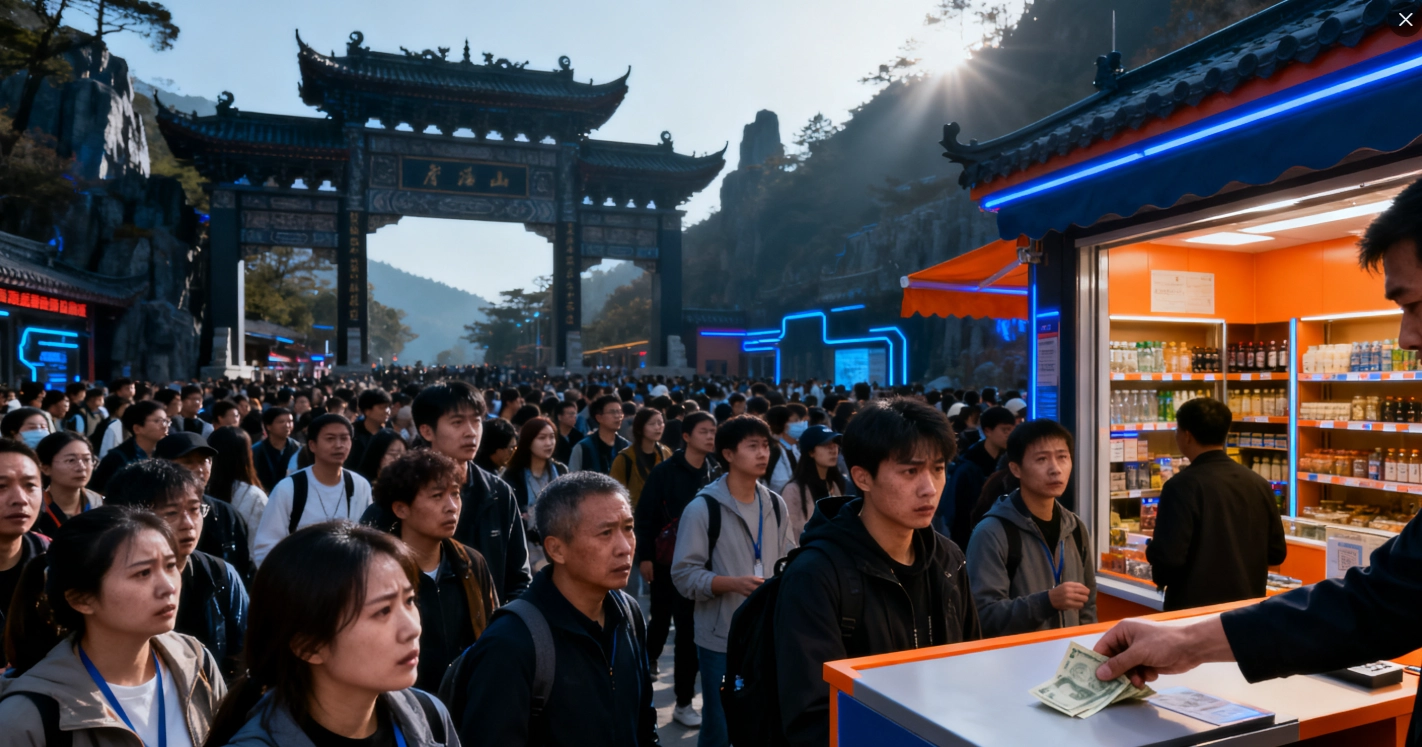
When tourists step into the scenic area with devout hearts, the 68-yuan incense product they had chosen is forcibly bundled and inflated to 952 yuan without any prior notice. This jarring "price betrayal" often triggers round after round of online social media backlash against the area's business practices. The vast majority of public commentary tends to simplistically blame such incidents on individual merchants' moral decline or the whack-a-mole lag in scenic area oversight. This outpouring of emotion, stuck at the level of moral condemnation, completely obscures a closed-loop commercial arbitrage system woven from "psychological hostage-taking" and "extremely low legal accountability" that operates within the specific near-field retail environment of scenic areas.
The process of inflating from 68 yuan to 952 yuan is, at its core, a meticulously engineered form of moral psychological extortion. Unlike ordinary commercial transactions, blessing-related and religious tourism products carry heavy overtones of reverence and taboo. The operators are highly skilled at exploiting tourists' psychological weaknesses—"wanting peace of mind and not willing to cause a scene," or "having already written their name, they dare not request a refund for fear of offending the gods." By using pre-emptive tactics such as inducing visitors to fill out ritual forms, they forcibly escalate a consumer purchase into a moral commitment. Trapped within this deliberately constructed psychological prison, the vast majority of tourists are left with no choice but to swallow the bitter pill of a heavily inflated price.
The underlying foundation that allows such brutally predatory pricing to persist over the long term is by no means a merchant's momentary audacity, but rather the confidence in wrongdoing granted by an ultra-lightweight business entity structure.
Following the corporate records down through Tianyancha's business registry, the involved shop, Hengyang City Nanyue District Yifuxuan Store (individual business), was registered in February 2026, just over six months ago. The operator information and sole proprietorship status clearly recorded in the Tianyancha system bluntly expose the real playbook of these "instant shell companies" in scenic areas. In prime scenic locations that depend on one-time, pass-through foot traffic, these merchants have absolutely no need to build any long-term brand equity or cultivate repeat-purchase goodwill. The status of an individual business means extremely low entry barriers and exit costs, allowing them to recoup upfront storefront expenses in a very short period through exorbitant price gouging.
The deeper market failure lies in the fact that current regulatory and mediation mechanisms objectively provide a betting space for this kind of arbitrage.
In the existing administrative handling process, market regulatory authorities typically resolve complaints by "organizing mediation between both parties and having the merchant refund the excess charges." This cost of wrongdoing—"refund only if caught"—appears utterly feeble when weighed against meticulous profit calculations. For the merchant, the hundredfold profits from transactions that are never reported represent pure, real profit, while the maximum loss after being reported is merely returning the overcharged 468 yuan. When expected gains far exceed the penalty price, case filing and refund mediation simply cannot deter the occurrence of such behavior.
For the next phase of tackling price gouging in scenic areas, if we remain stuck in "refund-by-the-book" approaches and post-hoc condemnation, we will never sever this gray interest chain that leverages small costs for outsized gains. Once the crude dividend of pass-through foot traffic is thoroughly exhausted, the real test of a scenic area's commercial ecosystem will no longer be how many individual cases are handled, but whether institutional design can completely dismantle the legal arbitrage channel that allows offending merchants to quickly dissolve and reinvent themselves under new shells—forcing those entities that seek to profiteer by exploiting consumers' reverence to pay a commercial price they cannot afford.