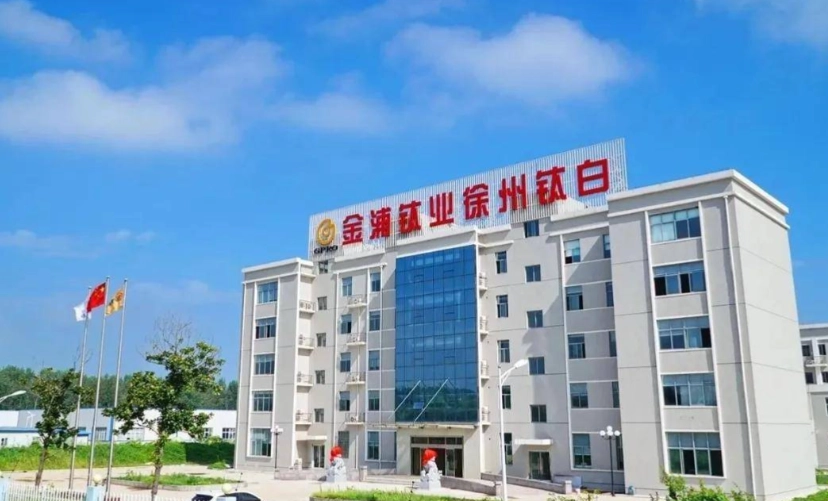
In the Titanium Dioxide Cycle Grinder, the Second-Generation Heiress Is Just an Expensive Legal Shield
Jinpu Titanium Industry Chairman Guo Yanjun resigns after four years of losses exceeding one billion yuan, a systemic squeeze from the real estate cycle collapse and debt storms, with her role merely a family legal shield.
The news of Jinpu Titanium Industry chairman Guo Yanjun's resignation is extremely easy to be boiled down into a melodramatic "second-generation heir squanders the family fortune" soap opera in the court of public opinion. Over four years, cumulative losses exceeded 1.058 billion yuan, and this glaring financial hole seems to confirm the stereotype that the young heiress lacks basic business acumen.
However, once you actually dig into the underlying operating logic of the traditional heavy chemical industry, you realize how naive such surface-level emotional venting truly is. The evaporation of this one billion yuan was never something that could be chalked up to a few bad decisions made by some young boss in the office, nor could it be lost through mere head-scratching errors. It is a systemic strangulation caused by the collapse of the entire titanium dioxide industry cycle, compounded by a minefield of historical debt.
Titanium dioxide sounds remote to the average person, but it is actually one of the most critical chemical raw materials in the upstream chain of the real estate industry, widely used in architectural coatings and paints. In that era of massive real estate infrastructure construction, this business was a license to print money while lying down. But as the real estate cycle plunged into a deep ice age, downstream coatings demand dried up entirely, while upstream raw material prices for titanium ore and other inputs fluctuated violently. For an old-school asset-heavy chemical plant like Jinpu Titanium Industry, once the furnace is lit, it cannot be easily shut down. The massive depreciation and inventory write-downs generated every single day operate like a tireless meat grinder, coldly devouring every last copper coin on the books.
In the face of this brutal cyclical gravity, what Guo Yanjun inherited was not some glamorous scepter of a business empire, but a mud-splattered, massive collection notice.
This deep-seated financial decay had already left a thoroughly damning medical record in the foundations of the public credit system. Digging deeper into the corporate archives on Tianyancha, you will find that Jinpu Titanium Industry is no emerging capital player. This company was established back in 1989, carrying a heavy aura of the old industrial era. Within its nearly one billion yuan in registered capital, major shareholder Jinpu Investment Holding Group and Barclays Bank and other various funds are intertwined in what looks like a complex web but is in fact riddled with holes.
The most fatal footnote in the Tianyancha files is the multiple records of enforcement orders and even judgments against dishonest debtors conspicuously listed in the company's historical records. Under the iron rules of the commercial world, if a mainboard-listed company repeatedly devolves into a deadbeat that refuses to comply with court rulings, there is only one explanation: its underlying cash flow has completely dried up, forcing management to resort to extreme measures of robbing Peter to pay Paul just to keep the core production lines running, dancing a tango through a minefield of debt.
Once this chain of interests is clarified, one can understand Guo Yanjun's real situation over these past four years. In the darkest hour when a heavy chemical enterprise is drowning in debt and facing high-frequency court enforcement actions, the position of legal representative and chairman is nothing less than a powder keg where one could be restricted from high consumption at any moment, or even held jointly liable under the law. The ultimate logic behind the actual controller pushing his daughter into this seat is not, by any stretch, a hope that she could use some disruptive internet thinking to save an aging overcapacity factory. It is the need for an absolutely loyal blood relative who can legally represent the family's interests to serve as a flesh-and-blood shield in the group's debt restructuring and creditor negotiations.
During her four years in office, her primary work was most likely not planning grand business blueprints, but signing her name on countless extension agreements, mortgage guarantee contracts, and court summonses.
Her resignation now is nothing more than this legal shield being strategically withdrawn by the family capital after suffering rapid reputational erosion. The evolution of business has always been ruthless; it does not believe in tears, nor does it care which generation of successor you are. In the second half of the heavy industry game, where survival is determined by real demand-side fundamentals and cash flow generating capacity, traditional chemical plants that merely tough out cycles without a second growth curve will eventually pay the most expensive exit bill. That one billion yuan in losses is the mess left behind by the ebbing tide of a whole era of real estate dividends, and that young heiress who resigned in the spotlight is nothing more than an insignificant signatory on the monumental bad debt of an era.