Tianmu Xiandao is sprinting toward an IPO, with the actual controller holding only 21.42% of voting rights and no controlling shareholder, as equity hidden reefs coexist with its solid-state battery halo.
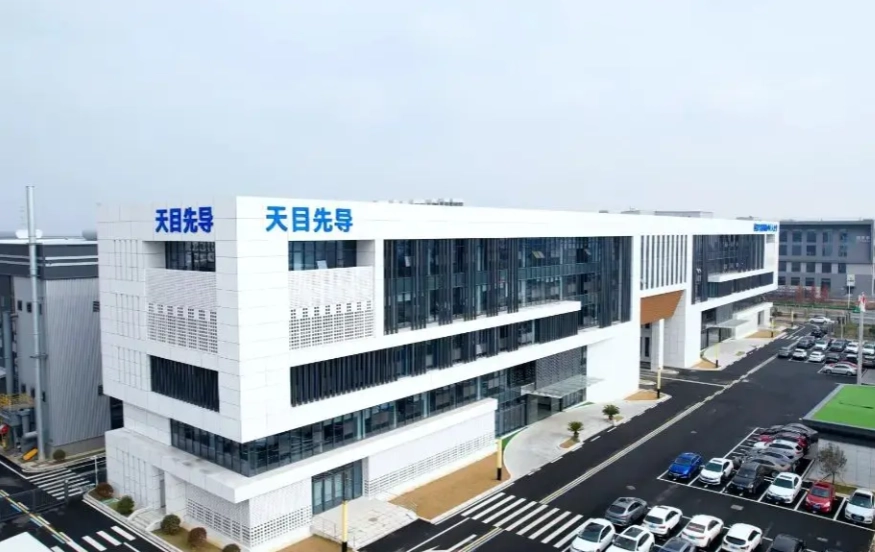
When Liyang Tianmu Xiandao Battery Materials Technology Co., Ltd., a star unicorn in the lithium battery anode field, formally completed IPO counseling filing with the Jiangsu Securities Regulatory Bureau and launched its listing sprint under the escort of CITIC Securities, attention in the power battery materials and new energy capital circles once again focused on the frontier technology generation of silicon-based anodes and solid-state batteries. However, beneath the halo of high valuations and intense admiration in the primary market, the highly conspicuous phrase in the counseling filing report that "the company has no controlling shareholder," and the equity structure in which actual controller Luo Fei controls only about 21.42% of voting rights in total, quickly tore open the test facing a hard-tech rising star born from a top research institute: while enjoying multiple rounds of capital lifting it with high premiums, it has no choice but to confront thin control and the challenge of governance balance.
Against the industrial backdrop of power battery energy density approaching the theoretical limit of traditional graphite anodes, silicon-based anodes, because their theoretical gram capacity is dozens of times that of graphite, are universally recognized by the entire industry as indispensable soul materials for next-generation high-energy-density batteries and semi-solid and all-solid-state batteries. Tianmu Xiandao has long been rooted in the technology incubation soil of Academician Chen Liquan's team at the Institute of Physics, Chinese Academy of Sciences, and started very early in silicon-carbon composite materials, silicon-oxygen anodes, and even nanoscale silicon modification processes at scale. It was once regarded as a pioneering representative of domestic silicon-based anodes breaking into the global top battery supply chain.
However, from the high energy gram capacity in laboratory beakers to the suppression of volume expansion, overcoming extremely low first-cycle efficiency, and amortizing high processing costs in hundreds of thousands of cycle tests on industrial production lines, the pace of commercialization penetration for silicon-based anodes is much gentler than the early frenzied expectations of capital.
Following the underlying business registration traces to penetrate the capital foundation of this pre-listing entity, its heavy equity structure formed after several rounds of runaway financing is fully exposed in Tianyancha data. Tianyancha business registration data shows that Liyang Tianmu Xiandao Battery Materials Technology Co., Ltd. was established in 2017, with registered capital already as high as about RMB 1.180 billion, and Luo Fei as legal representative.
Nearly RMB 1.2 billion in massive registered capital intuitively reflects that it has undergone extremely intensive large-scale equity financing and capital reserve conversions over the past several years.
In this capital carnival, institutions with Chinese Academy of Sciences backgrounds, local industrial guidance funds, and industrial capital such as CALB and Sanhua successively entered, pushing the company's book size into the tier of tens of billions in valuation. However, along with the injection of real money by external institutions in one wave after another, the equity ratio of the original founding R&D team was inevitably diluted to a critical state.
The equity map disclosed in the counseling report clearly reveals this governance concern: the company is currently in a state of "no controlling shareholder" at the legal level. Actual controller Luo Fei's personal direct shareholding ratio is only 2.34%, and he indirectly controls 19.08% mainly through several employee shareholding and partnership platforms, with the total proportion of voting rights he controls barely maintained at 21.42%.
This control structure is a hidden reef that must be carefully dismantled in the extremely sensitive IPO review context of the capital market.
First, the stability of control always faces potential challenges from multi-party gaming. A voting rights proportion barely above 20% and the absence of an absolutely controlling shareholder mean that once external strategic investors disagree on business strategy, capital operations, or technology roadmaps in the future, or once an acting-in-concert agreement loosens after listing, the company can easily fall into a vortex of board infighting with no leader and severely impaired decision-making efficiency.
This is precisely the institutional hard defect that regulatory authorities are most wary of when reviewing pre-IPO companies.
Second, the market demand and high R&D expenditures faced by silicon-based anodes are testing its ability to sustain cash generation. Although the concepts of solid-state batteries and fast charging are being hyped vigorously in the secondary market, under the reality that the vast majority of current passenger vehicle installation share is still firmly controlled by lower-cost artificial graphite, silicon-based anodes can currently mainly be used only as doping material at a low ratio of 5% to 10%.
The limited doping ratio, combined with the slower-than-expected ramp-up pace of Tesla's 4680 batteries, means that the real market throughput of pure silicon-carbon materials has not yet truly ushered in exponential explosion.
Facing production line depreciation, high R&D consumption for nanoscale silicon powder grinding and coating technology, and dimensional suppression by anode peers in low-cost fast-charging graphite, Tianmu Xiandao must, during its listing application period, present the capital market with a price and gross margin account that not only possesses technological foresight but can also withstand cyclical losses in the traditional anode industry.
This counseling filing that took place in early autumn sounded an alarm for the entire Pan-new energy materials entrepreneurship circle. Backing from top academic halo and frontier concepts can certainly secure the most dazzling valuation multiples in the primary market, but when a company steps under the spotlight of the public capital market, glossy PPTs must ultimately give way to the risk-resistant resilience of the equity structure and real per-ton shipment profits. How to steadily convert frontier solid-state materials in the laboratory into real money from industrialized mass production without losing the helm of the company's strategic control is the ultimate issue Tianmu Xiandao must overcome before ringing the listing bell.