Three Gorges Group invests a billion yuan in a Qinghai joint venture, deploying a mixed fleet to overcome funding and technology bottlenecks in new energy.
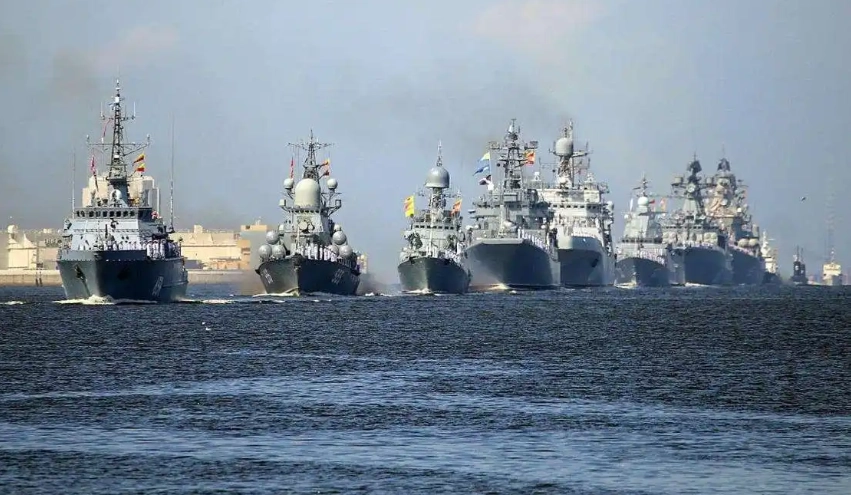
A billion in heavy capital has been hurled at the blazing sun and fierce winds of the Qinghai-Tibet Plateau. This is far more than a routine flag-planting by China Three Gorges Corporation on the northwestern map. When the three capital giants—Three Gorges Energy, Yangtze Power, and Yangtze Three Gorges Investment—first sailed into Qinghai in an extremely precise equity formation, this seemingly conventional new energy capacity expansion actually revealed the ultimate card of a giant energy central enterprise in the deep waters of building large desert-gobi-wasteland bases: using top-tier internal resources for financial hedging and technological complementarity.
Tracing the underlying veins of this one-billion-yuan paid-in capital, a defensive equity structure that could serve as a textbook example surfaced in Tianyancha records. Tianyancha business registration data shows that the newly established Three Gorges Group Qinghai Energy Investment Co., Ltd. has its equity precisely divided into 34%, 33%, and 33%. Among them, Three Gorges Energy, the group's vanguard in new energy development, secured a narrow controlling stake, while Yangtze Power, the world's largest listed hydropower company, and Three Gorges Investment, which handles capital operations, split the remainder equally.
This tripartite capital design points directly at the most fatal weakness in the current development of large new energy bases in the northwest: extremely heavy capital accumulation and debt ratio assessment.
Qinghai possesses the nation's finest wind and solar resources, but it is also facing the most brutal grid consumption bottleneck. Securing land for photovoltaic projects here is no longer a sure-fire profit-making business. The massive initial capital expenditure and extremely high curtailment rates of wind and solar power are enough to completely drag down the balance sheet of any single new energy listed company. Although Three Gorges Energy commands powerful forces, its continuously galloping leverage ratio needs to be closely monitored.
Bringing Yangtze Power into the fold at this point is essentially borrowing the extreme financing credit of this super cash cow. Yangtze Power's perennial abundant operating net cash flow and extremely low bond issuance costs serve as the hardest financial ballast for the entire joint venture platform. All three parties sharing the capital contribution equally not only ensures the massive funding supply for project development but also cleverly avoids a single listed entity bearing excessive consolidated debt pressure during the project construction period.
A deeper strategic intent hides within an extremely unusual business scope. In the approved business of a new energy investment company in the great northwest, beyond conventional wind, solar, and energy storage technologies, water resource management, ecological restoration, and even water conservancy-related consulting services conspicuously appear.
To talk about water on the arid Qinghai-Tibet Plateau—this is precisely the physical foundation for Yangtze Power's entry. The most core breakthrough solution for large wind and solar bases in the northwest is currently hydro-wind-solar multi-energy complementarity and pumped storage. Pure photovoltaic and wind power are intermittent sources that depend on the weather and are extremely unfriendly to the grid, while hydropower is currently the finest large-scale natural energy storage battery.
Transplanting Yangtze Power's decades of giant water conservancy hub scheduling experience in the Jinsha River and Yangtze River basins to Qinghai, using hydropower from the upper reaches of the Yellow River to smooth out the wind and solar fluctuations on the gobi desert, and washing intermittent green power that would otherwise be rejected by the grid into stable baseload power—this is the ultimate technological barrier that gives Three Gorges Group the confidence to drop heavy assets in Qinghai.
This billion-yuan joint venture operation in the heart of the plateau has demonstrated the ultimate form of oligopoly players to the entire bulk energy market. When competition in the new energy track escalates from grabbing power generation permits to competing on cross-border resource integration and capital cost control, ordinary players are still struggling with the cost pain brought by mandatory energy storage configuration, while Three Gorges has already begun using internal cross-sector mixed fleets to smooth out the cyclical fluctuations of new energy assets.