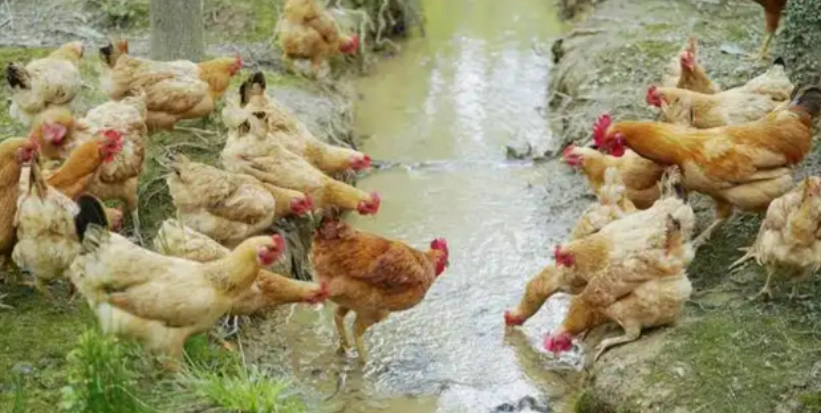
Ebb of Traffic and Gravity of Soil: The Shattered Romance Behind 'Third Virtue' Free-Range Chicken
The execution order against the company behind 'Third Virtue' free-range chicken, founded by actor Zhao Liang, for a debt of 46,000 yuan reveals the clash between idealism and commercial logic when celebrities venture into agriculture.
When "Sandezzi" from classic films and TV dramas took off his costume and retreated into the mountains to raise free-range chickens for over a decade, the public once saw it as a tale of a new-age farmer. However, the business world's final ledger never runs on sentiment. Recently, Chengdu Sandezzi Haozhenxuan Agricultural Technology Co., Ltd. was added to the list of judgment debtors, with an enforcement target of over 46,000 yuan. For an actor, this amount may be a trivial drop in the bucket, but for a fragile agricultural e-commerce supply chain, it is a straw capable of breaking the camel's back of consumer trust.
This compulsory enforcement, handled by the People's Court of Jinjiang District in Chengdu, has torn open the conflicts of interest when celebrity IPs cross over into hardcore agriculture. Zhao Liang's chicken farming in the mountains back then carried a strong undertone of poverty alleviation. But when these traditional agricultural products, defined by their slow-return cycle, were forcibly packaged into the e-commerce shell of Chengdu Sandezzi Haozhenxuan and pushed through live-stream sales, the underlying business logic had already undergone a mutation.
An examination of the company's equity structure through Tianyancha reveals the dual forces of media technology and agricultural development behind it. This architecture, forcibly stitching together traffic generators and operators, planted the seeds of trouble from the very start. In the digital retail landscape of 2026, live-stream rooms demand low prices and instant sales spikes, while true mountain-raised chickens require long investment cycles and high logistics losses. When a media company tries to harvest agricultural traffic with a high-margin model, it inevitably resorts to aggressive marketing to offset costs.
This enforcement order of just over 40,000 yuan is a microcosm of the company's long struggle in the quagmire of non-compliance. In Tianyancha's legal litigation records, the company's trail is clearly visible. Prior to this, it was fined over 100,000 yuan by the market supervision administration for publishing false advertisements. What further damaged its brand credibility was the widely publicized "clever trademark" incident—in the live-stream room, it marketed "Dezi Chicken," but the outer packaging only bore the registered trademark "Dezi Tu." This speculative move, attempting to use wordplay to cash in on consumers' "pastoral worship," ran directly into the regulatory red line.
The industry consensus tends to view celebrity litigation as a mere management oversight. But this underestimates the brutality of the agricultural supply chain. As fines for false advertising and trademark disputes pile up, the already razor-thin agricultural margins are quickly swallowed by legal costs. This 46,000-yuan compulsory enforcement is, in fact, a warning sign of cracks forming in its underlying capital chain. It signals that after the peak of traffic dividends has fully passed, the traffic shell built by the media company can no longer subsidize the heavy costs of physical farming operations.
This enforcement hammer brought down by the court has shattered the illusion that acting sentiment alone can escape the gravity of heavy assets. In an era where truth is redefined by real financial data and legal red lines, sentiment cannot serve as a firewall for the supply chain. Any player attempting to play word games in the dirt or leverage traffic as a lever will ultimately be reduced, in the ever-updating judicial records of Tianyancha, to the coldest form of financial cost.