Tencent QClaw shuts down, product dies before its trademark is approved, exposing big tech's AI Agent infighting and business struggles.
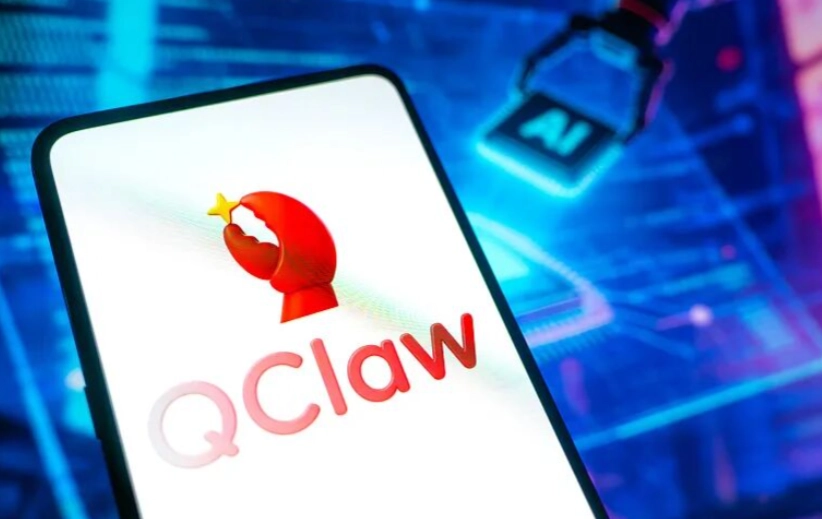
When the Tencent QClaw team posted a shutdown notice on its official website, announcing that it would officially extinguish its servers by the end of the year, this AI experiment, which lasted only half a year, poured a bucket of cold water on the internet giant's agent frenzy in a highly ironic manner. On the front end was the novelty boom of users who had just gotten used to remotely controlling desktop reports through WeChat conversations; on the back end, the trademark registration process had not even completed substantive examination before being ruthlessly pulled by the group.
This was by no means an ordinary technical version iteration, but an inevitable strangulation woven from the internal horse-racing mechanism of big companies and the calculation of computing power costs amid anxiety over the lack of killer commercial returns for general artificial intelligence deployment.
Trademarks Not Yet Born, Product Dies First: The Disconnect Between Intellectual Property and Business Life-and-Death Speed
Looking through the filing trajectory of underlying intellectual property to see this sudden emergency brake, a shocking disconnect has formed between the legal ownership process and the life-and-death speed of the business. Tianyancha intellectual property information shows that Shenzhen Yingzhiyuan Software Technology Co., Ltd., a Tencent affiliate, had just intensively submitted multiple QCLAW trademark applications in March this year, spanning core commercial categories such as scientific instruments, advertising and sales, and transportation and storage.
Until the current shutdown order was issued, this batch of defensive trademarks still remained in the initial state of awaiting substantive examination in the Tianyancha system.
The product has already reached the end of its life, yet the trademark has not yet been legally born. This deformed inversion tears open the impetuous undertone of big companies blindly sprinting ahead and then rapidly retreating on the AI Agent trend.
Defensive Product and Two Major Fatal Flaws: Security Compliance and Commercial Self-Sustainability
The birth of QClaw was essentially a defensive product hastily initiated by a big company after the open-source architecture OpenClaw became explosively popular, in order to prevent the desktop agent entrance from being subverted by external startups. Relying on the unmatched reach advantage of the WeChat ecosystem in China, the team achieved remote computer wake-up, file capture, and workflow scheduling through WeChat mini-programs or chat boxes, which once triggered viral spread among geeks and white-collar groups.
However, forcibly grafting WeChat's instant messaging leverage onto a local on-device Agent did not form a stable commercial closed loop, but instead quickly exposed two major fatal flaws.
The first is the Sword of Damocles of security and compliance. Letting an agent driven by an external large model possess low-level control over the user's operating system and frequently transmit local files and instructions back through the WeChat channel constituted systemic vulnerabilities that were difficult to avoid in privacy compliance and antivirus risk control systems. The second was extremely weak commercial self-sustainability.
Individual C-end users are extremely accustomed to freeloading for free and are very unlikely to continuously pay high monthly subscription fees just for simple remote file retrieval; while once user invocation frequency surges, the computing power relay costs and bandwidth expenses brought by multi-model concurrency will quickly push this lightweight tool into the financial trap of the more it sells, the more miserably it loses.
Internal Horse Racing and Resource Integration: The Inevitable Purge of Reinventing the Wheel
A deeper pathology was rooted in the bloody horse racing and resource integration logic inside big companies.
Looking back at the so-called full-series lobster product matrix released by Tencent early this year, from WorkBuddy for collaborative office work, to QClaw leaning toward on-device automation, to cloud deployment tools, different departments set up their own banners in order to compete for project budgets in the AI era. However, as the external environment tightened assessments of return on investment, redundant projects reinventing the wheel had to be centrally purged.
As early as the middle of this year, when rumors fermented that the core person in charge had left and the business had been assigned to the WorkBuddy team, QClaw's independent fate had already been sentenced to death. In this announcement, guiding users to migrate data to WorkBuddy appears on the surface to be a business adjustment, but in reality it is Tencent forcibly recycling fragmented C-end novelty functions in the AI office field into an enterprise-level ecosystem, concentrating limited computing power and engineering resources on the main products more likely to generate B-end collaborative effects.
Warning: The Fragility of Single-Point Tools in Big Company Ecosystems
This shutdown announcement in late autumn sounded a cold warning bell for the entire entrepreneurial ecosystem force-ripened by the large model concept: in the super-app ecosystems woven by giants, single-point tools built simply by wrapping open-source frameworks and connecting local interfaces are so fragile that they cannot withstand a single blow. When the frenzy of capital recedes, those marginal explorations that have not established deep data moats and independent payment scenarios, even if they carry the halo of a big company and have preemptively registered a full set of trademarks, will at any time become sunk costs written off when the group's strategy shifts.