Cash-Paid Properties Trap Tanmujiang in Legal Deadlock, Ownership of 13 Units Pending
Tanmujiang paid in full for 13 properties but cannot transfer ownership; after developer bankruptcy, it faces demands for return, risking losing both money and homes; company insists on rights protection.
"Tanmujiang" Full-Payment Property Purchase Hits Judicial Stalemate, Ownership of 13 Properties Pending Resolution
"We absolutely cannot let this grievance go unheard." A representative of Jiangsu Tanmujiang Tourism Development Co., Ltd. ("Tanmujiang") told reporters. According to the company, it has received relevant court documents regarding a judicial dispute over 13 commercial properties it purchased in full years ago.
Around 2013, Tanmujiang, headquartered in Chongqing, planned to relocate its management center to Jiangsu.
It is understood that when the management center relocated in 2014, some employees were unable to move due to family reasons. The company's founder, Tan Chuanhua, recognized the advantageous location of Jiangsu and decided to establish the management center in Jurong.
Now, the properties Tanmujiang once purchased in full at significant cost are facing court recovery and auction, leaving the company confronting the dilemma of potentially losing both the money and the properties. Tanmujiang has decided to pursue its rights defense to the end.
The Turning Point from Purchase to Rights Defense
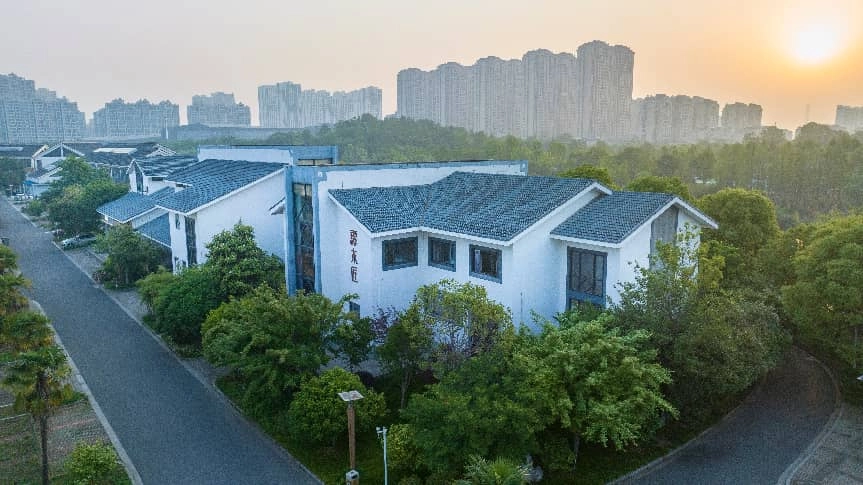
In 2013, Tanmujiang decided to relocate its management center from Chongqing to Jurong, Jiangsu, requiring the purchase of office space locally. After inspections, Tanmujiang selected 13 commercial units in Buildings 9 and 10 of Shangdao Yuelanwan, Dongchang Road, Huayang Town, Jurong City, developed by Suzhou Jianxing Real Estate Co., Ltd. Jurong Branch ("Jianxing Real Estate"). The purchase contracts explicitly stipulated that property delivery was due by September 30, 2014, with payment to be made in a single lump sum.
Within one week of signing the contracts, Tanmujiang paid the full purchase price as agreed. Subsequently, due to the developer's funding chain issues, the transaction became mired in a prolonged dispute.
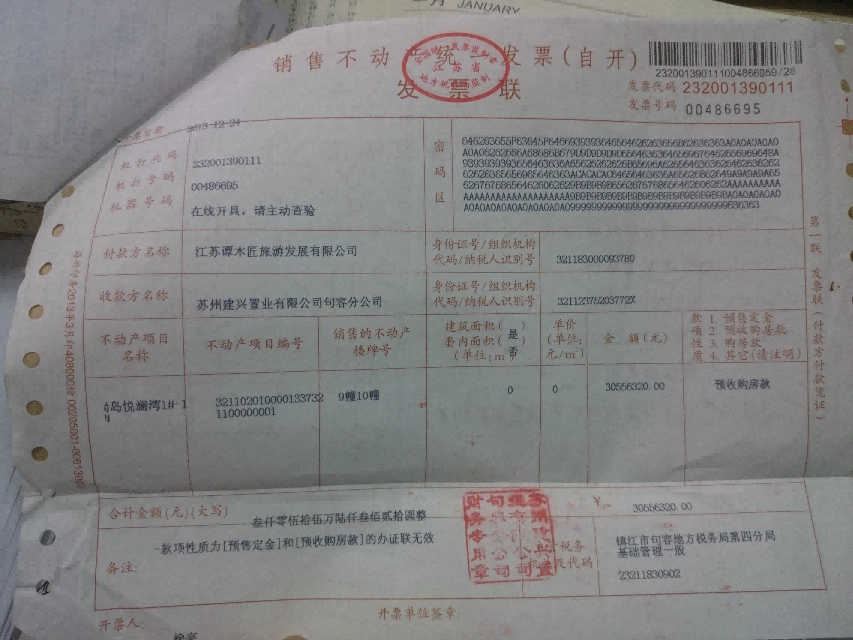
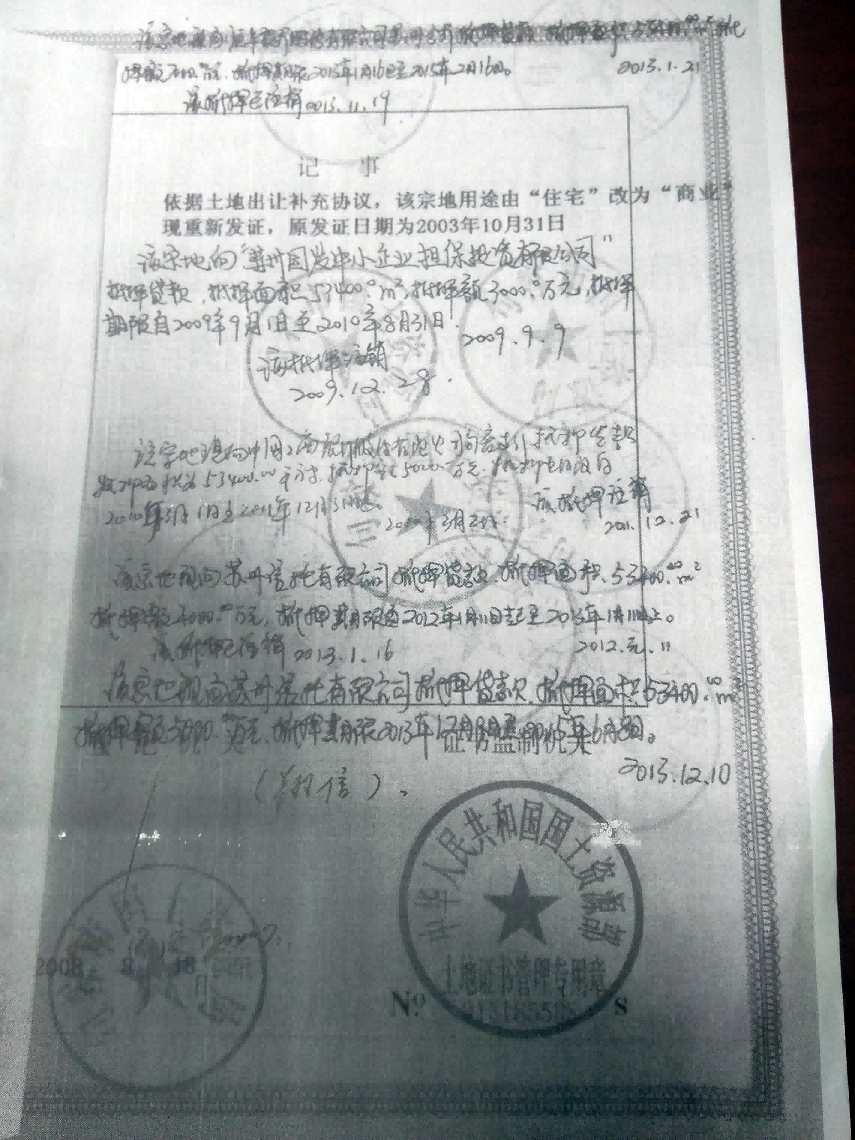
Under normal transaction procedures, property title transfer registration should follow full payment of the purchase price. However, due to the developer Suzhou Jianxing Real Estate's tight funding chain, the land use rights for the properties in question had previously been mortgaged to Suzhou Trust Co., Ltd. (mortgage amount: 50 million yuan), and this mortgage was not released in a timely manner, preventing property title registration.
Additionally, the project faced issues such as outstanding taxes, incomplete supporting facilities, and unfinished property surveying, rendering the properties temporarily ineligible for title certificates and delaying the transfer process.
In 2020, Suzhou Jianxing Real Estate entered bankruptcy liquidation proceedings due to financial difficulties. In February 2021, the court-appointed bankruptcy administrator issued a notice to Tanmujiang, citing the unreleased land mortgage, incomplete supporting facilities, and objective inability to perform the contracts, and notified Tanmujiang of the termination of the 13 commercial property sales contracts, requiring the company to vacate the properties and return them within 10 days of receiving the notice.
Tanmujiang maintained that it had fully performed its contractual obligations and that there was no basis for terminating the contracts, explicitly refusing to return the properties. After failed negotiations, the administrator filed a lawsuit in court demanding that Tanmujiang vacate and return the properties.
Liability for Breach and Contract Performance
The Contract Book of the Civil Code contains clear provisions on liability for breach of contract.
Article 577 of the Civil Code stipulates: "Where a party fails to perform its contractual obligations or its performance does not conform to the agreement, it shall bear liability for breach such as continuing to perform, taking remedial measures, or compensating for losses."
The breaching party shall compensate the non-breaching party for actual losses suffered as a result of the breach.
Reviewing this case, Tanmujiang has paid the full purchase price, and the developer delivered the properties, which Tanmujiang accepted and has continued to use to this day.
Tanmujiang pointed out that it has paid the full purchase price, fulfilling its primary contractual obligations. In bankruptcy liquidation, buyers who have paid in full and are in actual possession of the properties should receive priority protection.
According to Tanmujiang's understanding, other portions of the Shangdao Yuelanwan project have already been disposed of through bankruptcy proceedings and title transfers completed. The properties purchased by Tanmujiang have now had the land mortgage discharged and initial registration completed. Upon inquiry with the Jurong City Real Estate Registration Center, there are no policy restrictions preventing title transfer.
Therefore, Tanmujiang believes that the properties in question are now eligible for title transfer, and continued performance of the contracts is practically feasible. If the properties are recovered, the paid purchase price would only participate in bankruptcy distribution as ordinary creditor claims, with uncertain recovery rates.
The core dispute in this case is: when a buyer has paid in full and is in actual possession and use of the properties, but title transfer was not completed due to the developer's reasons, does the administrator have the right to terminate the contracts and recover the properties after the developer enters bankruptcy?
Tanmujiang argues that it has fulfilled all payment obligations, the properties have been delivered and used for years, and the obstacles to title transfer have now been removed, so the contracts should continue to be performed.
The administrator, on the other hand, argues that because the land mortgage was not released and supporting facilities were incomplete, the contracts could not objectively continue to be performed, and termination complies with bankruptcy procedural requirements.
Tanmujiang, known as China's No. 1 brand in comb manufacturing, is a well-known private enterprise domestically and one of the representatives of outstanding private enterprises in China. Since its founding in the 1990s, it has received numerous social honors.
Most notably, Tanmujiang is also a well-known socially responsible enterprise. Among its current workforce of over 1,000 employees, more than 360 are people with disabilities. As a conscientious enterprise dedicated to public welfare, Tanmujiang has expressed its hope to provide dignified employment opportunities for people with disabilities. Physical disability does not mean that one's abilities and spirit are also disabled. Tanmujiang persistently works on this quietly, aiming to provide more people with disabilities with greater equal treatment and dignity in life.
The company's founder, "Comb King" Tan Chuanhua, is known for his resilient character and legendary life experiences.
Within Tanmujiang, employees all know the story of the company burning combs. In 1995, in the company's third year of operation, 150,000 wooden combs with quality defects from technical renovations were cleared from the warehouse. Based on production costs at the time, these products were worth at least 300,000 yuan. Selling them at a discount, even at cost, would have been no problem. At the time, several wholesalers were interested in these combs and were willing to purchase them all at low prices.
But after the deal was negotiated, Tan Chuanhua made the final decision to burn the combs. Tan Chuanhua said that only by putting integrity first could Tanmujiang have hope. In the end, the 150,000 combs were piled together, and Tan Chuanhua lit the fire.
Tanmujiang's business principles still uphold integrity to this day. No matter which franchisee exits Tanmujiang's marketing system, their inventory can be returned to Tanmujiang.
It is this dedication of the founder and helmsman that has shaped Tanmujiang's corporate culture today. This tenacity and persistence have also been deeply ingrained in Tanmujiang's DNA.
Currently, Tanmujiang's management still hopes that its legitimate rights and interests as the compliant party will be protected.
For a socially renowned private enterprise, it is crucial in judicial practice to ensure it experiences the dignity of the law and fairness and justice in judicial cases.
In August 2025, the Supreme People's Court issued the "Guiding Opinions on Implementing the 'Law of the People's Republic of China on Promoting the Private Economy.'" The Guiding Opinions require strengthened judicial protection of property rights, standardized handling of assets involved in cases, timely correction of wrongful cases involving enterprises, protection of the personal rights of private economic organizations and their operators, and protection of the legitimate rights and interests of private economic organizations and their operators.
In March of this year, the Jiangsu Provincial High People's Court issued the "Jiangsu Provincial High People's Court Action Plan for Optimizing the Law-Based Business Environment," covering the optimization of a fair and orderly competitive environment for enterprises, a vibrant development environment, an honest and trustworthy trading environment, a survival-of-the-fittest exit environment, and a fair and efficient judicial environment.
The Action Plan proposes fully implementing the Private Economy Promotion Law, focusing on breaking down local protection barriers, strengthening protection for honoring commitments and fulfilling promises, improving mechanisms for disciplining dishonesty and rewarding integrity, providing positive incentives for enterprises and business operators who voluntarily fulfill obligations, and strengthening review of illegal cross-regional and profit-driven law enforcement and judicial cases.
The Action Plan also proposes strengthening bankruptcy trial and administrator team building, establishing a bankruptcy trial talent pool, strengthening talent pipeline development for bankruptcy trials, establishing and improving a province-wide bankruptcy administrator roster system, strengthening supervision of administrator performance, and taking effective measures against administrator conduct on the negative list.
Tanmujiang pointed out that Suzhou Jianxing Real Estate, as the breaching party, does not have the right to unilaterally terminate the contracts. What Tanmujiang is upholding is precisely the most basic credit and order in the market — that those who honor their commitments and contracts should not be wiped out.